SJFS 2023 Night 1 recap May 18, 2023
Posted by Mike C. in Animation, Audio, Comedy, Health, Internet, Jazz, Music, Personal, Photography, Radio, Technology, Travel, TV, Video.add a comment
Friday, April 28, was the first of two nights for the 20th anniversary edition of Smooth Jazz for Scholars, hosted by keyboardist Jay Rowe in his hometown of Milford, Connecticut. The event, held on two nights since 2013, benefits the Milford Public Schools music department. It was the 19th SJFS overall (canceled by COVID in 2020 and ’21), my 15th overall, and 14th that I’ve seen it its entirety. (I only saw the first night in 2015 with that year’s WCWP Hall of Fame Ceremony held the following afternoon back on Long Island.)
In the days and hours leading up to the Milford trip, I grew overwhelmed by the impending workload (photos and videos). I struggled to pack everything the afternoon of the 28th, having spent two hours editing most photos from the WCWP station dinner (for student and alumni staff) on the 26th. I didn’t want to go, but felt obligated to go because I didn’t want to back out of the commitment I’d made to Jay. I convinced myself this would be the last year. (SPOILER: It won’t be.)
I finally left house with my parents just before 2:00. We encountered traffic delays on I-95 in Fairfield County, Connecticut. Waze directed us through winding side streets in Westport. We were eventually directed back to I-95 in Bridgeport with little volume the rest of the way to Exit 36 in Milford (in New Haven County, if you’re wondering). Not knowing which would be the official hotel, we booked rooms at Hampton Inn a month or two earlier. Our rooms were on the second floor, facing opposite ends of the building. I chose the room facing the parking lot so I-95 traffic wouldn’t keep me awake.
After settling into our rooms, we went for dinner at Pasquale Pizza a short drive from the hotel. Since we were close to the hotel, I walked back after finishing my pasta. On the way, I passed a Gas & Go station:


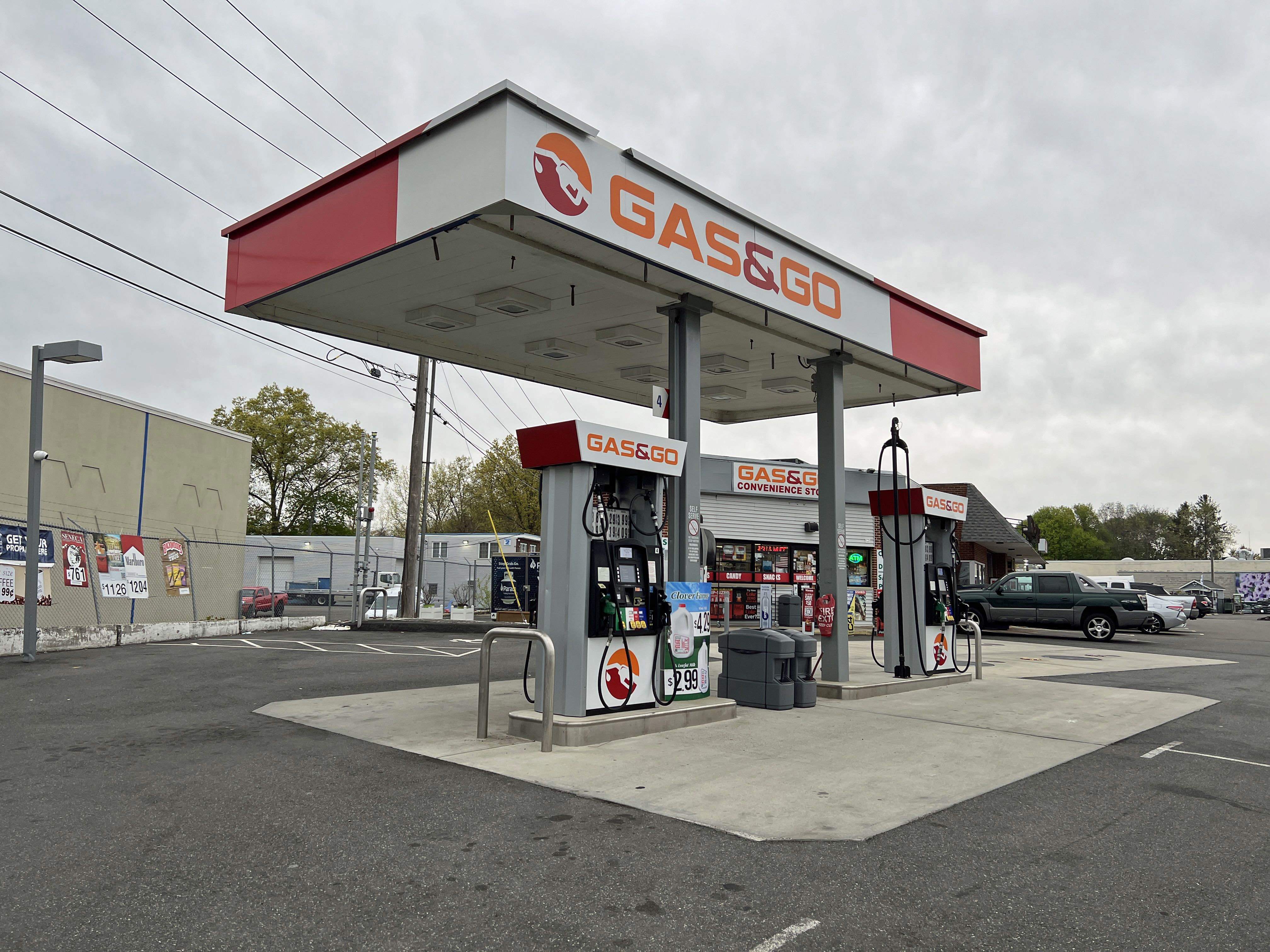
That made me think of the Gasigo sequence in the “Heroboy” episode of Freakazoid! In the sequence, singing attendants delayed Freakazoid’s (Paul Rugg) attempt to reach the villain Gutierrez (Ricardo Montalban). They had to finish the jingle in Freak’s car. Watch:
The episode ended with the Gasigo attendants driving Gutierrez mad as they reprised their jingle:
South of Gas & Go was another gas station/convenience store: Cumberland Farms. I stopped in there to buy ice cream bars for dessert back in my room.
My friend Kelly drove down from Wallingford for the show and met me at my room door around 6:30. We hung out for a little while, then drove to the Parsons Complex. I had her stop at CVS on the way so I could buy a small notebook or pad for writing out the set list and side notes. I forgot to pack a notebook and my sleep mask. I got a cheap gray mask and stenographer pad (close enough), then went on to Parsons. We arrived close to 7:30, after the soundcheck, so the doors were open.
Before entering the Veterans Memorial Auditorium, I decided to take a chance on the 50/50 raffle. I took out my wallet from my coat’s right pocket and bought three tickets for $10. Little did I know I inadvertently knocked out my keys, and wouldn’t realize what happened until the next day. More on that in the Saturday post.
I got plenty of reassurance from Katherine Gilraine and Ron Hancox, my fellow photographers in the orchestra pit, along with friends like Jay Dobbins, Phyllis Abrams, and Robin Morin Stewart. I love what I do and I love the music. I shouldn’t put so much pressure on myself. I need to be present, enjoy myself, trust the process, and take my time. I don’t work for a media outlet. There is no deadline.
With newfound confidence, I set up my equipment on the center-left portion of the orchestra pit below the stage. Production manager Kevin McCabe came on stage around 8:10 to welcome the audience and thank the sponsors:

Then, he introduced Jay Rowe, who read his statement in the program that marked Smooth Jazz for Scholars’ 20th anniversary:


Here is that message:
20 years of Smooth Jazz for Scholars!! I certainly did not think I would reach this milestone when I had the idea to start this event 20 years ago. Doing these shows helped me to become a better musician and play with some of my favorite musicians and people!! In some cases, I was playing alongside my musical heroes like Jeff Lorber, Alex Bugnon, David Benoit, Marc Antoine and Peter White, while watching newer artists like Vincent Ingala and Eric Darius become superstars and amazing entertainers. There have been losses along the way such as the passing of Jeff Golub, Chuck Loeb, Nick Colionne [fan page] and Rohn [“Ron”] Lawrence. These guys are missed terribly in our musical community and will never be forgotten. I have learned much about how important music is in people’s lives and have examined my own relationship with music. I still love playing and I am grateful that musical dreams can still come true in advancing middle age!! I truly hope that the youth of Milford, Connecticut – the town I grew up in and still love to live in – can experience the joy I have when playing music in whatever they pursue when they grow up. I also hope they can have the wonderful friendships that I have had through playing music. Thanks so much to Ken Navarro, Marion Meadows, Chieli Minucci [“key-ellie min-oo-chee”] and Nelson Rangell for being there for me at the very first Smooth Jazz for Scholars show that we played back in 2003 at Foran High School. It is very fitting to me that these artists perform for the first night of our 20th anniversary weekend. It has been a pleasure working with all of the artists who have played at Smooth Jazz for Scholars over the years at various festivals, clubs and events all over the world. Thanks to all of the fans of smooth jazz who have supported this show for all these years. You have been the reason to keep this going to support music education in our public schools inspiring the next generation of artists and music teachers!! Thanks to our sponsors: Barrett Outdoor Communications; Milford Bank; Dr. Anna Cutaia, Superintendent for Milford Public Schools; Amy Perras, Instructional Supervisor for Music, Art and Library Media; Kathy Bonetti, Communications Coordinator for Milford Public Schools; my mom Mia DiStasi; my wife Deborah Rowe; Kevin McCabe; WRTC; Mike Stacy at WRCH; Gregg Roche, former host of The Sunday Smooth Jazz Brunch on WRCH; Steve Butler, my favorite booking agent; everyone in this ad book (program), all of the wonderful fans of smooth jazz and the great artists performing at this year’s shows. Enjoy this year’s shows and stay tuned for next year when Smooth Jazz for Scholars becomes an adult at 21!!
Jay Rowe, 2023 Smooth Jazz for Scholars program
As Jay said, all four headliners from the first show in 2003 were present on the first night 20 years later!
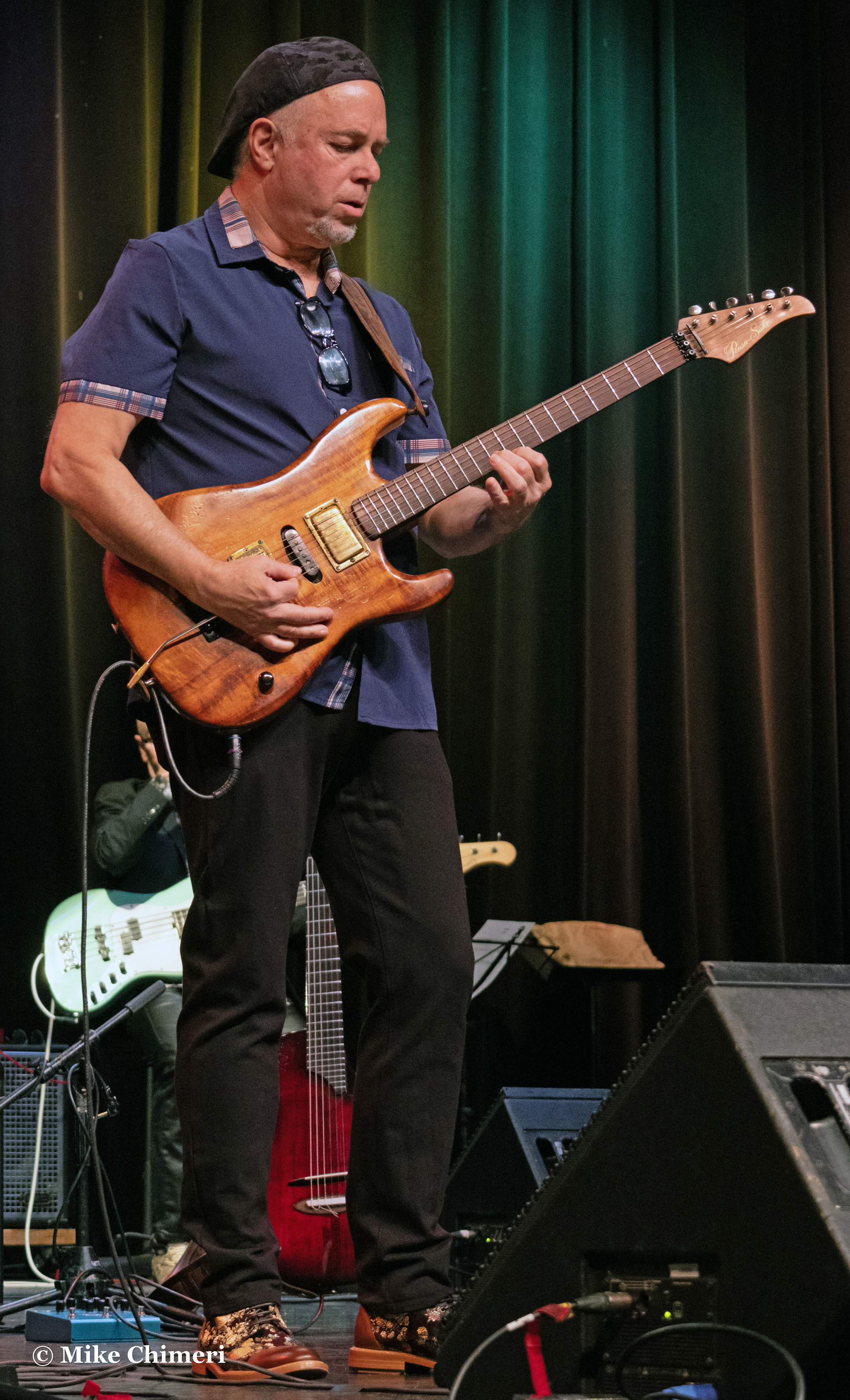
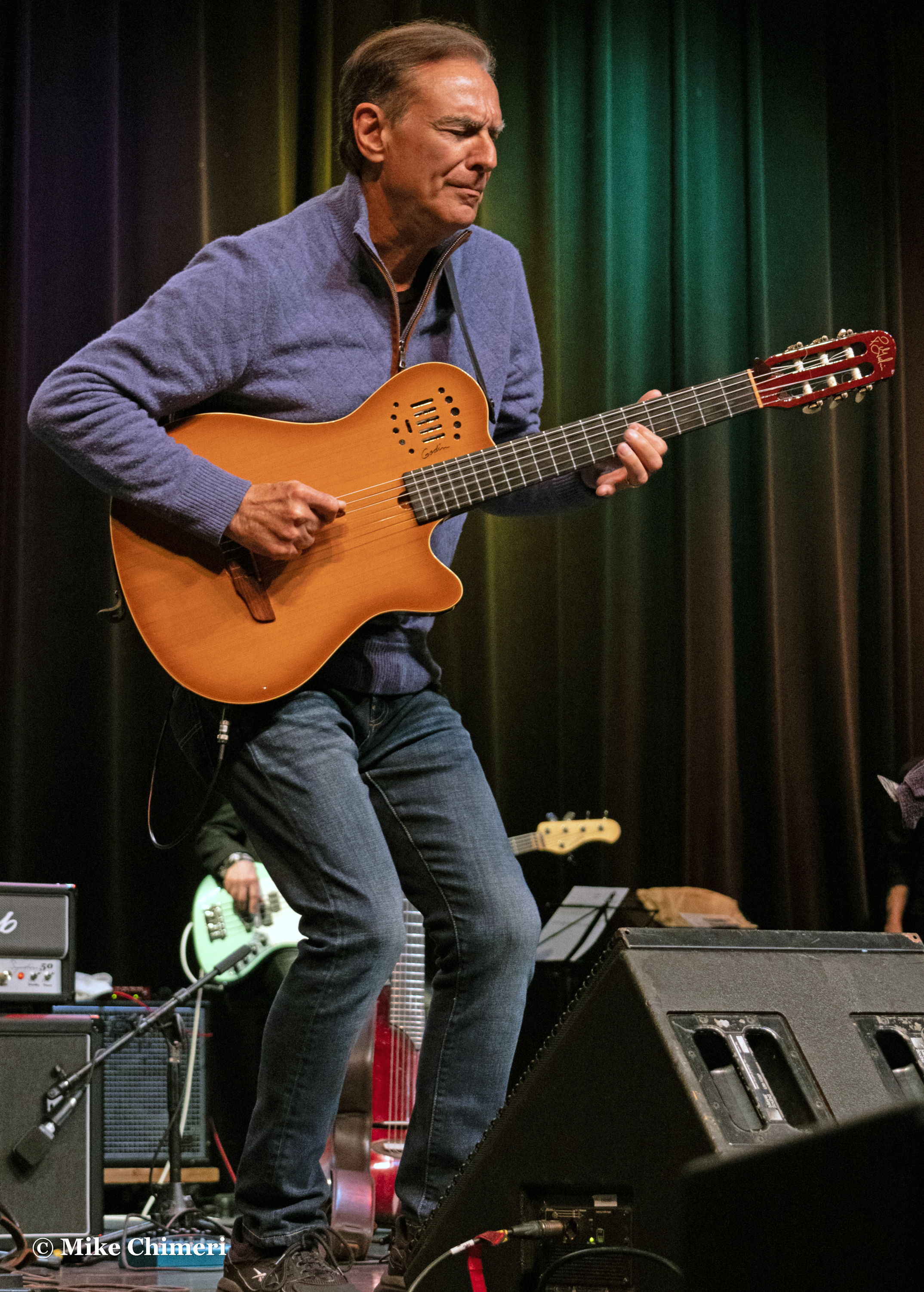
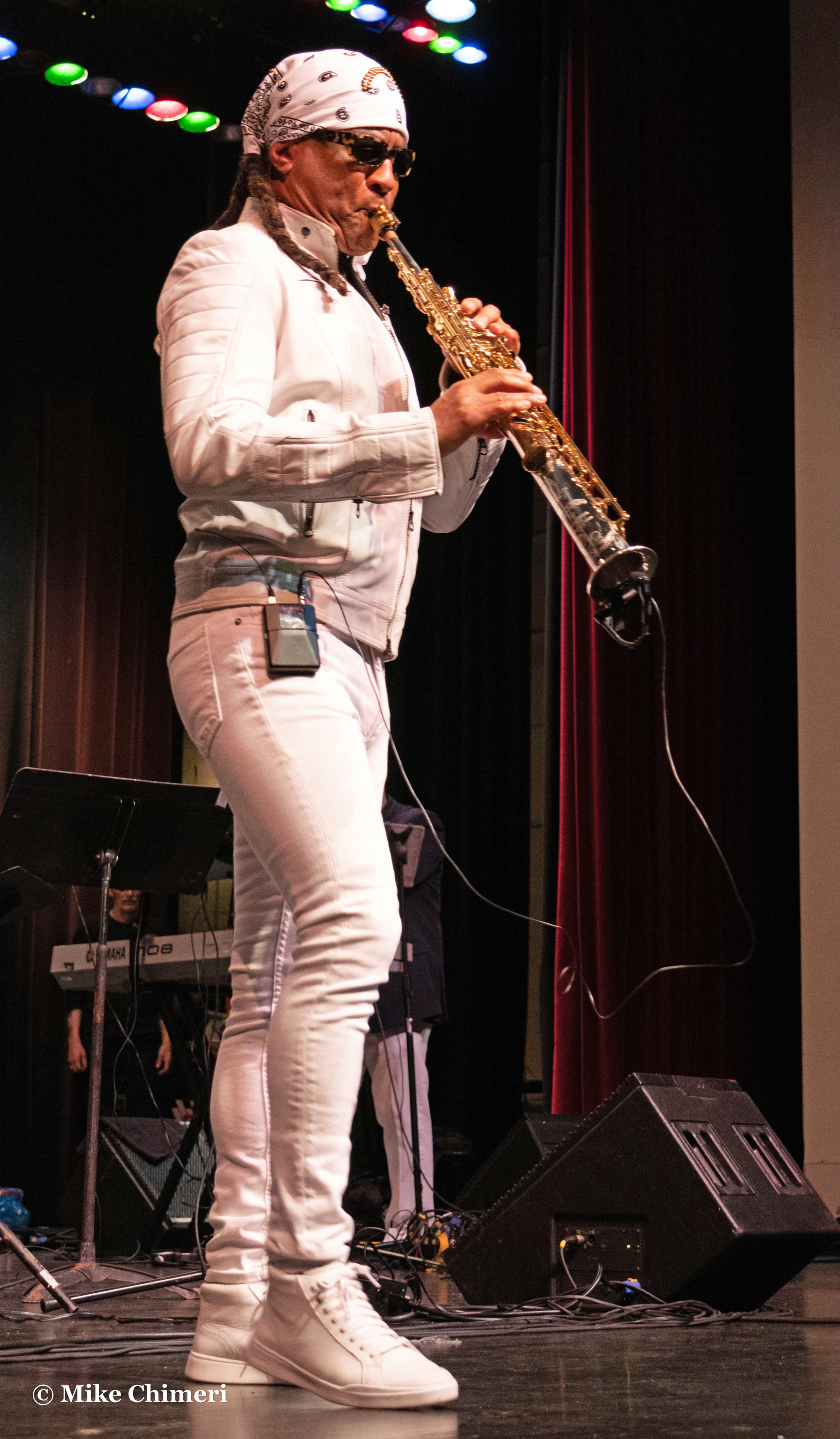
…and Nelson Rangell:

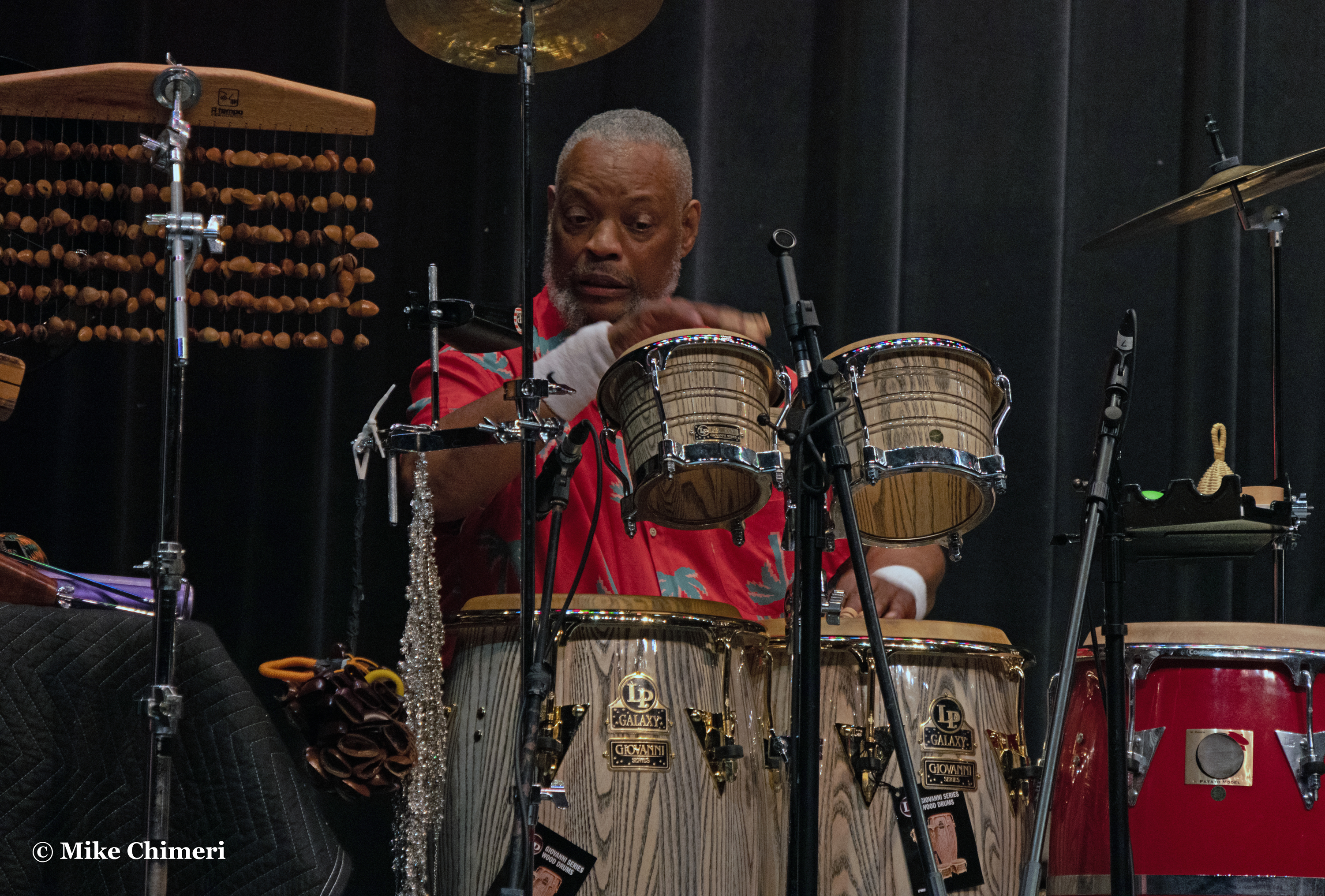
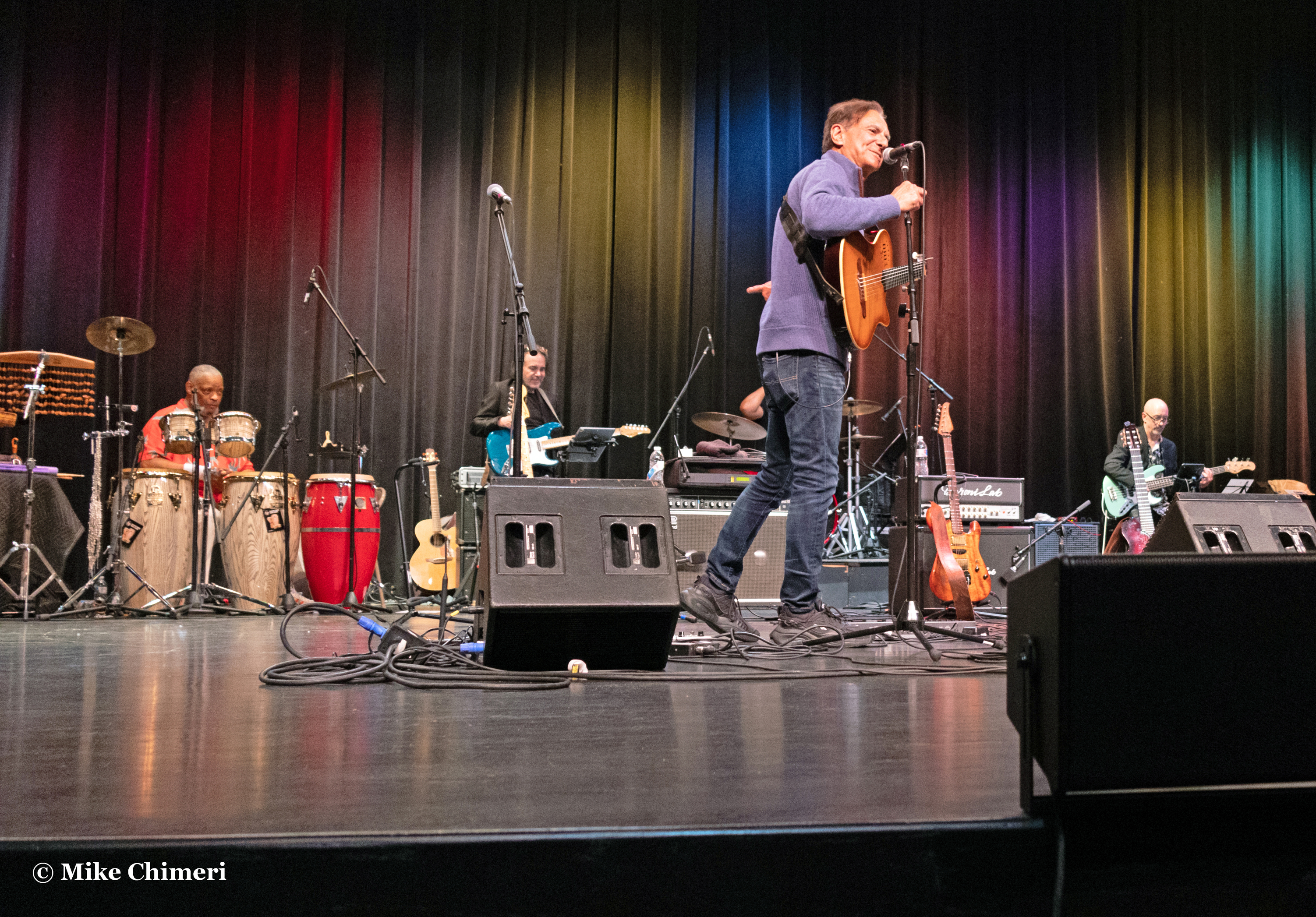
Jay’s house band had percussion by Steve Scales:
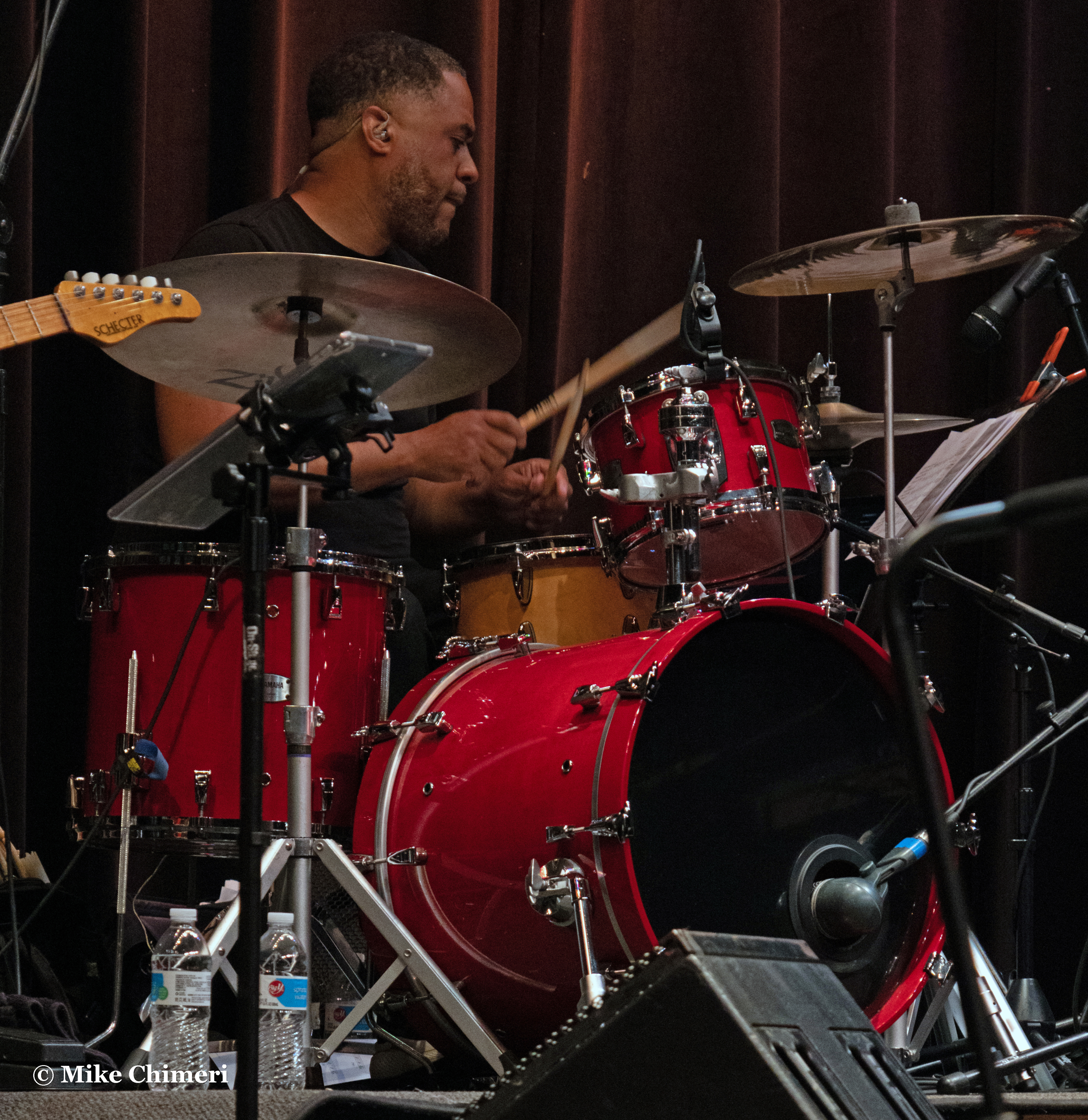
Trever Somerville on drums:
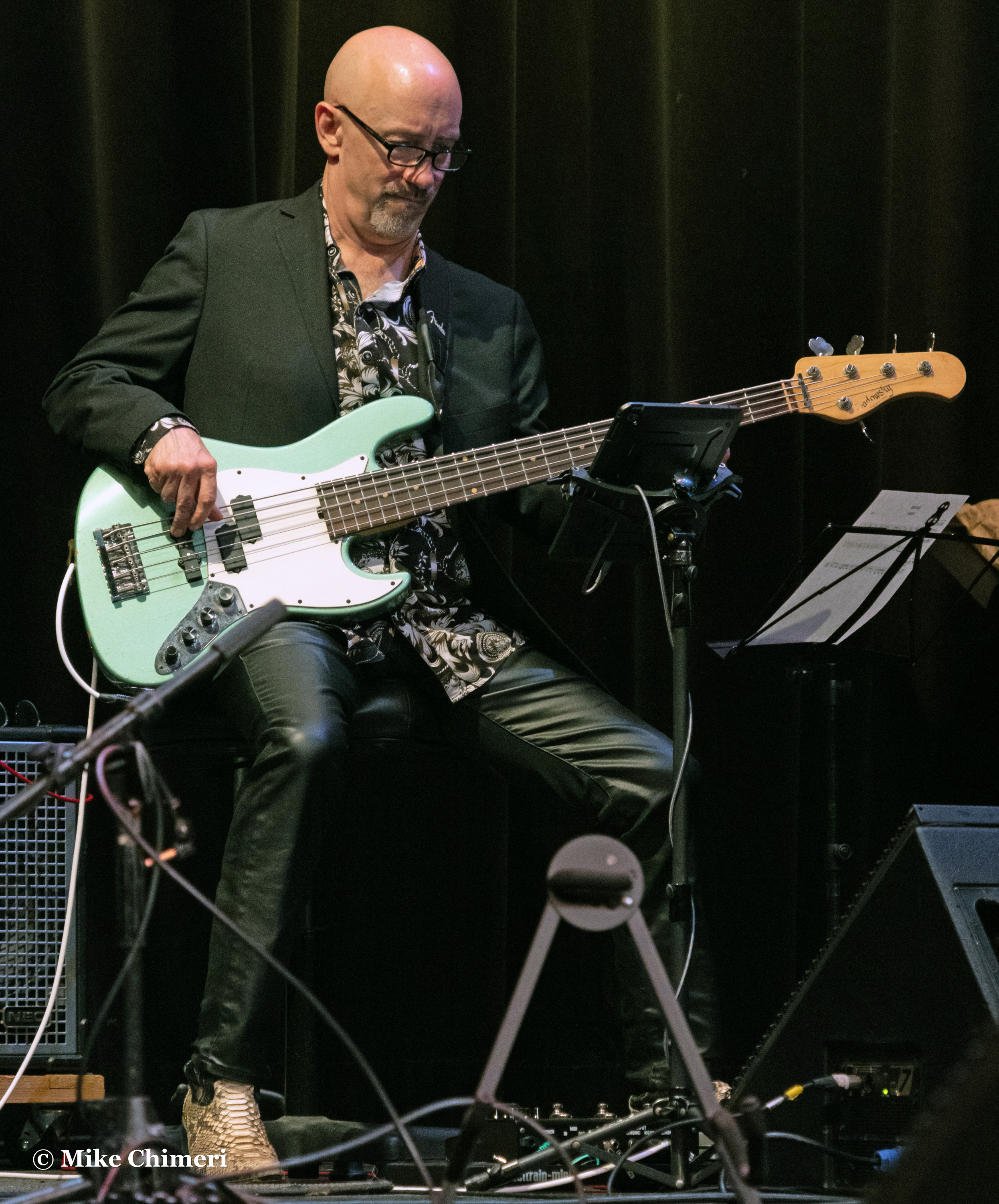
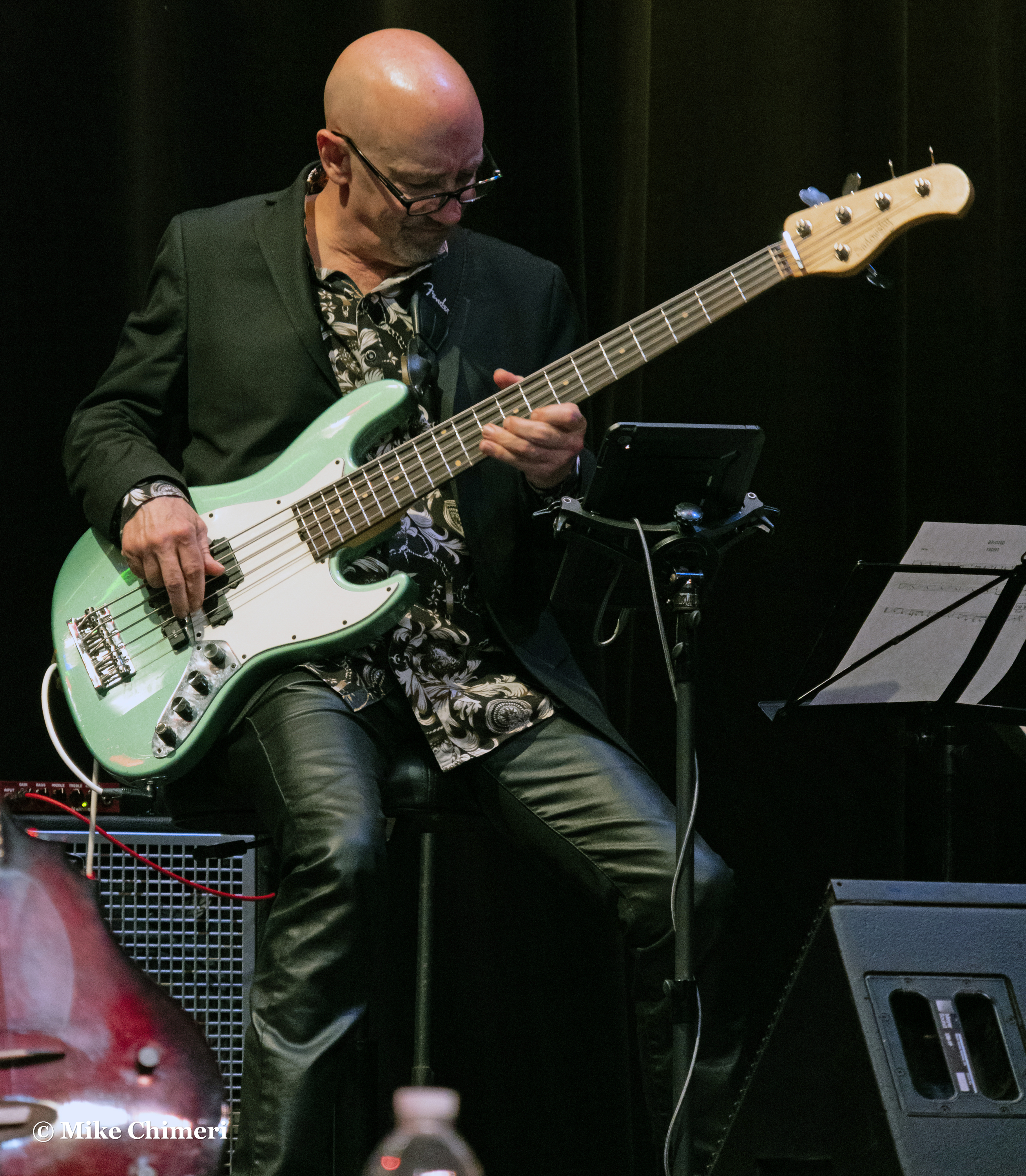
Dave Anderson on bass:
Andy Abel on guitar:

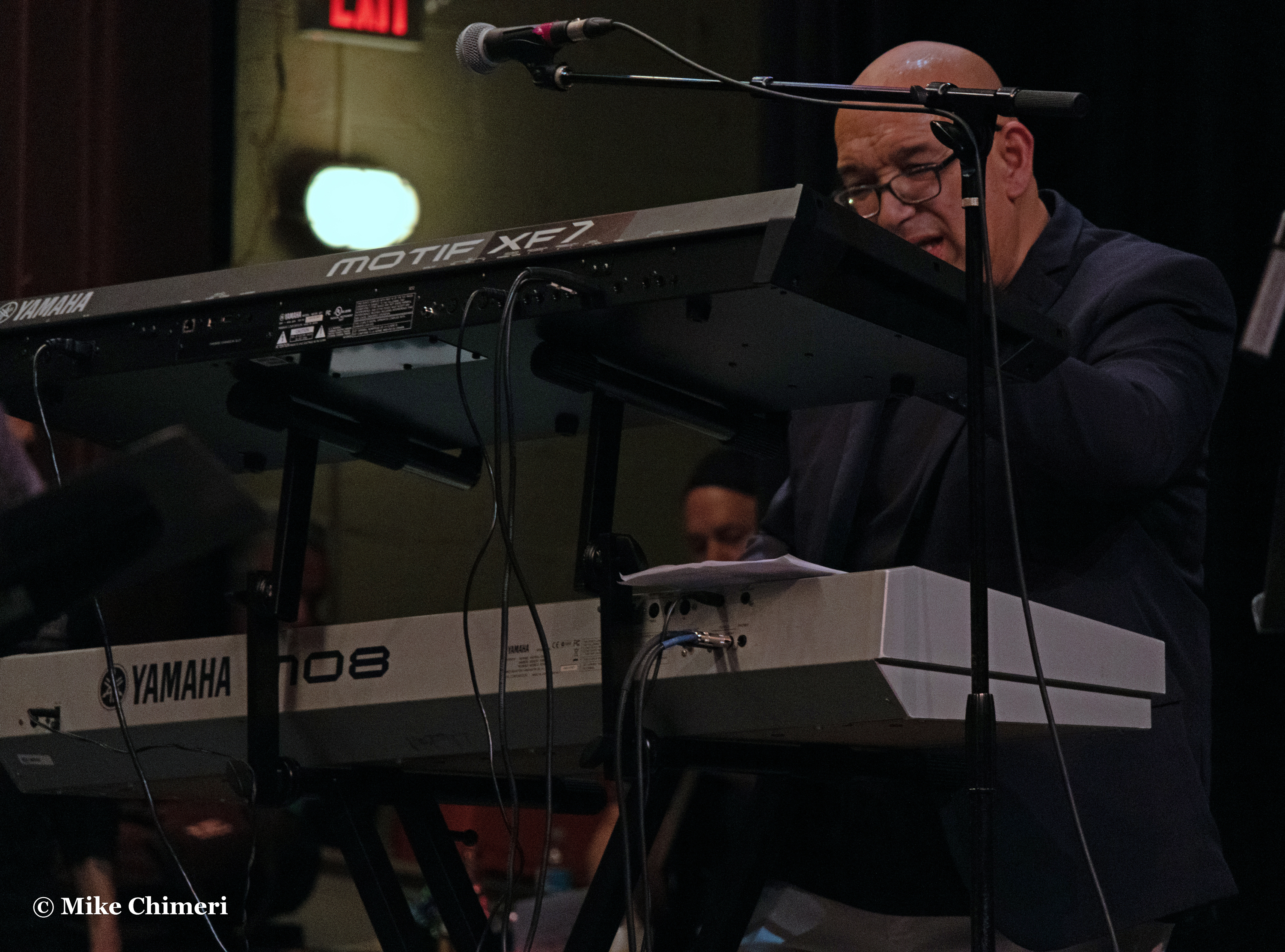
And directing it all, Jay Rowe on keyboards:
(Updated with videos on 5/31. The soundcheck was part of the original post.)
SET LIST
1. Every Woman Every Man (Jay Rowe)
Originally heard on: Smooth Ride (2016) (earlier version of this post incorrectly credited song to Groove Reflections)
Featured musician: Jay Rowe (keyboards)
2. Midnight Dance (Jay Rowe)
Single
Featured musician: Jay Rowe (keyboards)
3. Ballerina (Special EFX)
Originally heard on: Just Like Magic (1990)
Featured musician: Chieli Minucci (electric guitar)
4. George Can’t Dance (Special EFX)
Originally heard on: Catwalk (1994)
Featured musicians: Chieli Minucci (electric guitar), Nelson Rangell (alto sax)
5. Gratitude (Nelson Rangell)
New and unrecorded (10/5/23 UPDATE: It has since been recorded and will debut as a single tomorrow.)
Featured musicians: Nelson Rangell (alto sax), Chieli Minucci (acoustic guitar)
6. Smokin’ Joe (Nelson Rangell)
New and unrecorded; tribute to Joe Sample
Featured musicians: Nelson Rangell (alto sax), Jay Rowe (keyboards)
7. Smooth Sensation (Ken Navarro)
Originally heard on: Smooth Sensation (1997)
Featured musician: Ken Navarro (acoustic guitar)
8. When We Dance (Ken Navarro)
Originally heard on: Into the Light (2020)
Featured musician: Ken Navarro (acoustic guitar)
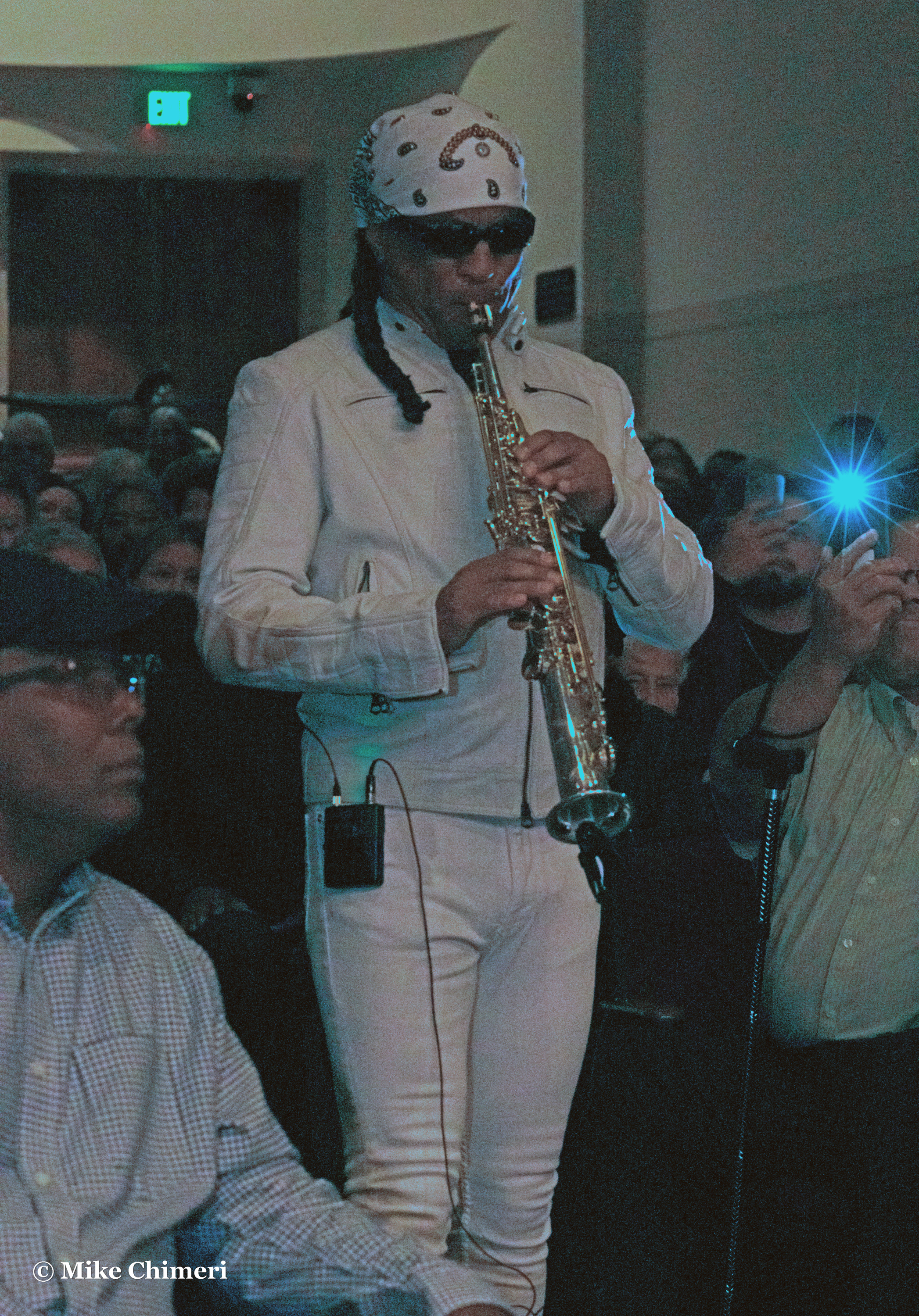
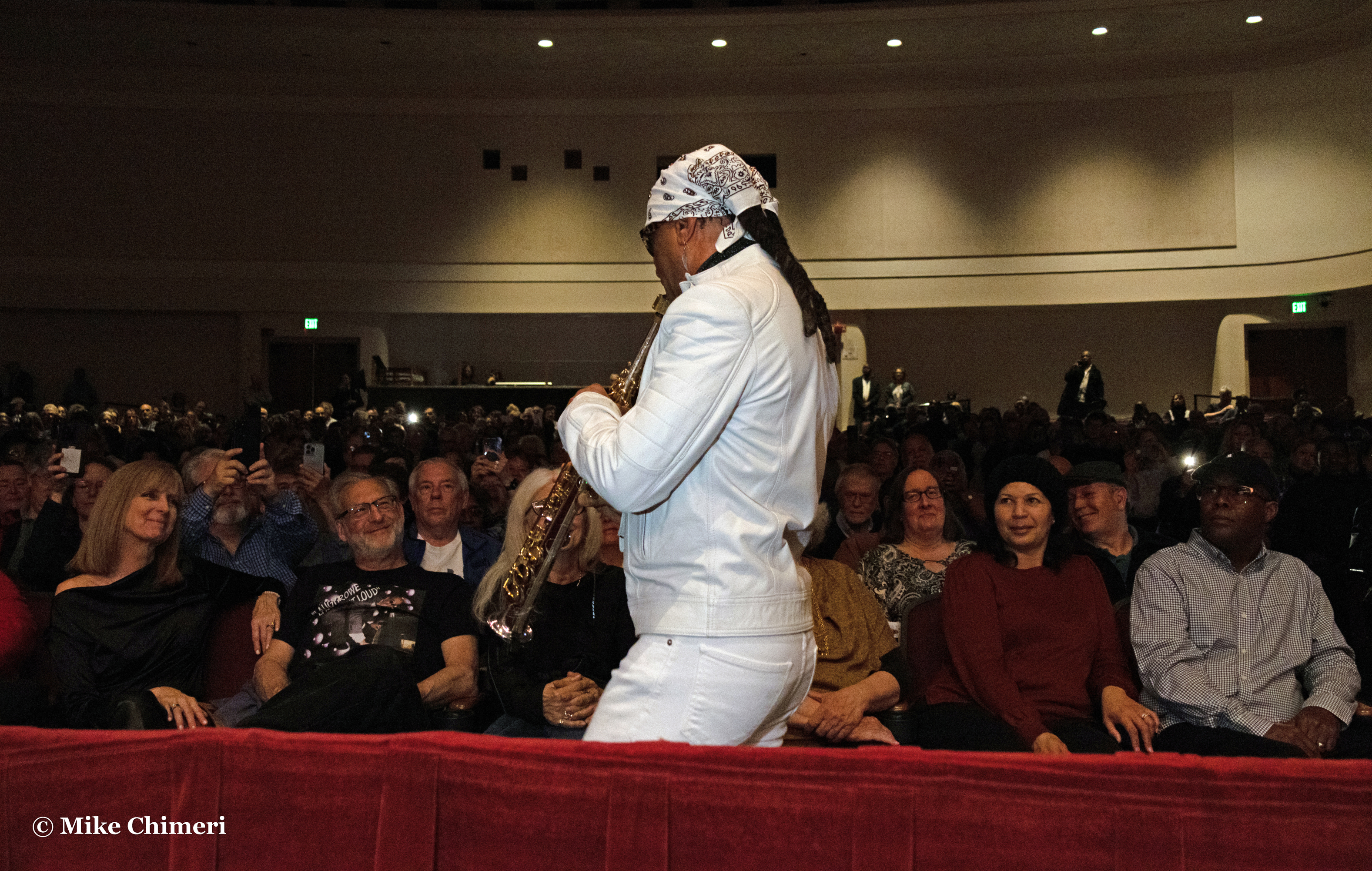
9. The Lift (Marion Meadows) (started in audience)
Originally heard on: Body Rhythm (1995)
Featured musician: Marion Meadows (soprano sax)
10. My Cherie Amour (Marion Meadows; Stevie Wonder cover)
Originally heard on: Body Rhythm (1995)
Featured musicians: Marion Meadows (soprano sax), Jay Rowe (keyboards)
11. Daybreak (Special EFX)
Originally heard on: Global Village (1992)
Featured musicians: Chieli Minucci (acoustic/electric guitars), Jay Rowe (keyboards), Dave Anderson (bass)
12. Sonora (Nelson Rangell; Hampton Hawes cover)
Originally heard on: Destiny (1995); My American Songbook, Vol. 1 (2005)
Featured musicians: Nelson Rangell (whistling/piccolo), Ken Navarro (acoustic guitar)
13. In the Sky Today (Ken Navarro)
Originally heard on: All the Way (2003)
Featured musicians: Ken Navarro (acoustic guitar), Nelson Rangell (alto sax), Steve Scales (percussion), Trever Somerville (drums)
14. In Memory of Elizabeth Reed (Special EFX; The Allman Brothers Band cover)
Originally heard on: Twenty Twenty 2 (2022)
Featured musicians: Chieli Minucci (electric guitar), Ken Navarro (electric guitar), Jay Rowe (keyboards)
Ken posted video of the soundcheck:
15. Marcosinho (Marion Meadows; Dave Valentin cover)
Originally heard on: Whisper (2013)
Featured musician: Marion Meadows (soprano sax)
16. Romantica (Marion Meadows) (ended in audience)
Originally heard on: Player’s Club (2004)
Featured musician: Marion Meadows (soprano sax)
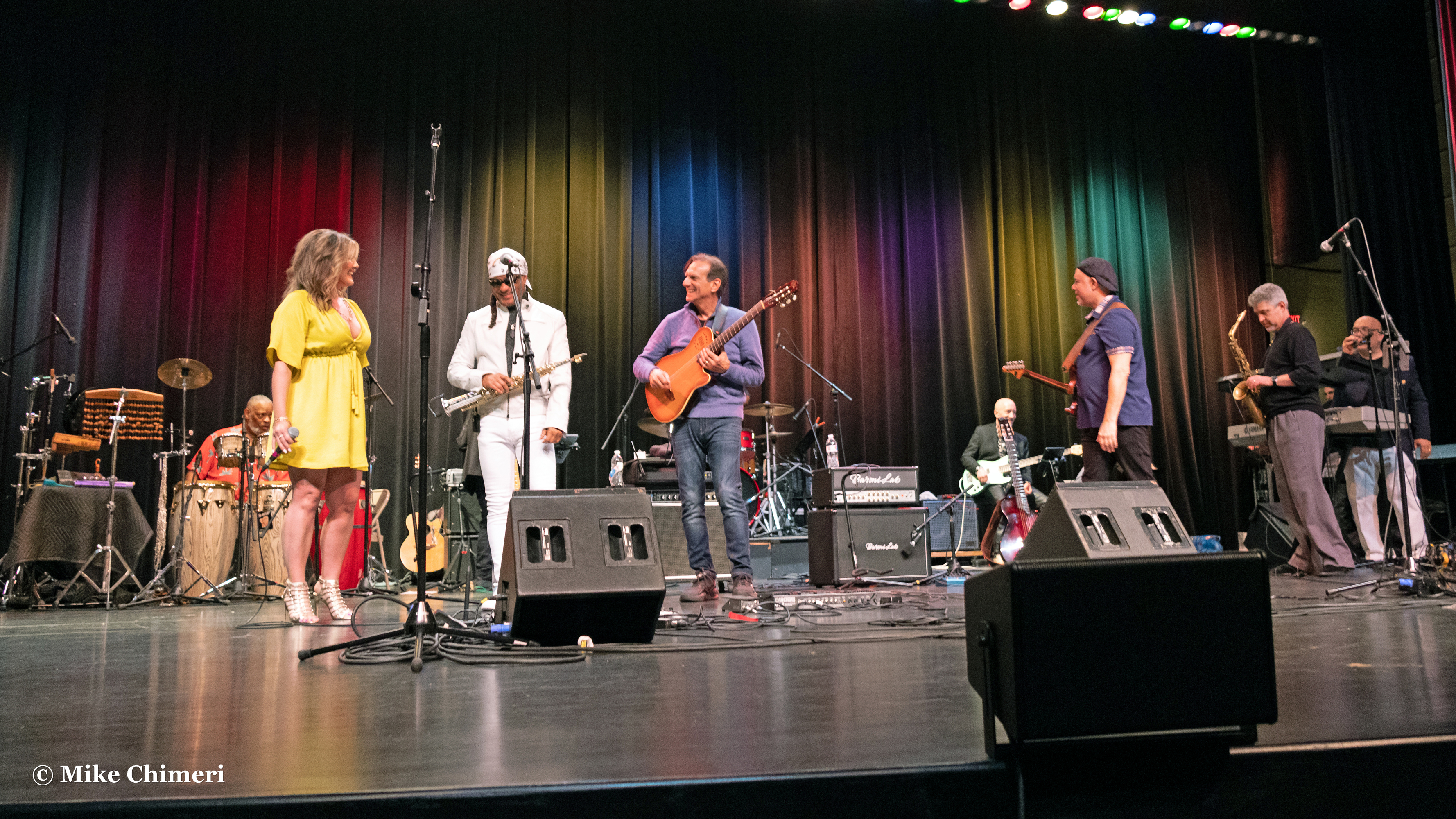
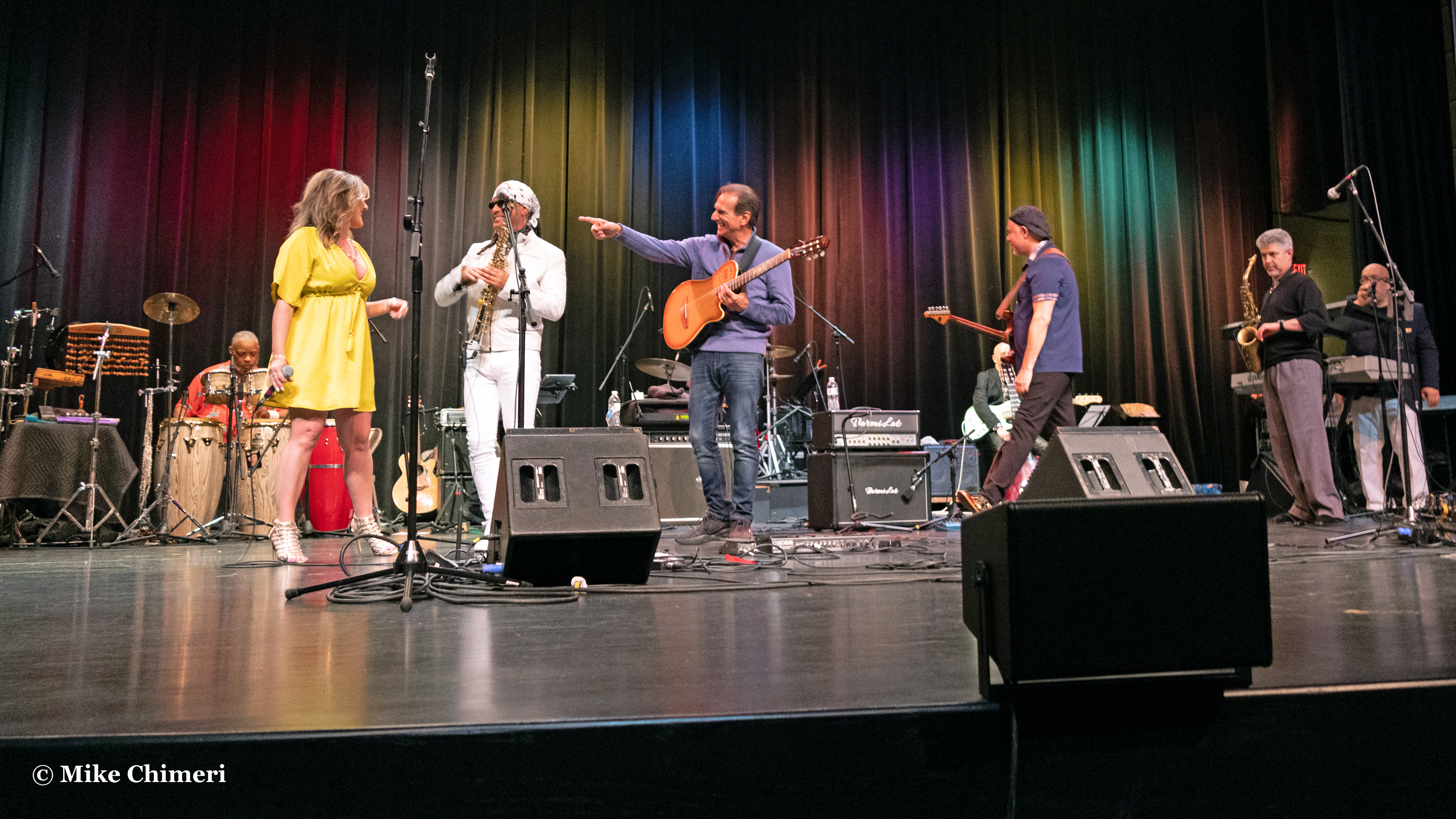
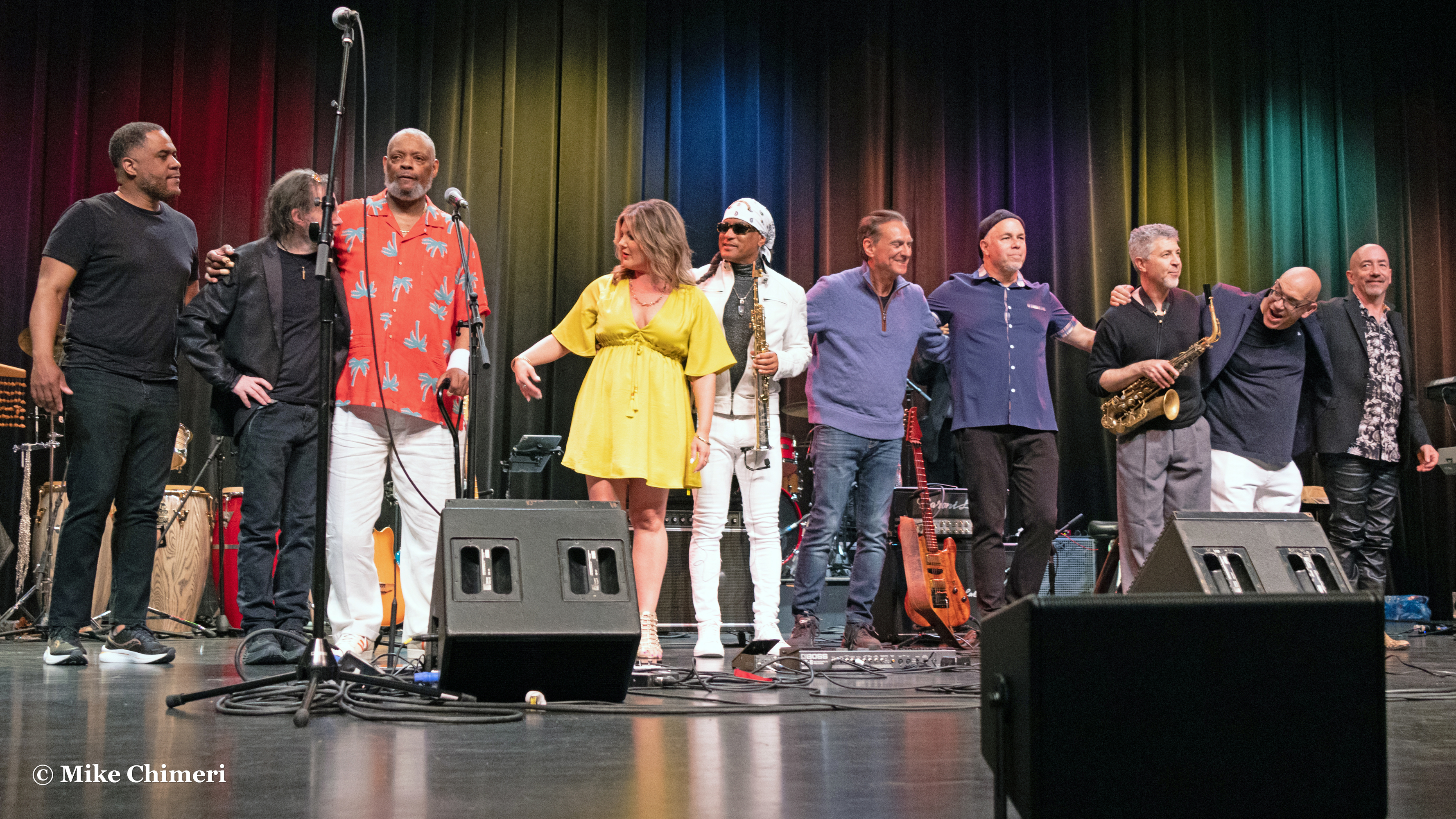
17 (Finale). What You Won’t Do for Love (Bobby Caldwell cover, tribute to the recently departed singer)
Featured musicians: Everyone, Carla Z (vocals)
Marion was part of Bobby’s live band.
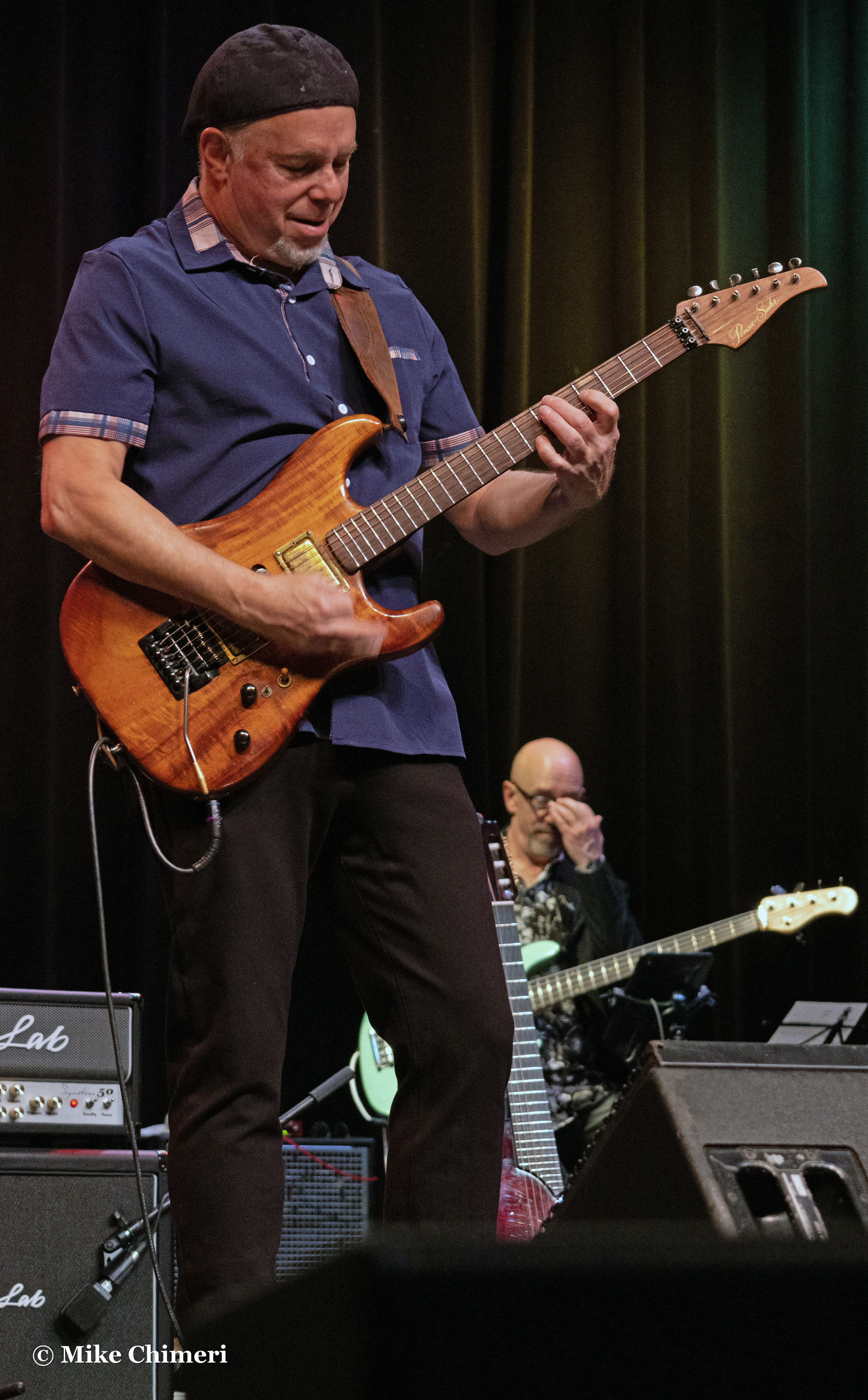
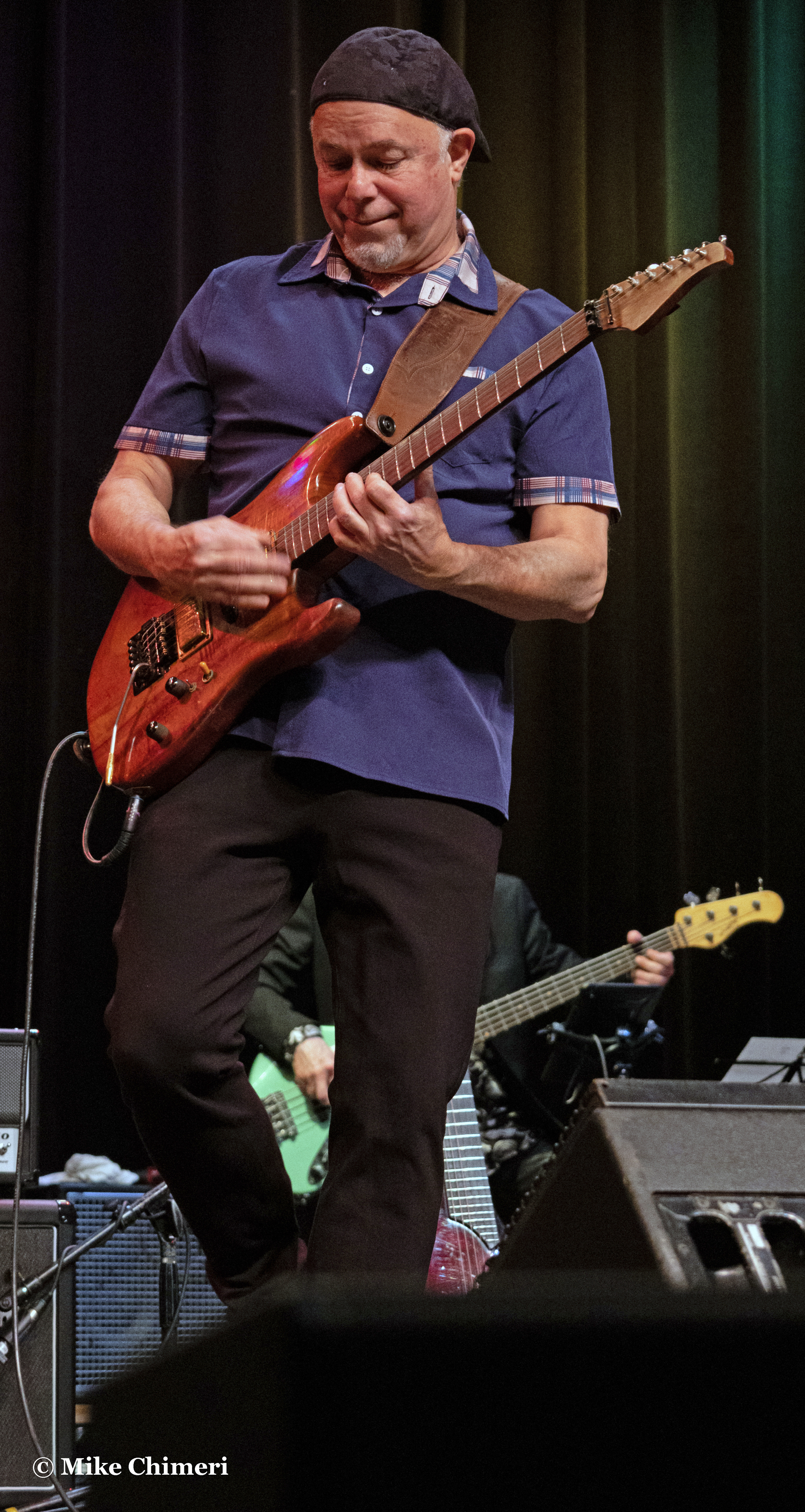
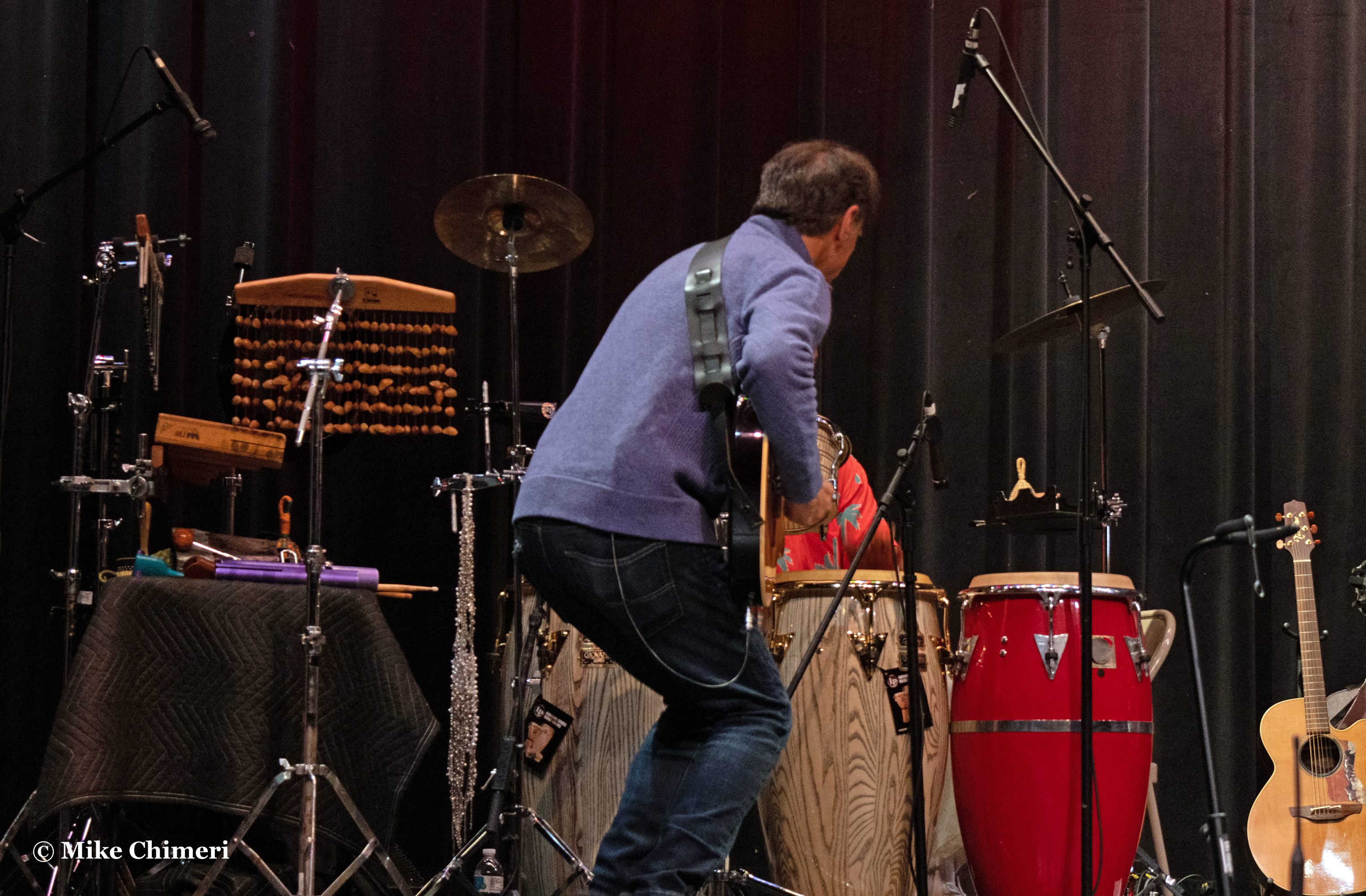
This part of the post is dedicated to photo galleries of the headliners. We start with Chieli Minucci on electric guitar:


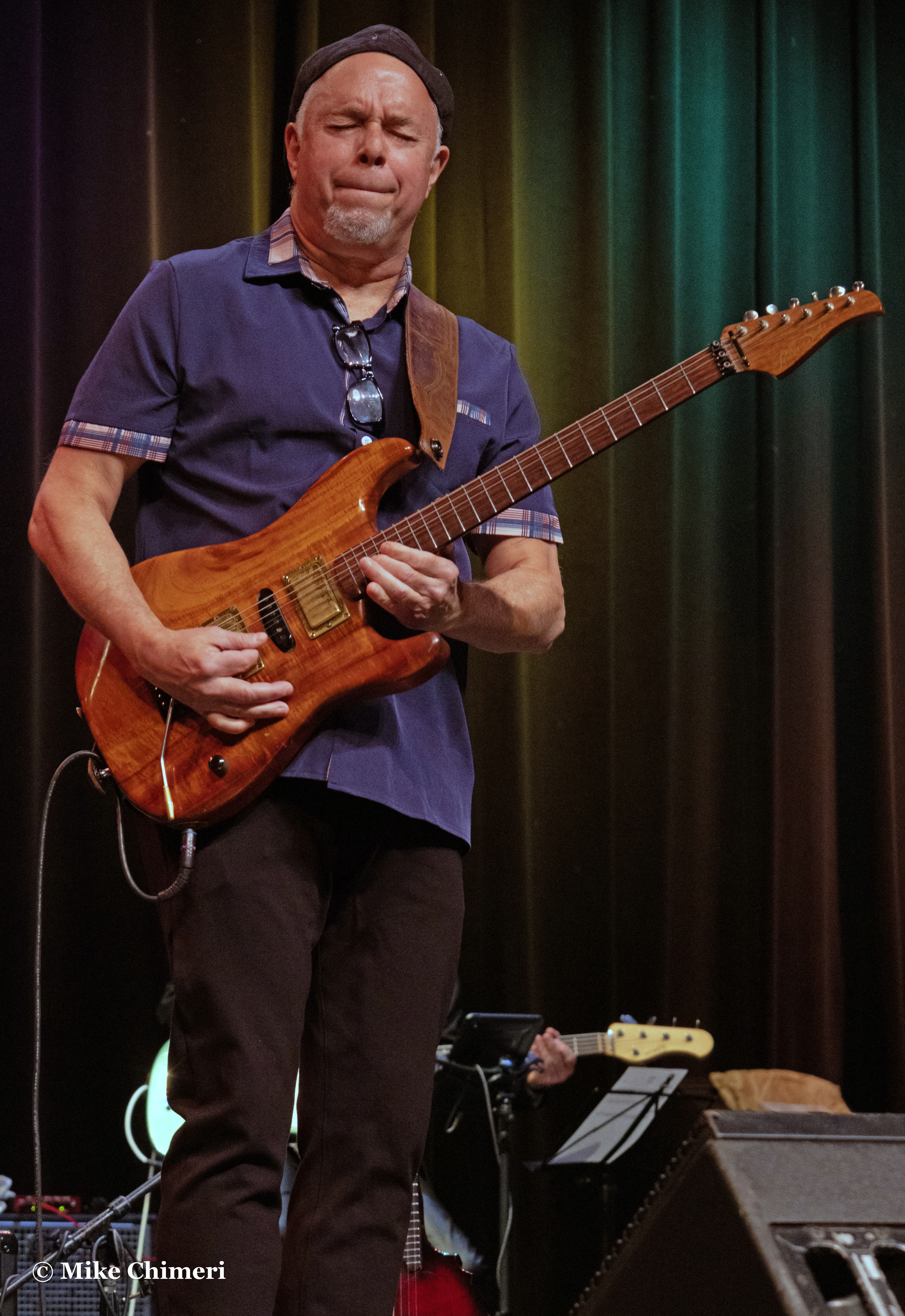
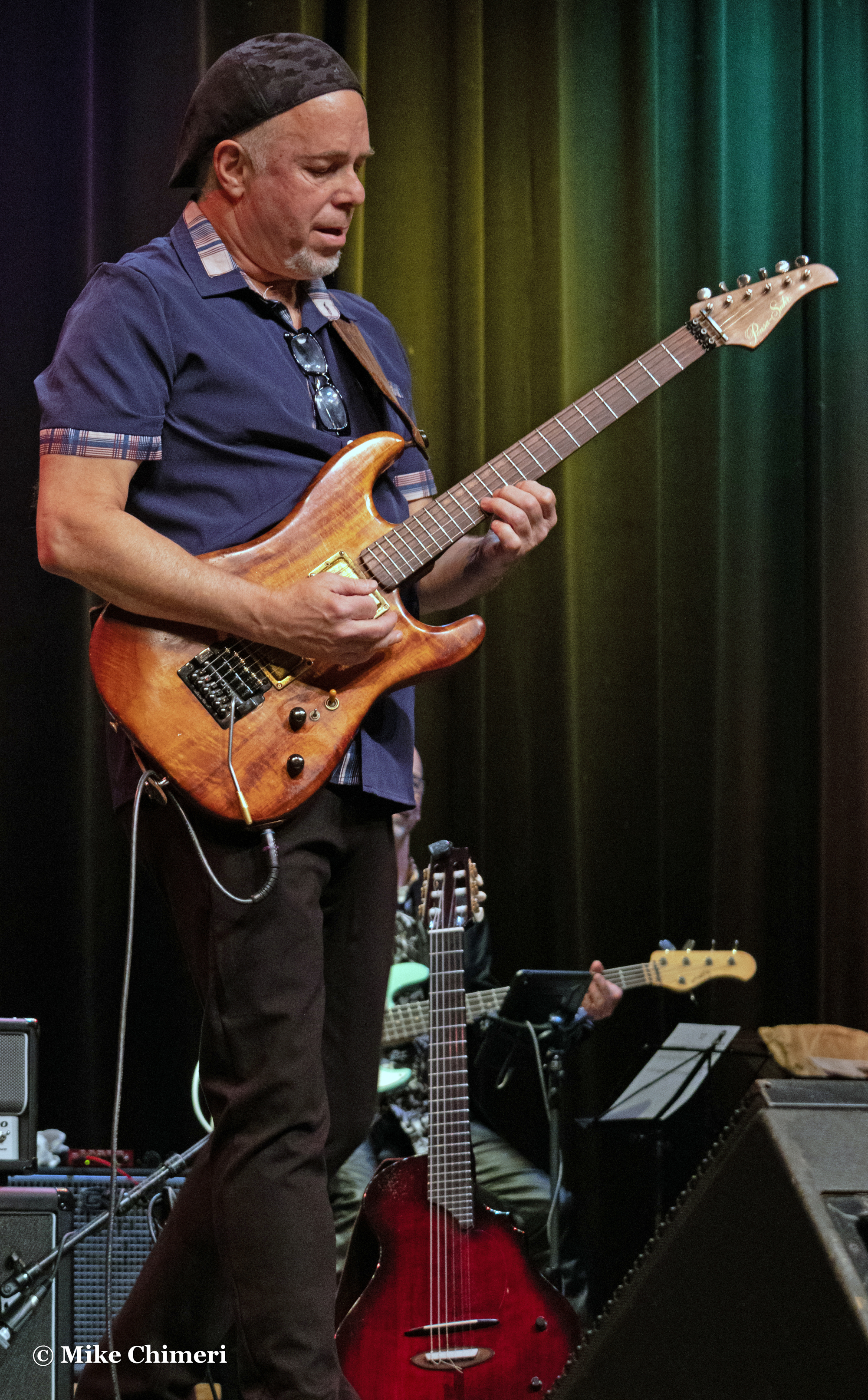
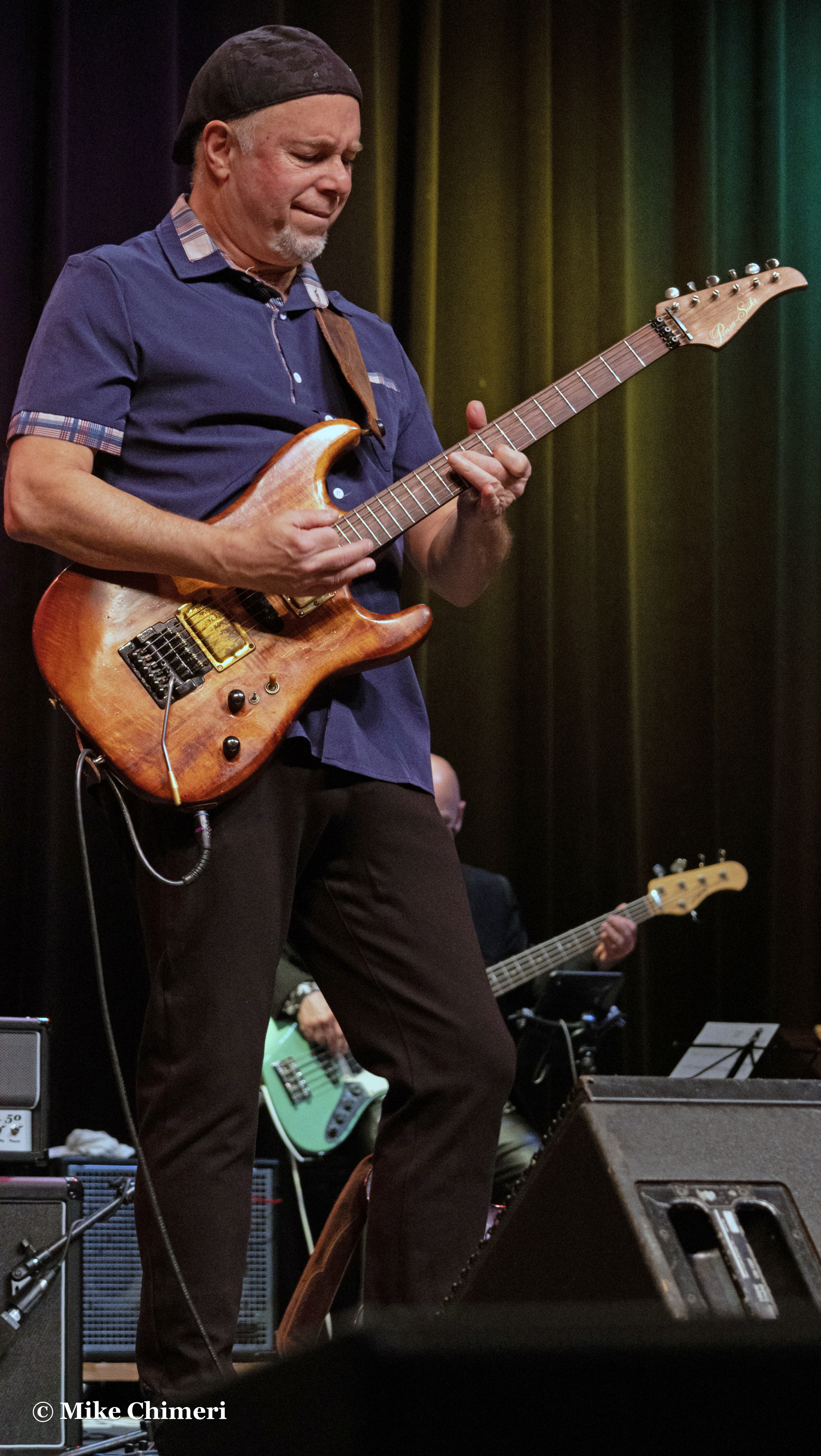

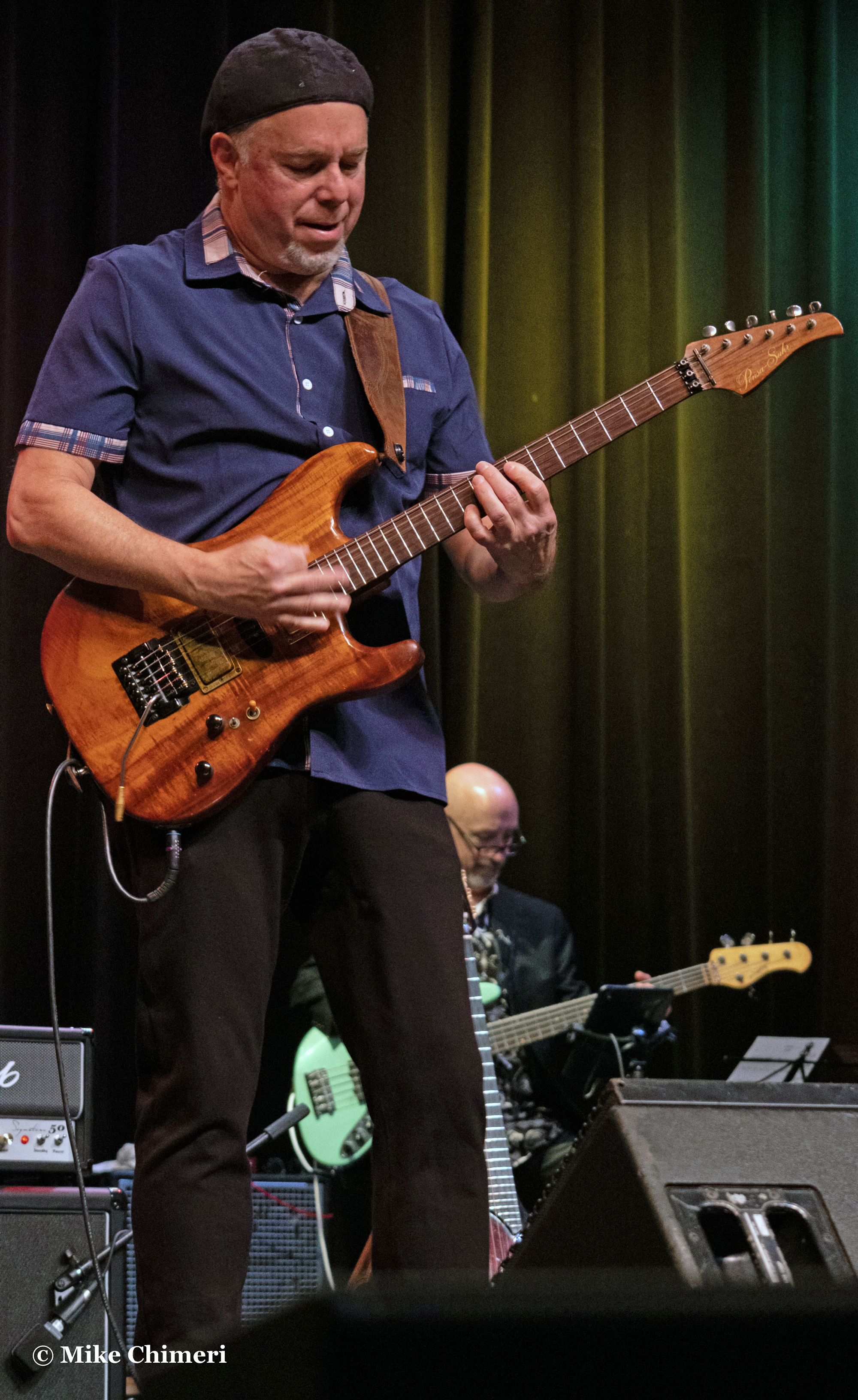
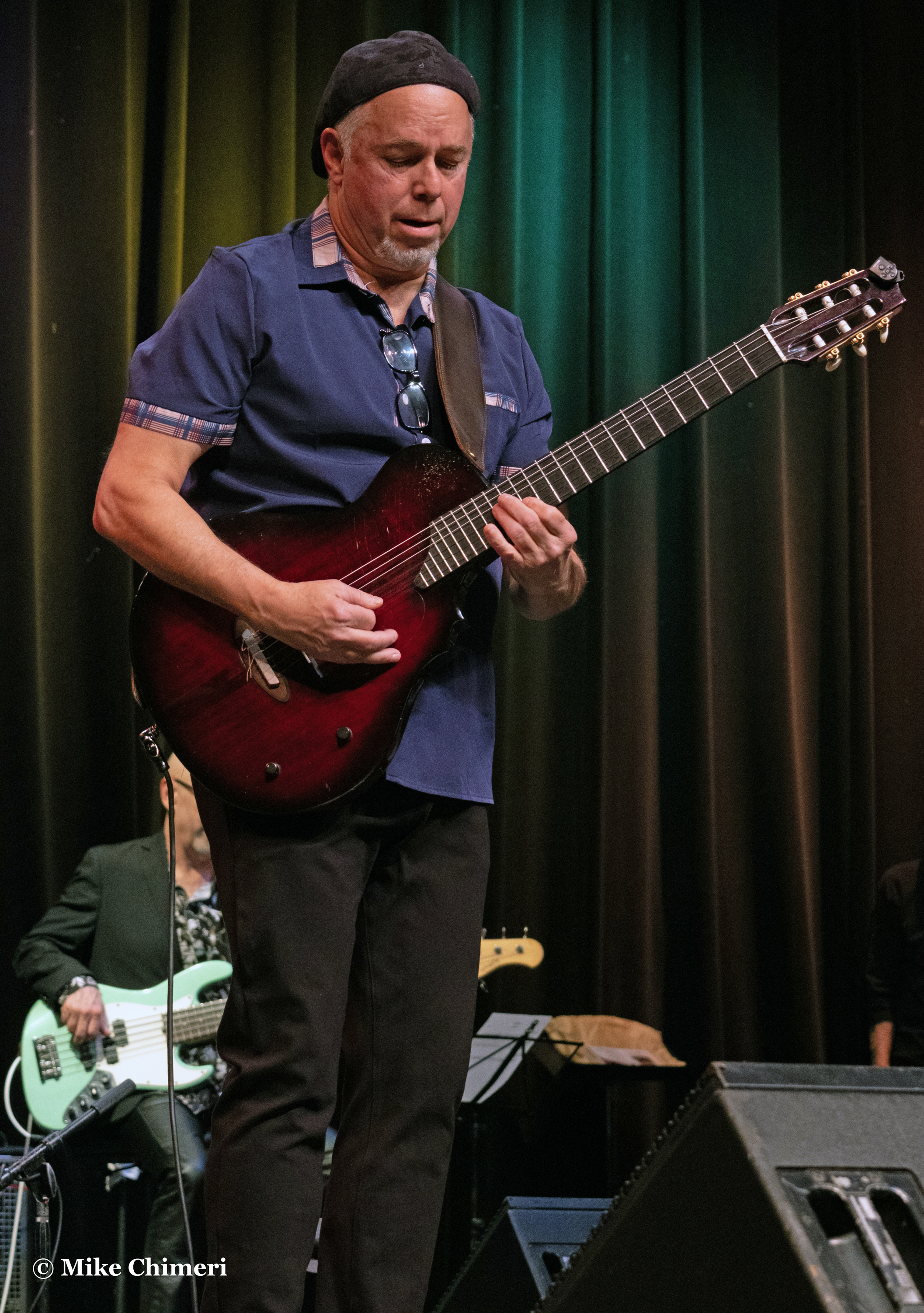
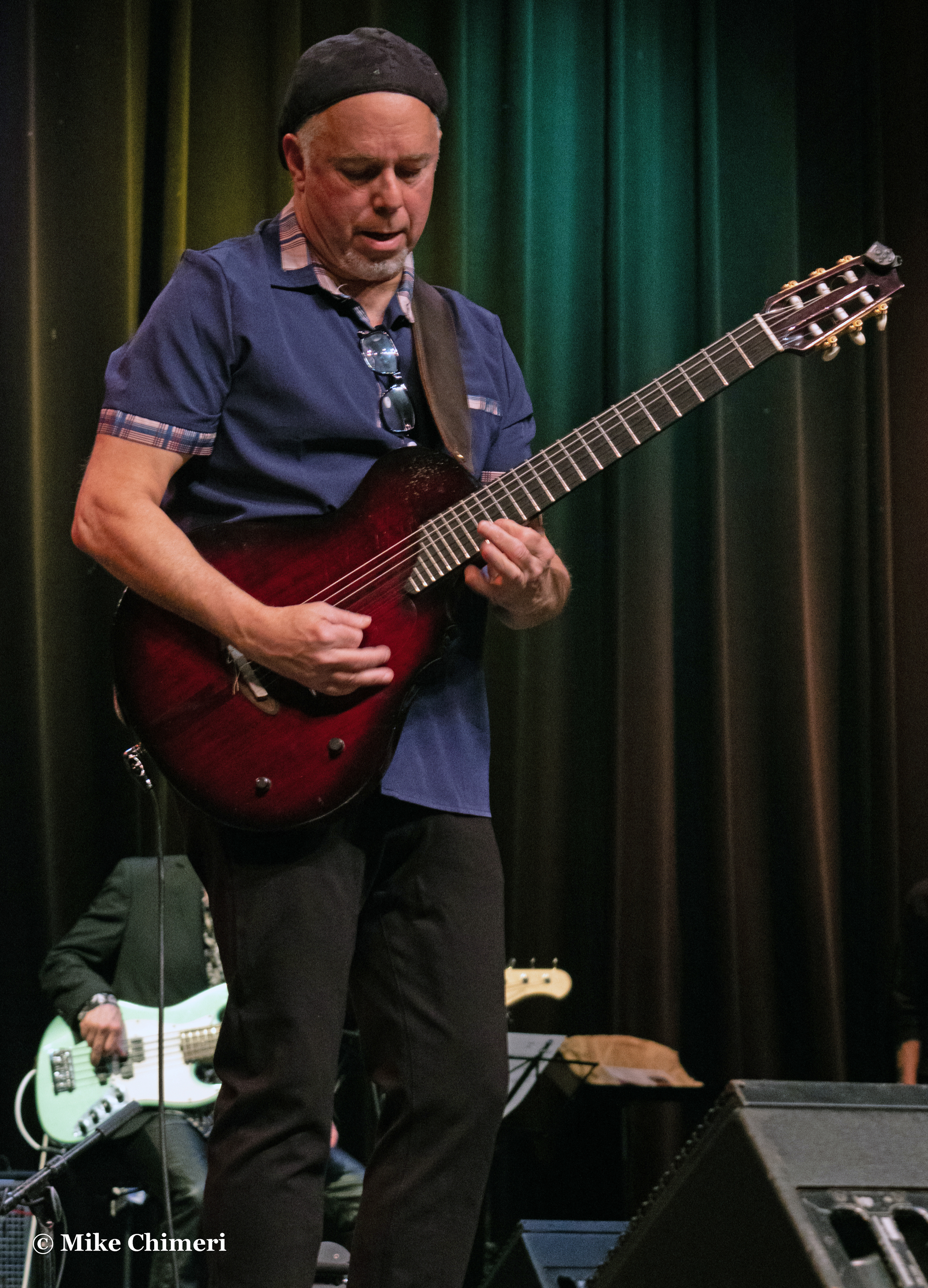
Chieli on acoustic guitar:


Ken Navarro on acoustic guitar:
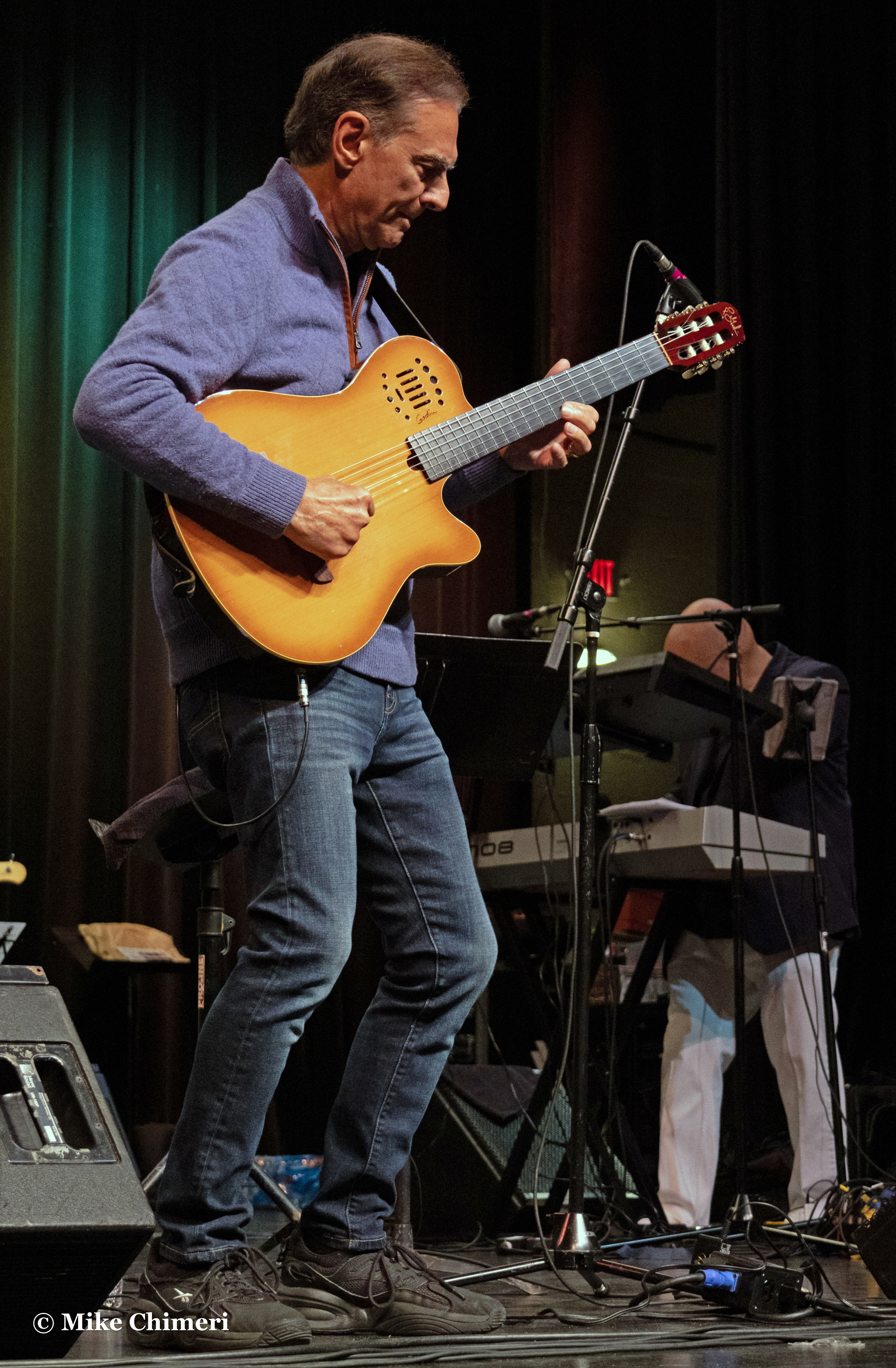
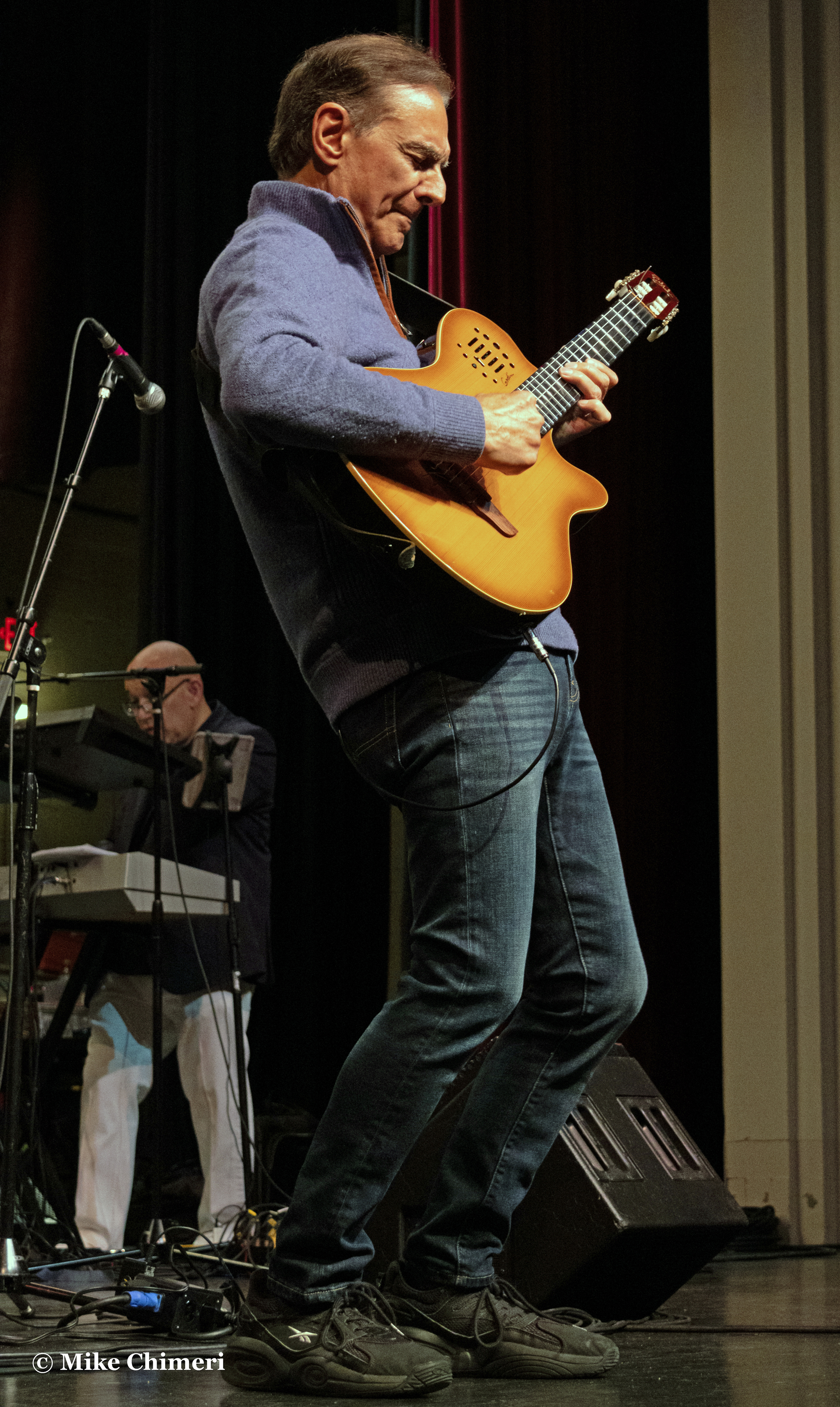

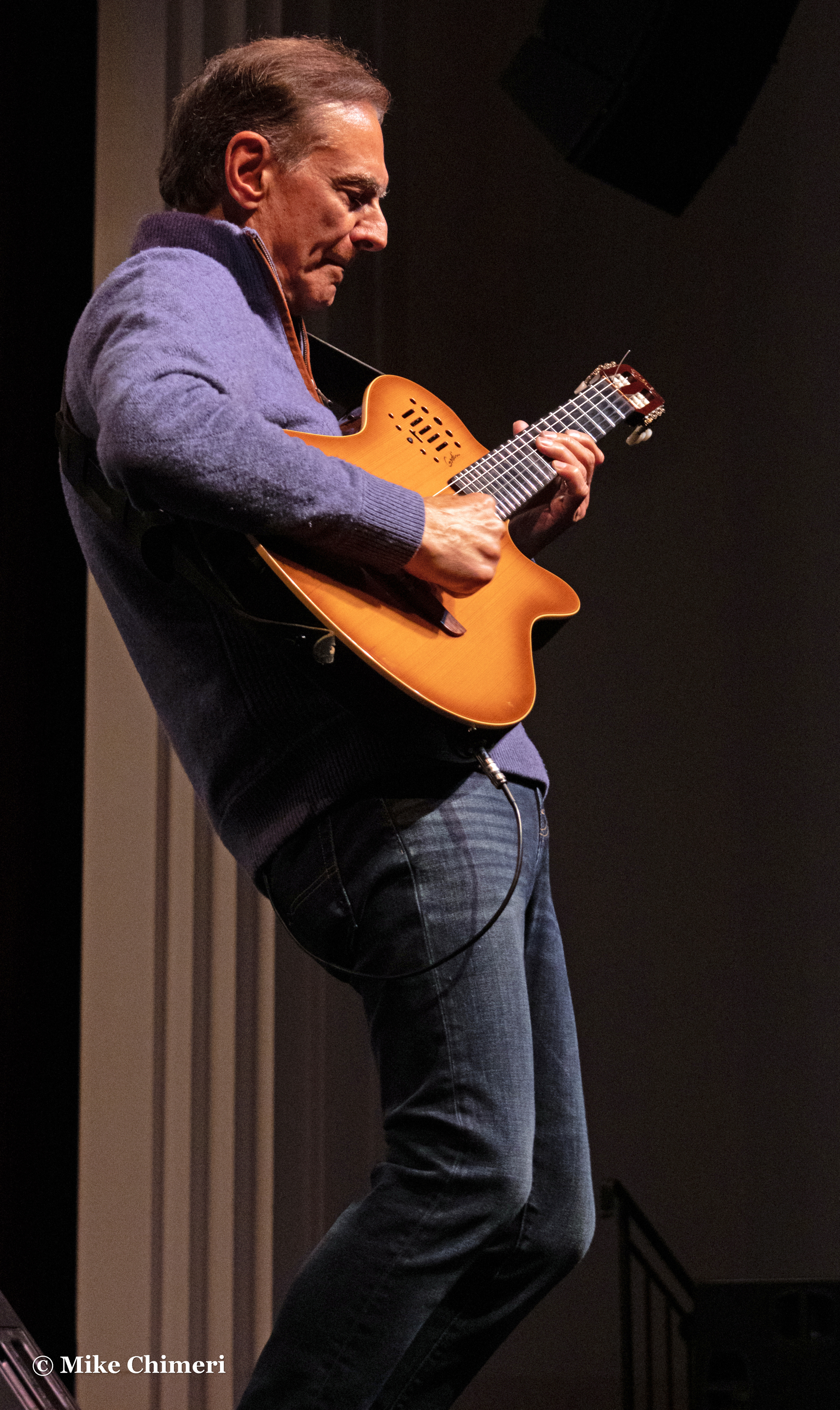


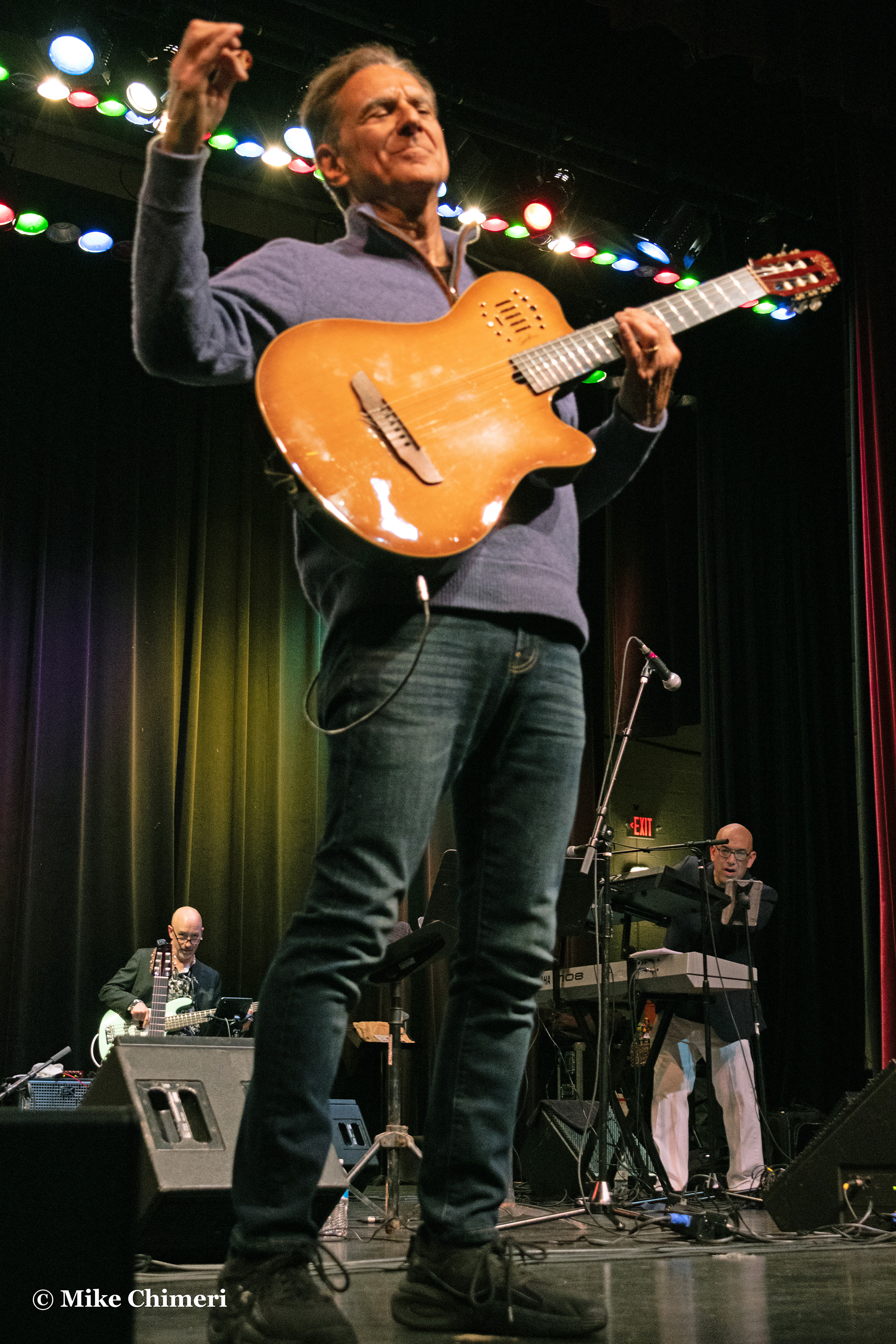
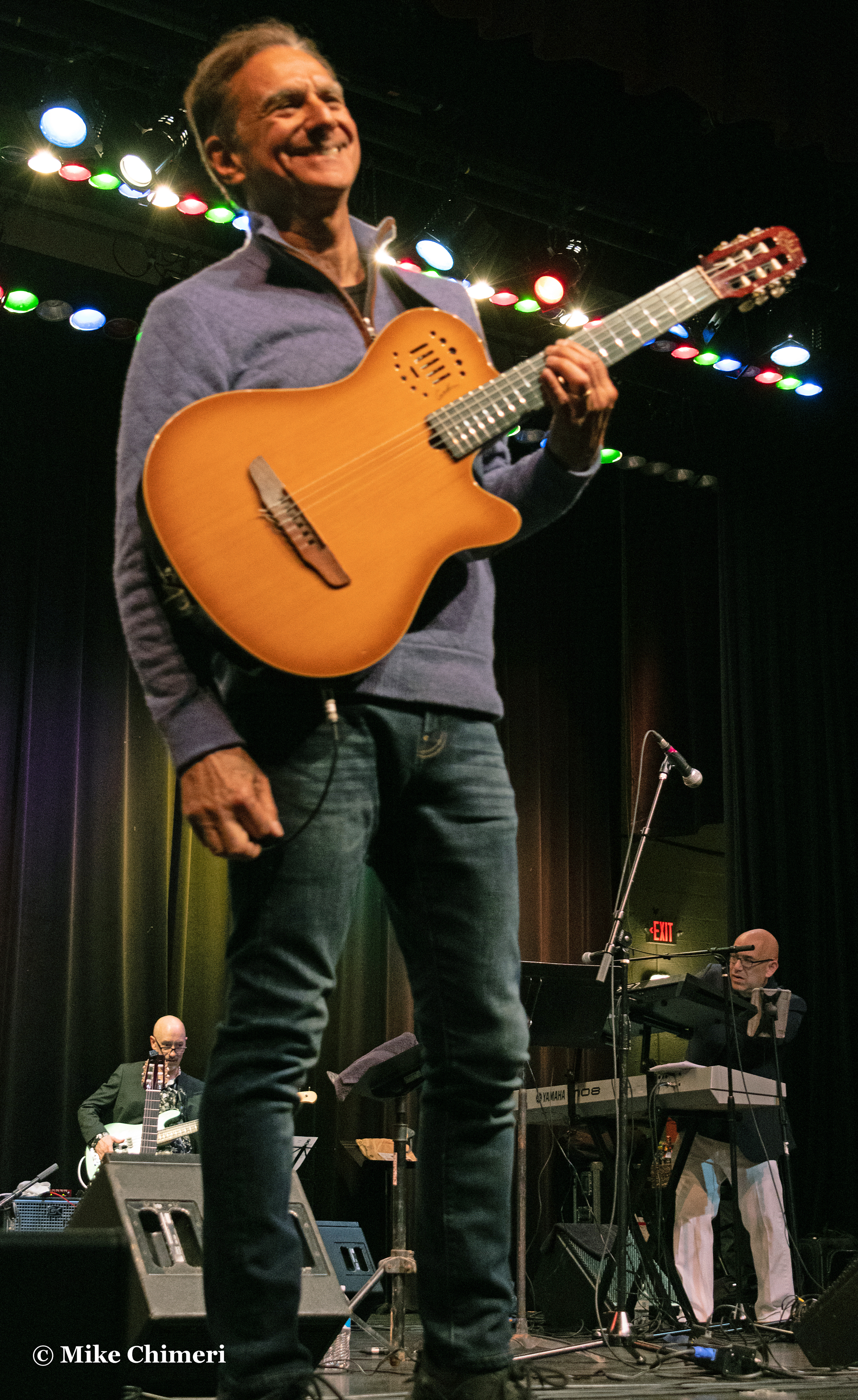

Ken on electric guitar for “In Memory of Elizabeth Reed”:

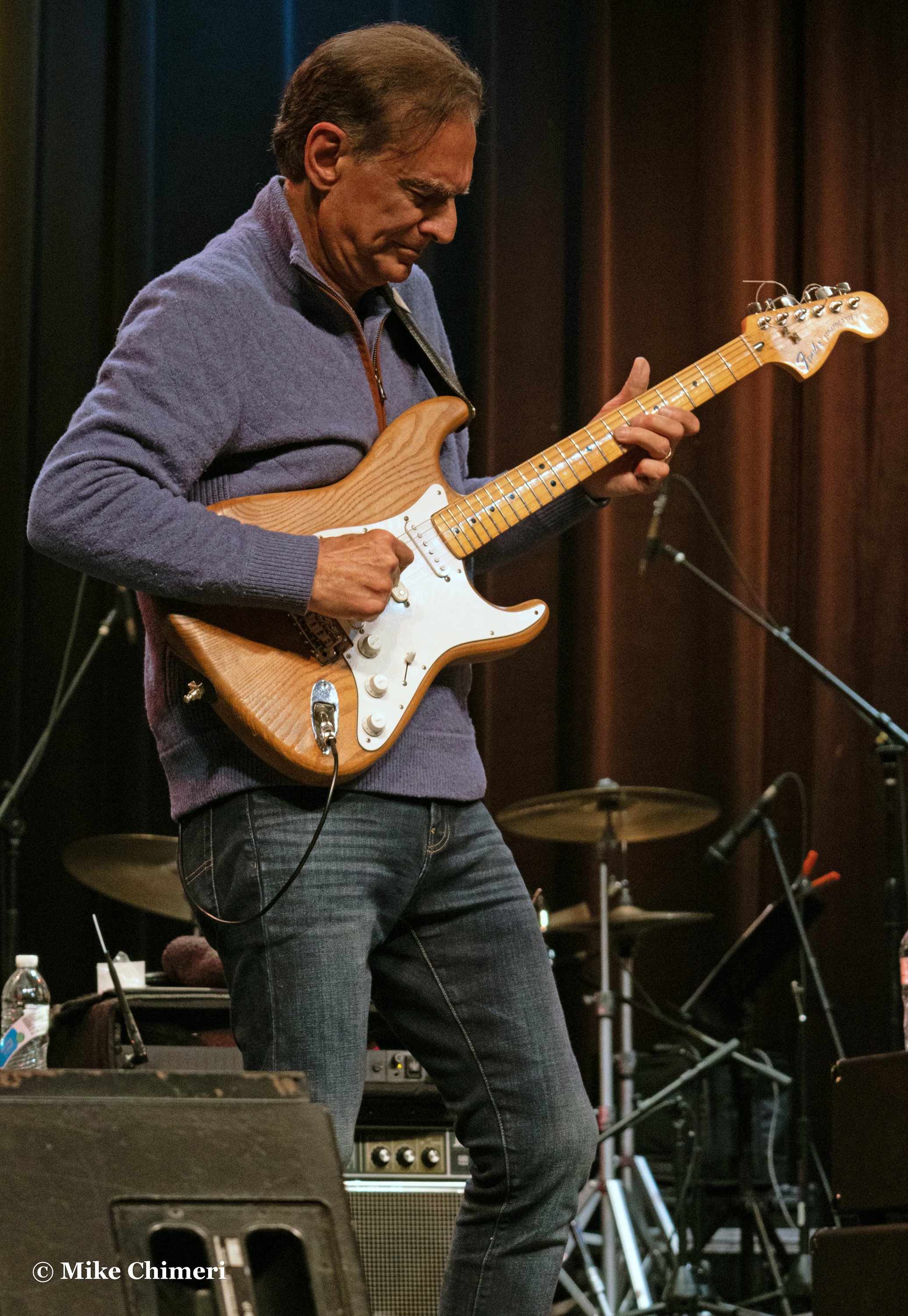

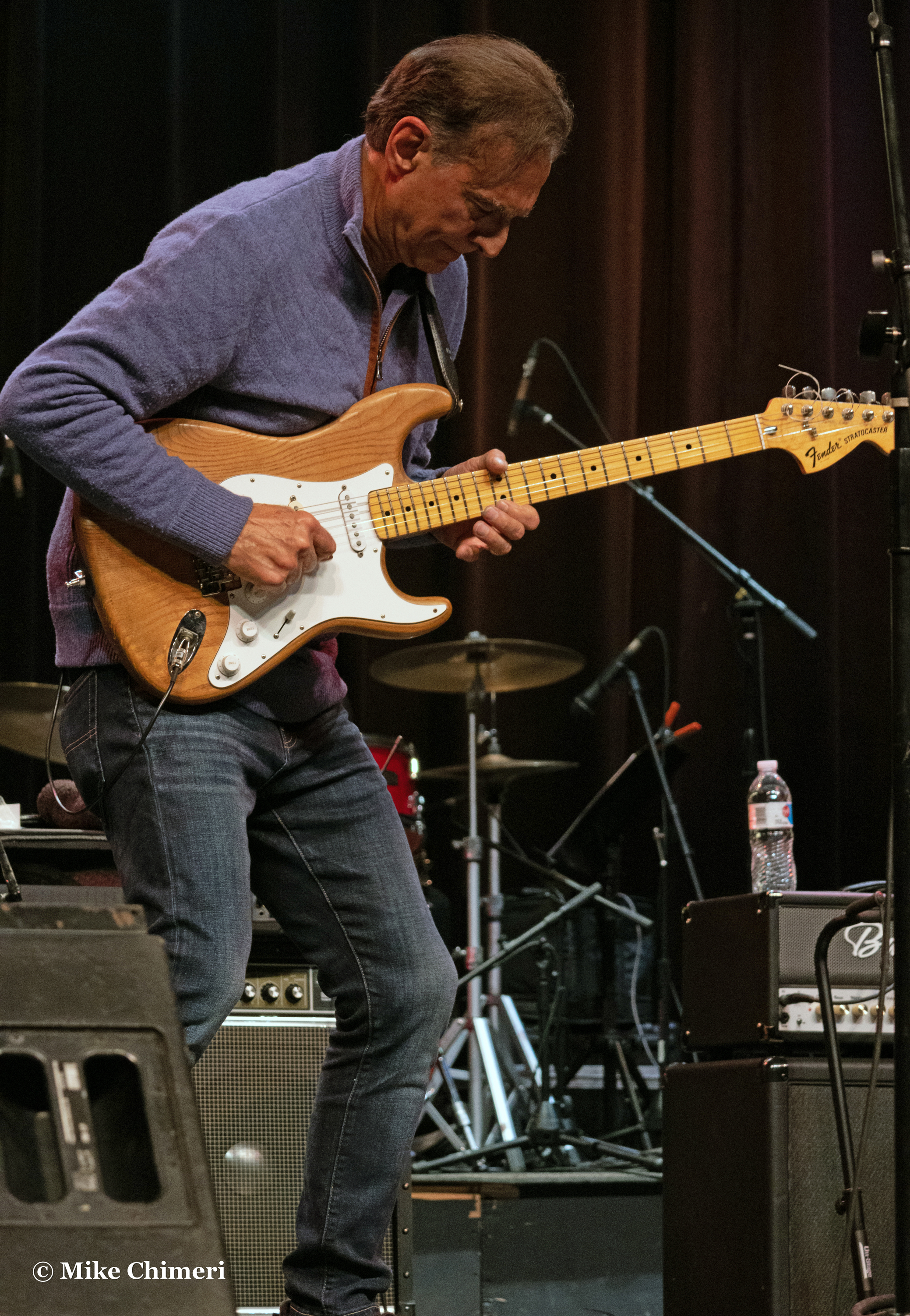

Ken interacting with the band on “In the Sky Today”:
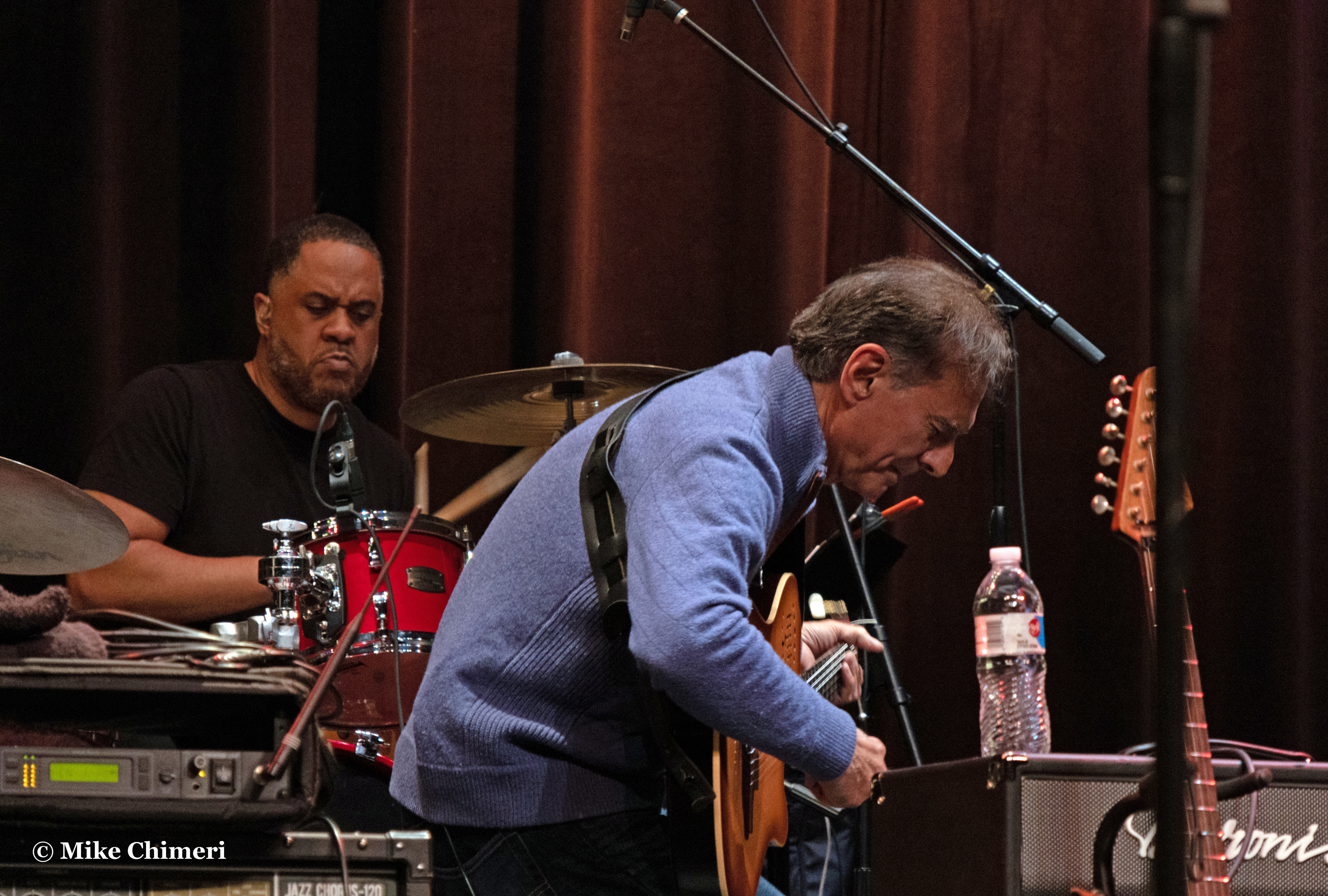



Marion Meadows starting in the audience for “The Lift”:
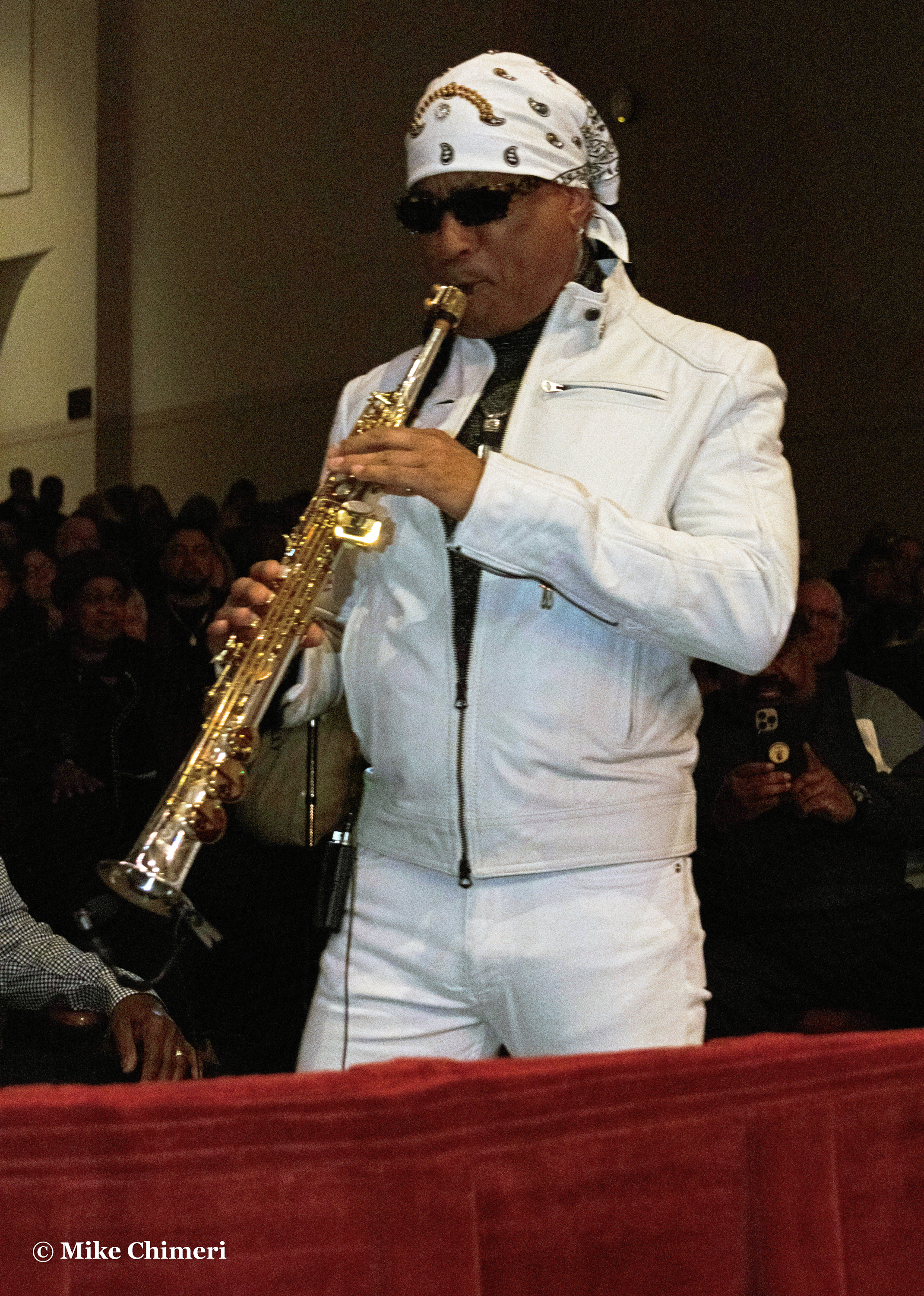


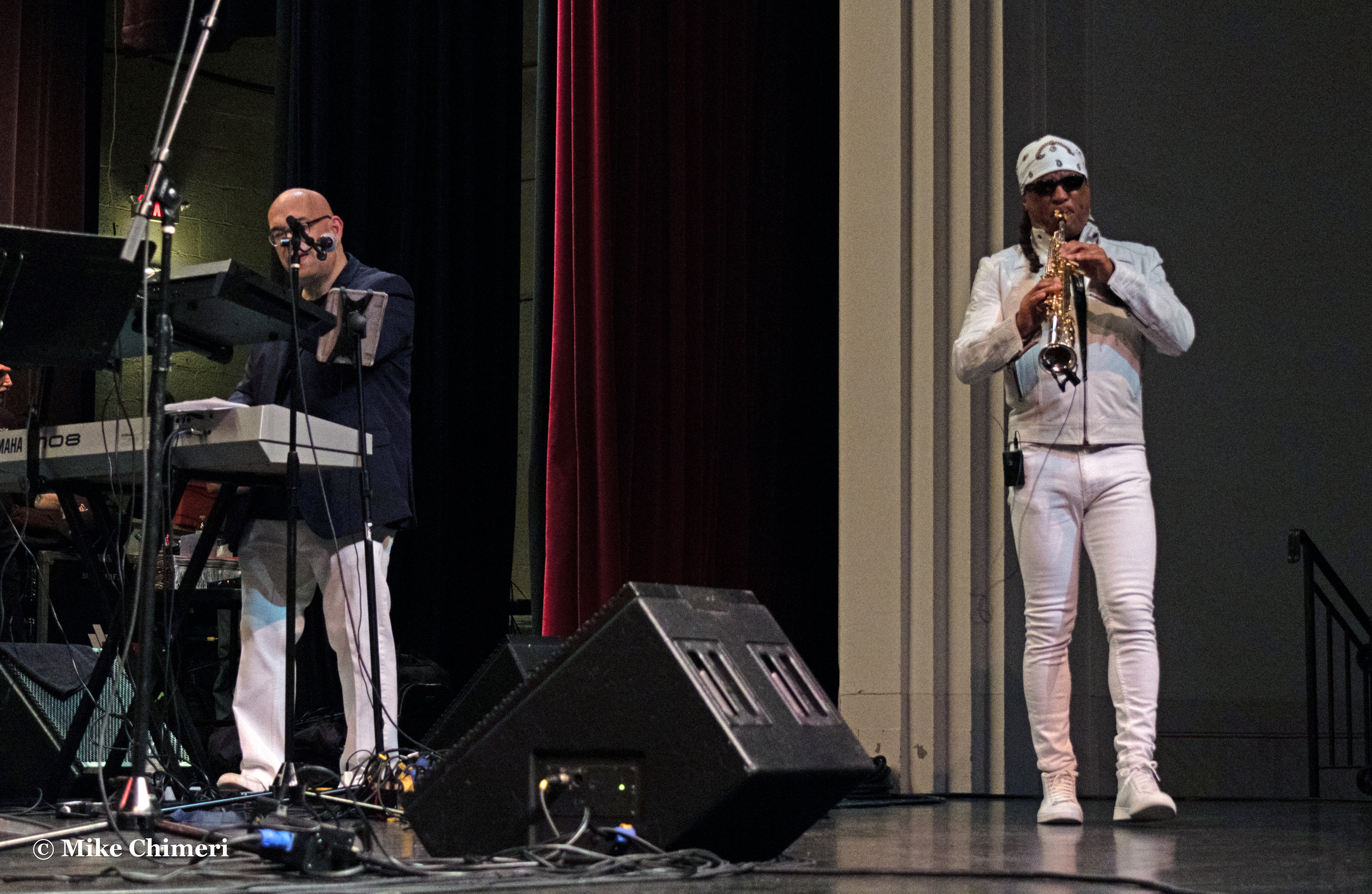
On stage:
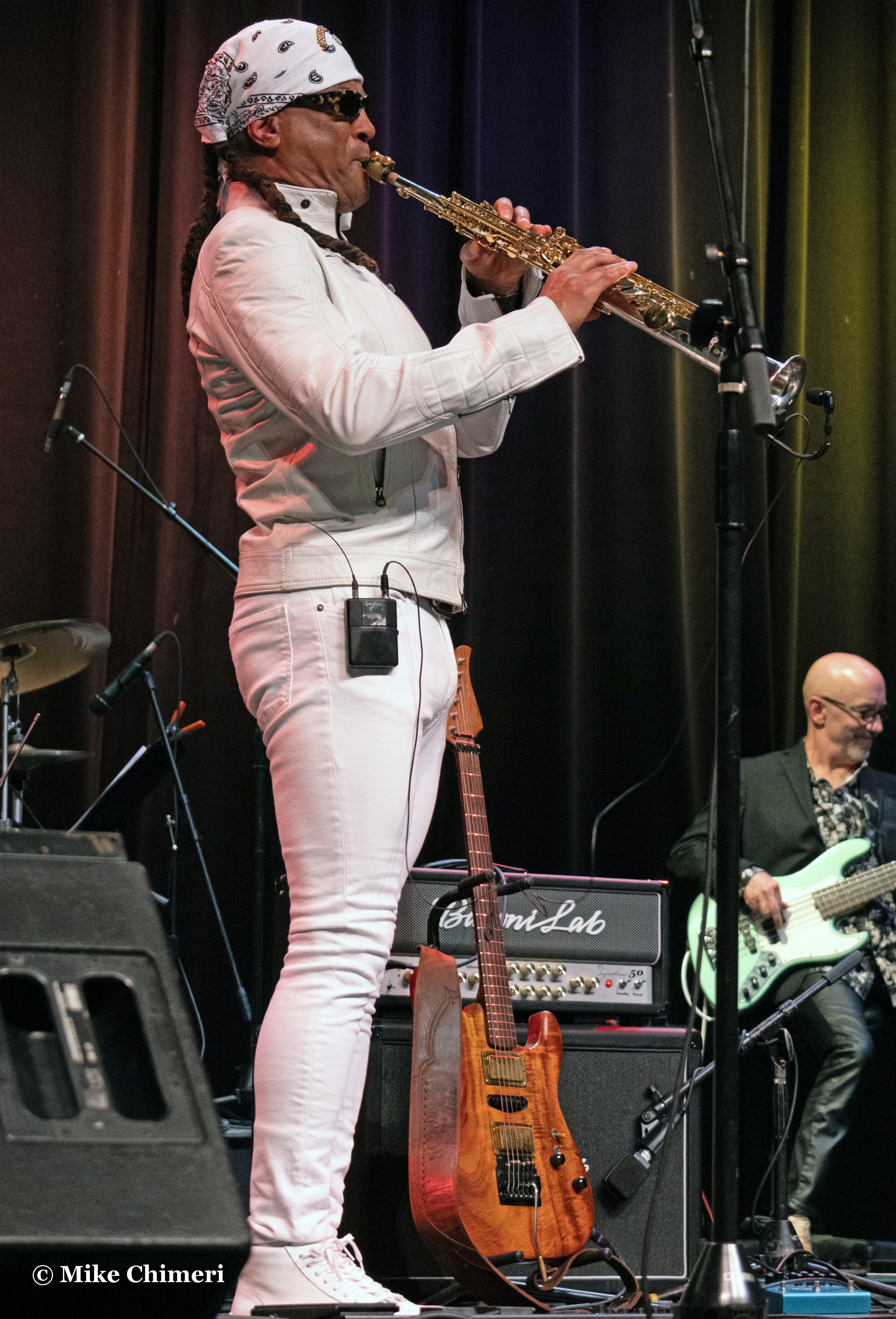
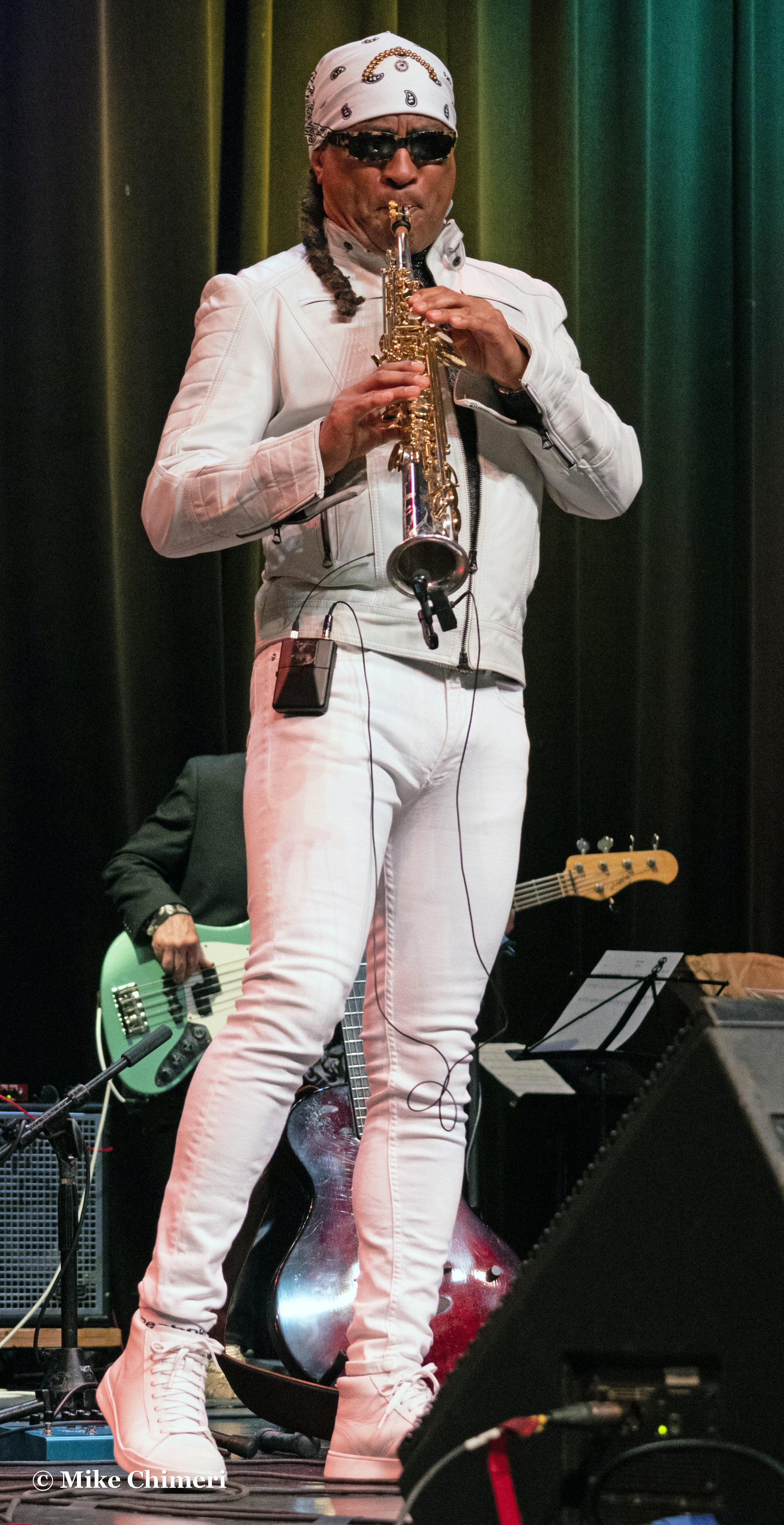
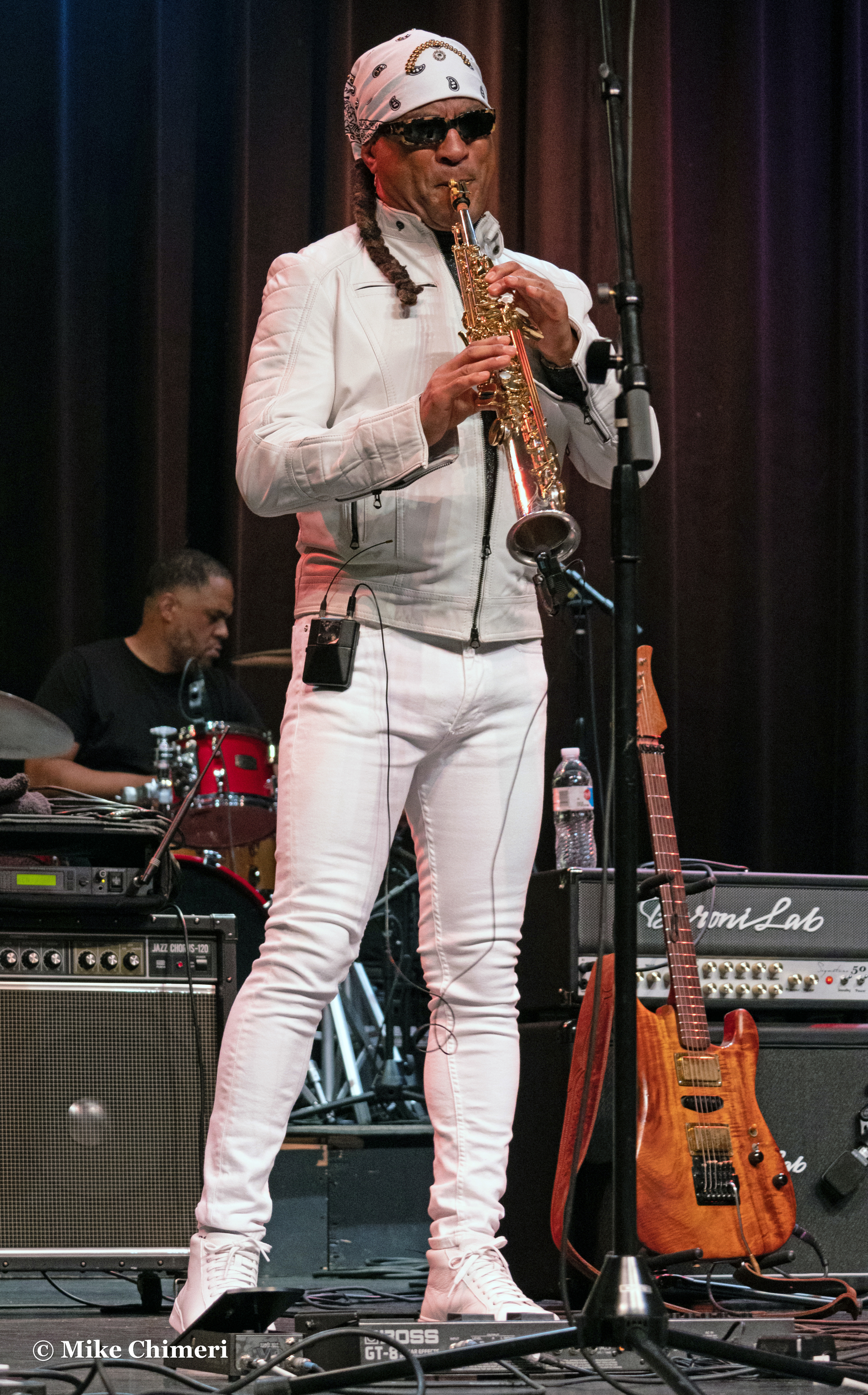


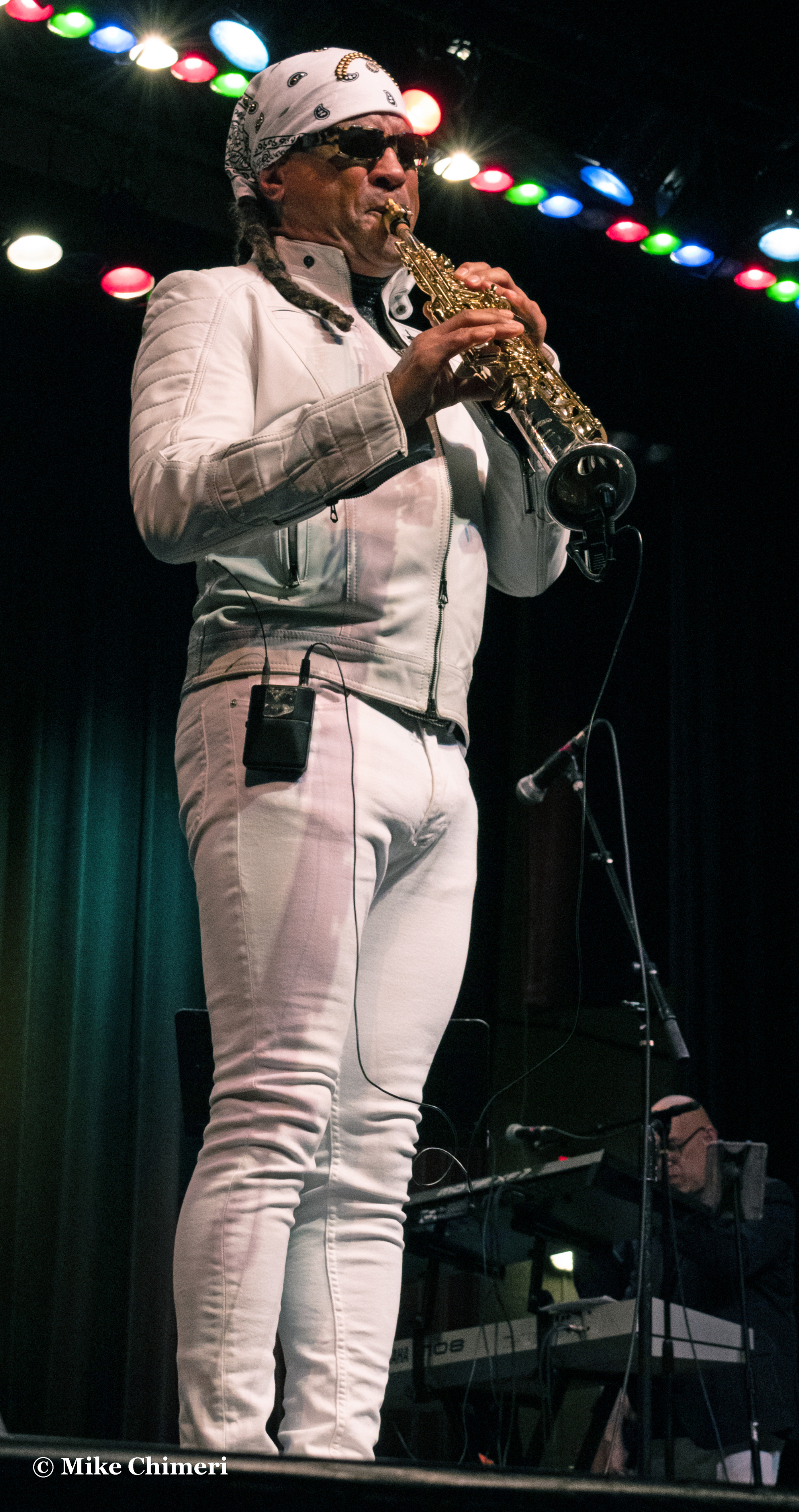
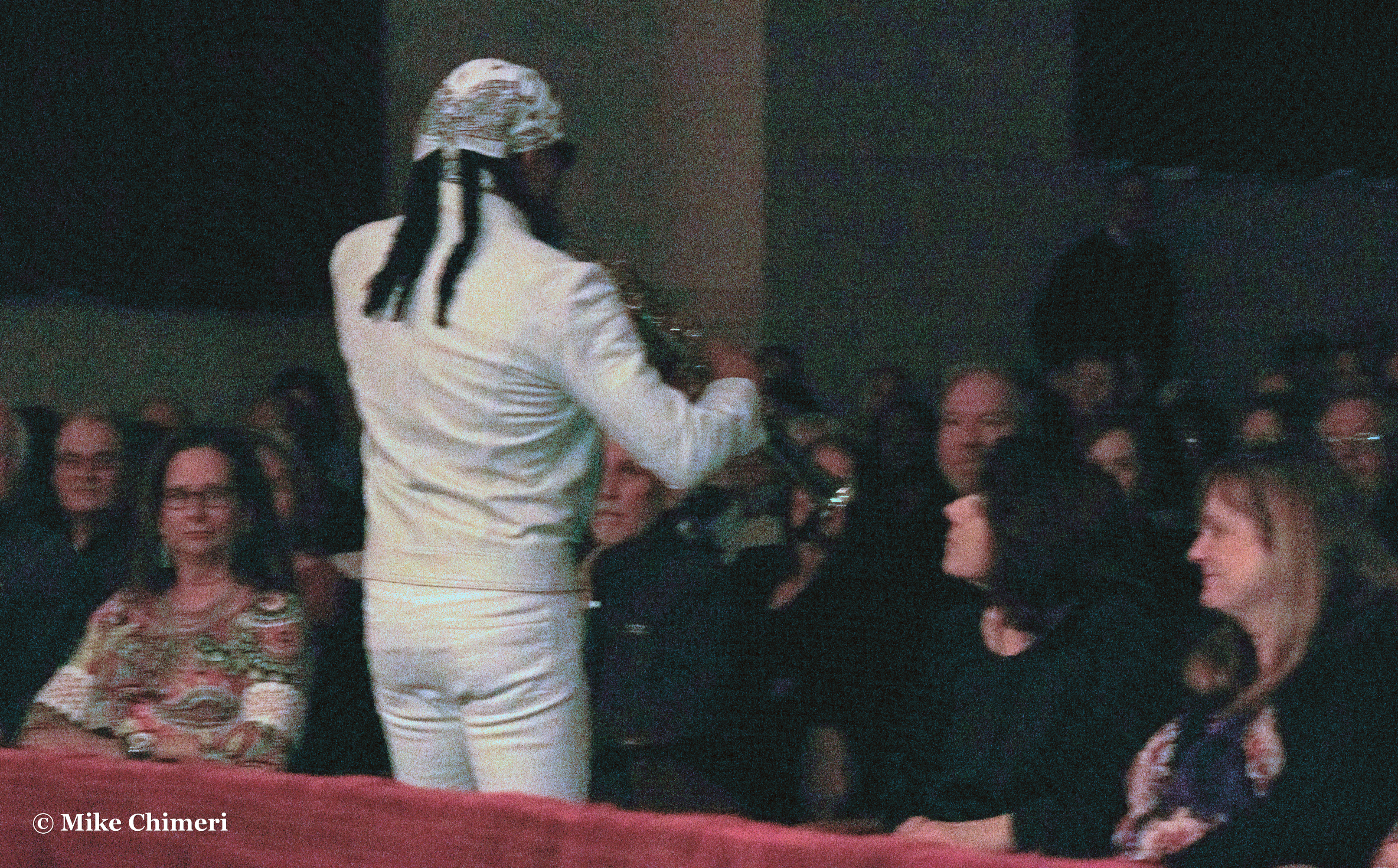
Ending “Romantica” in the audience:

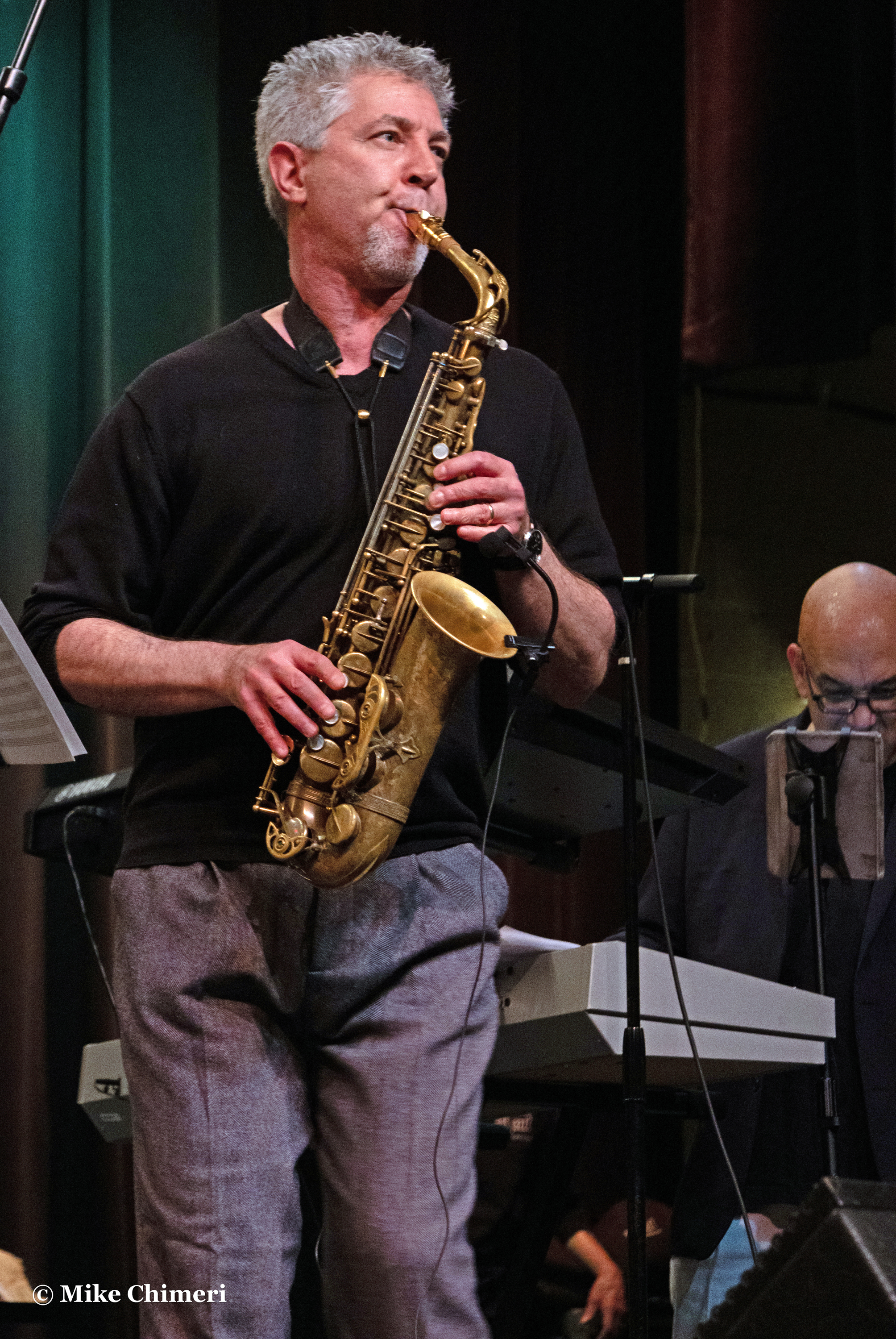
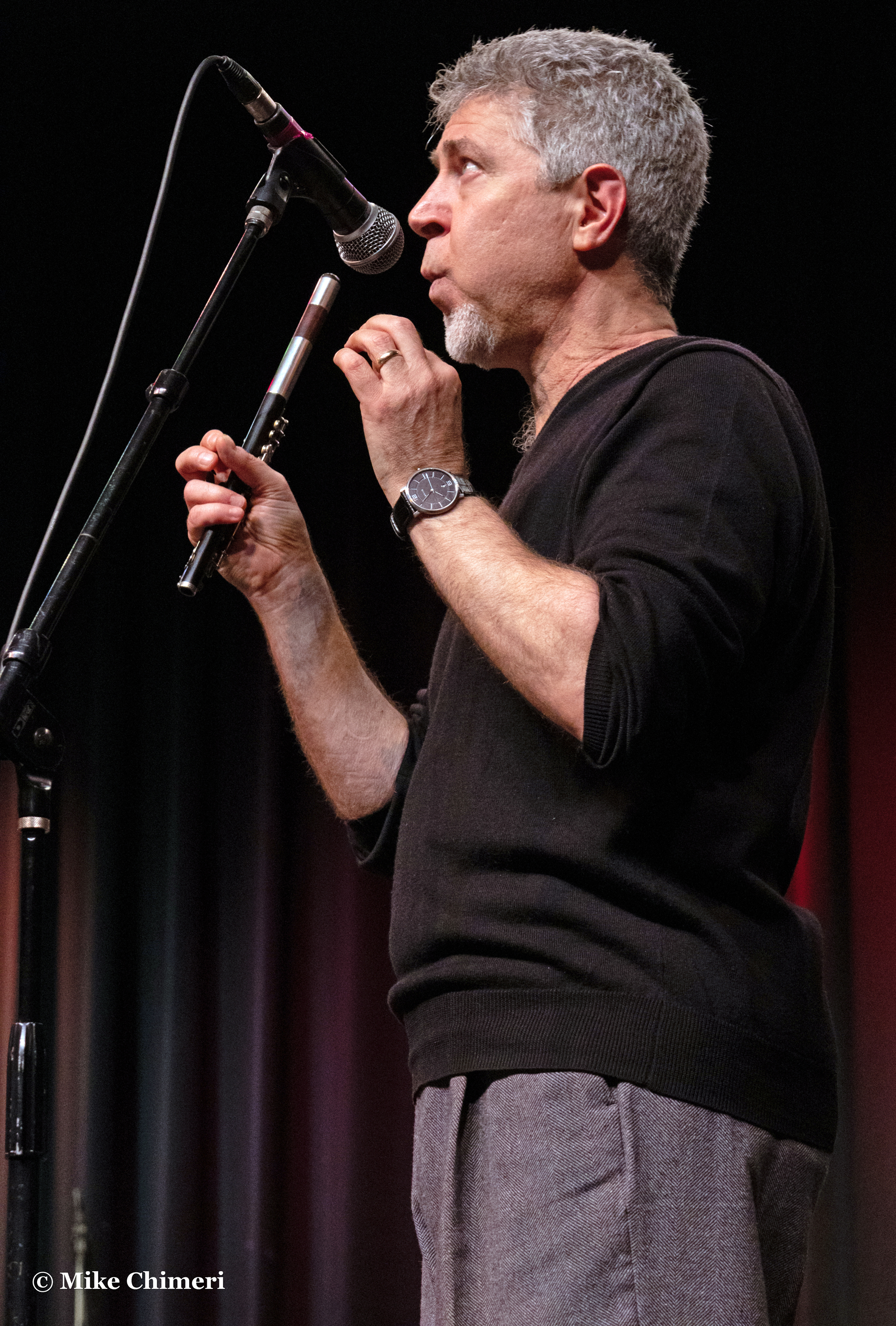
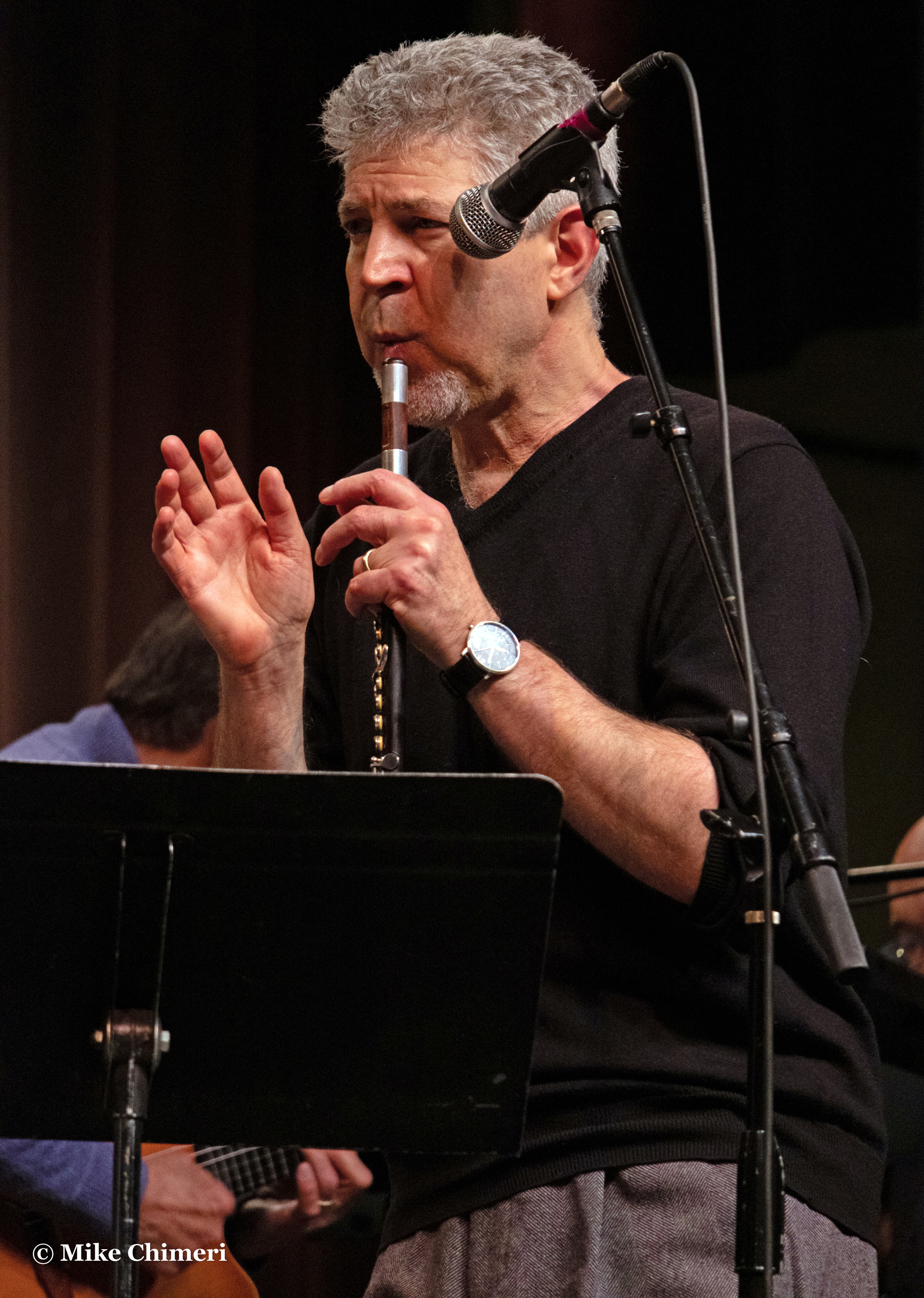
Nelson Rangell on alto sax:


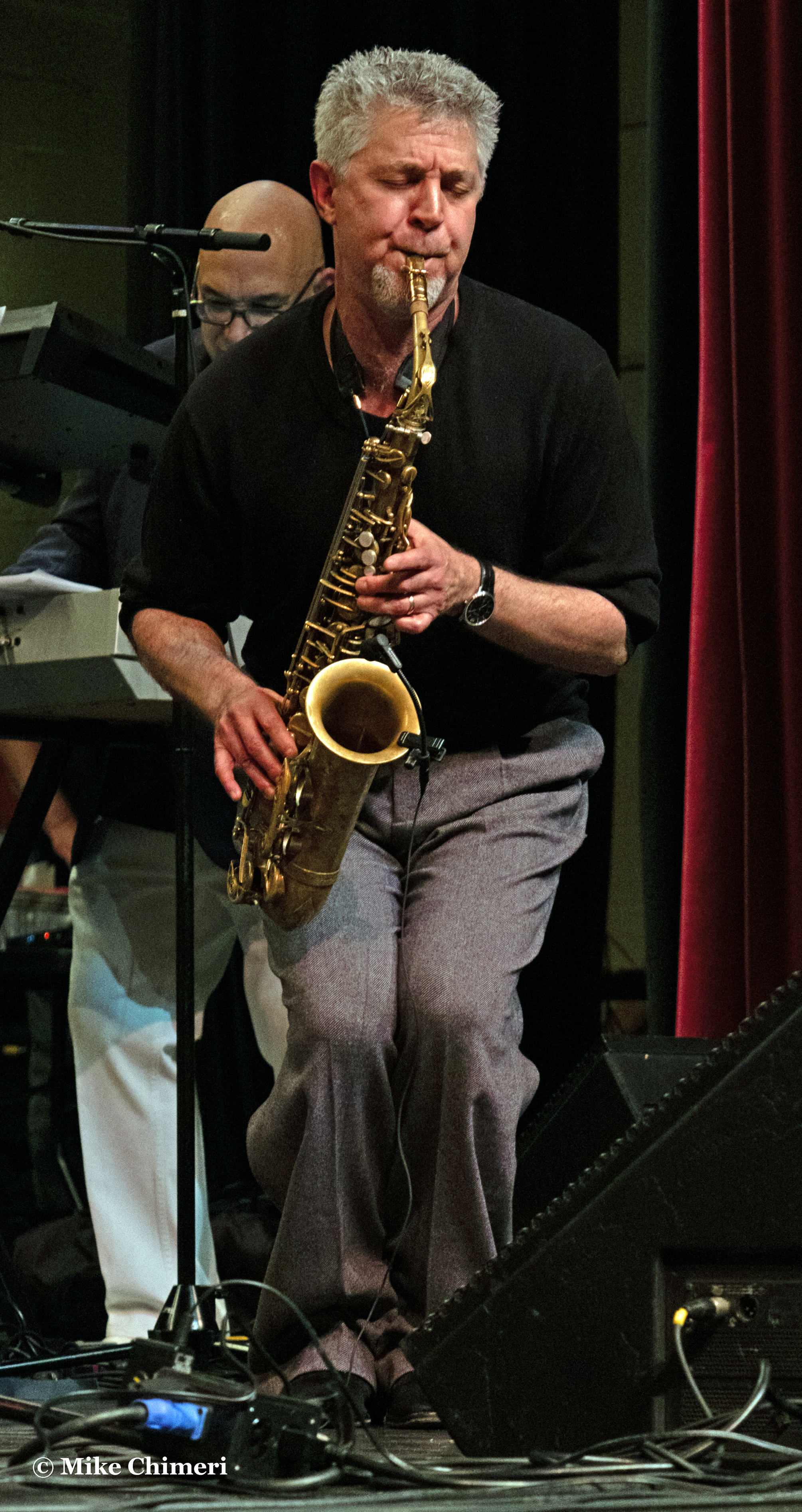
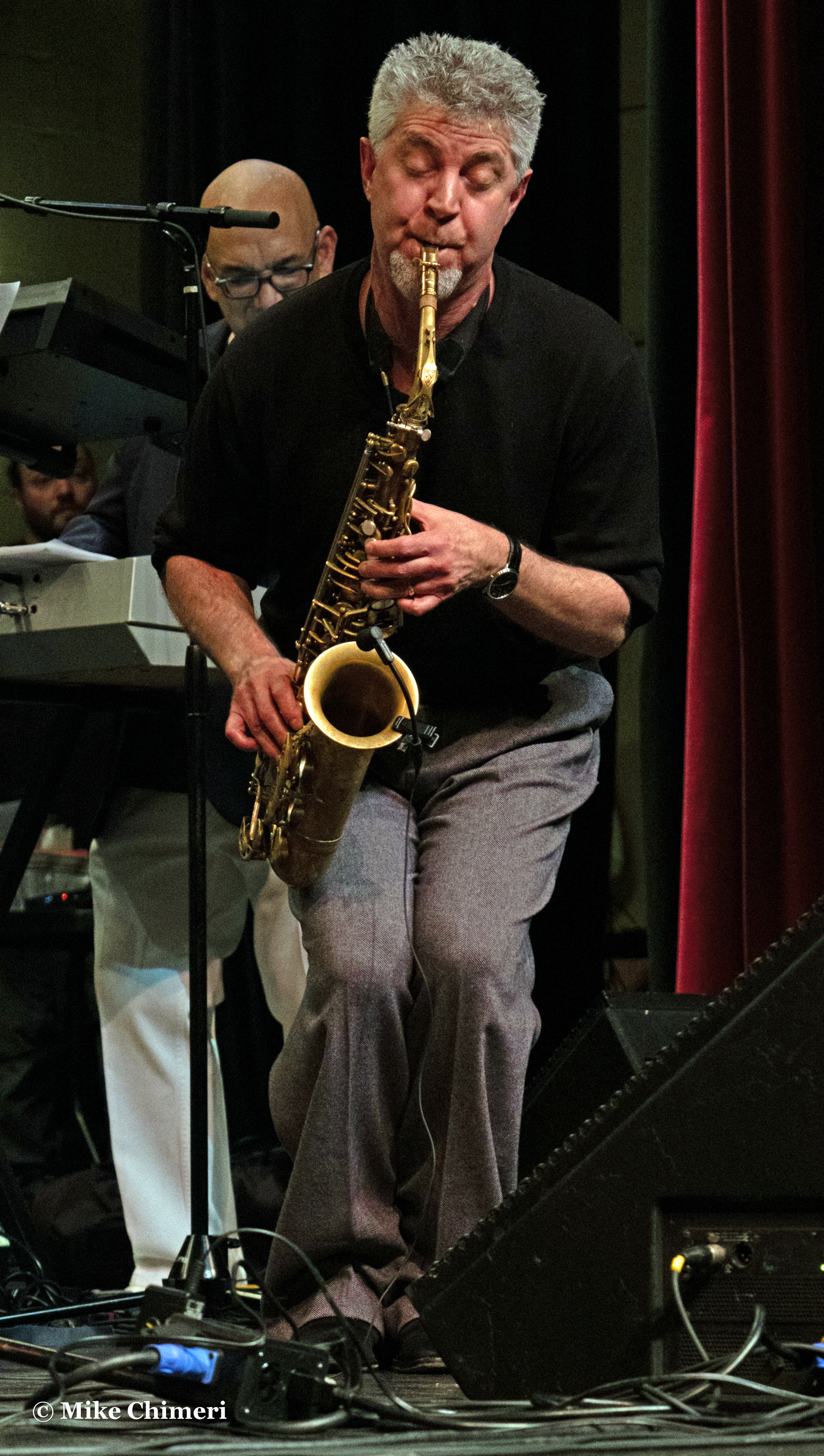


Whistling on “Sonora”:

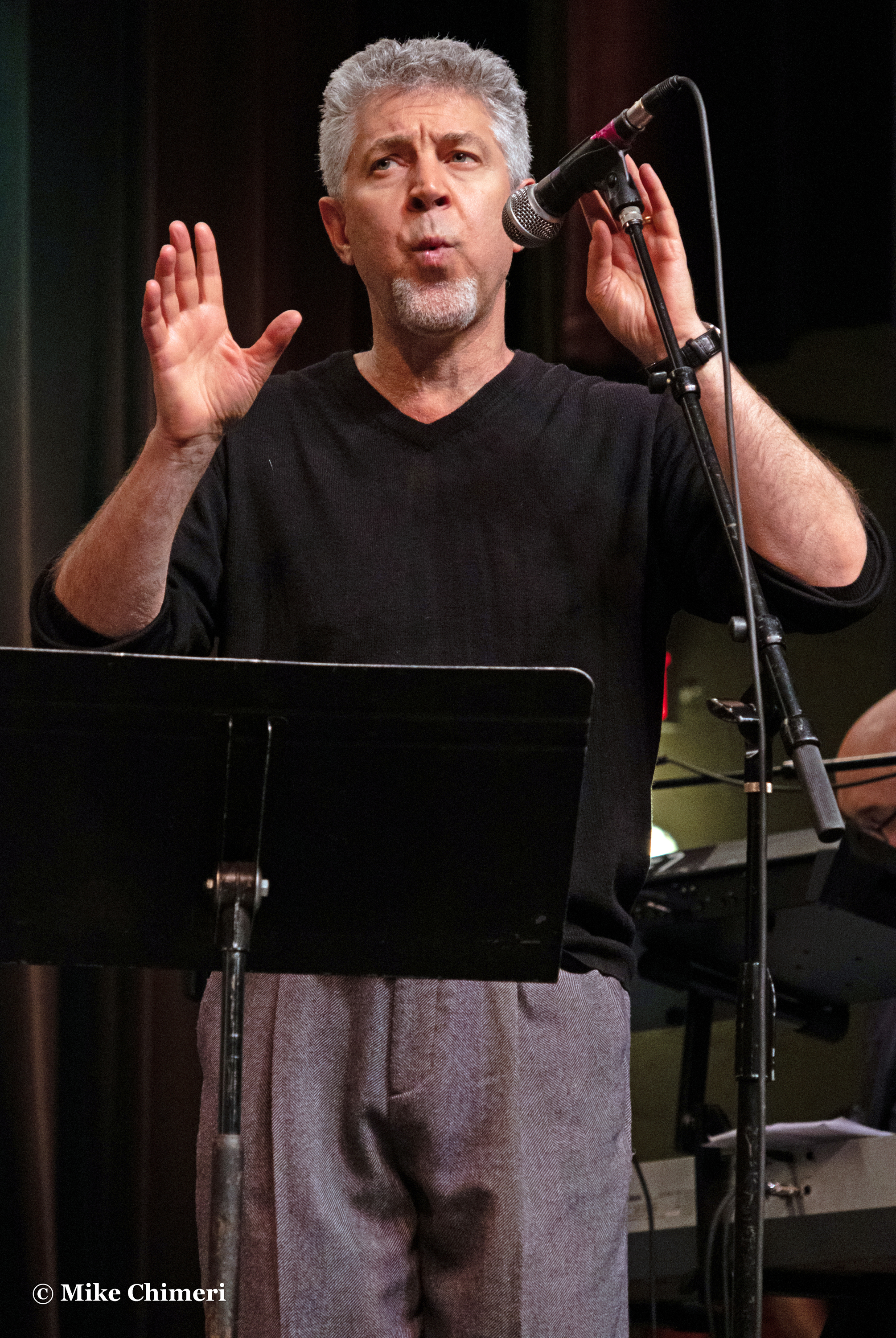
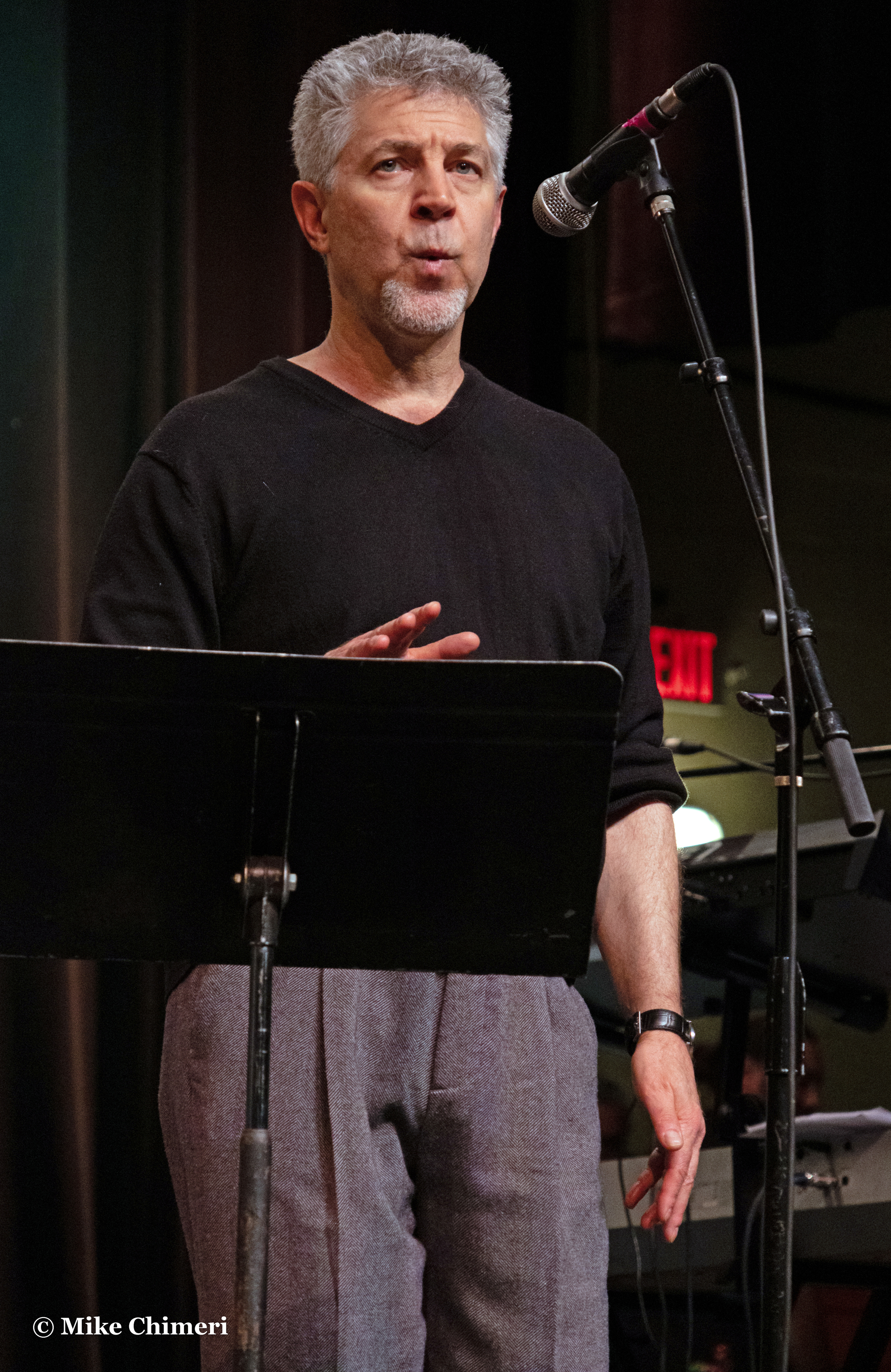

Whistling gave way to piccolo…


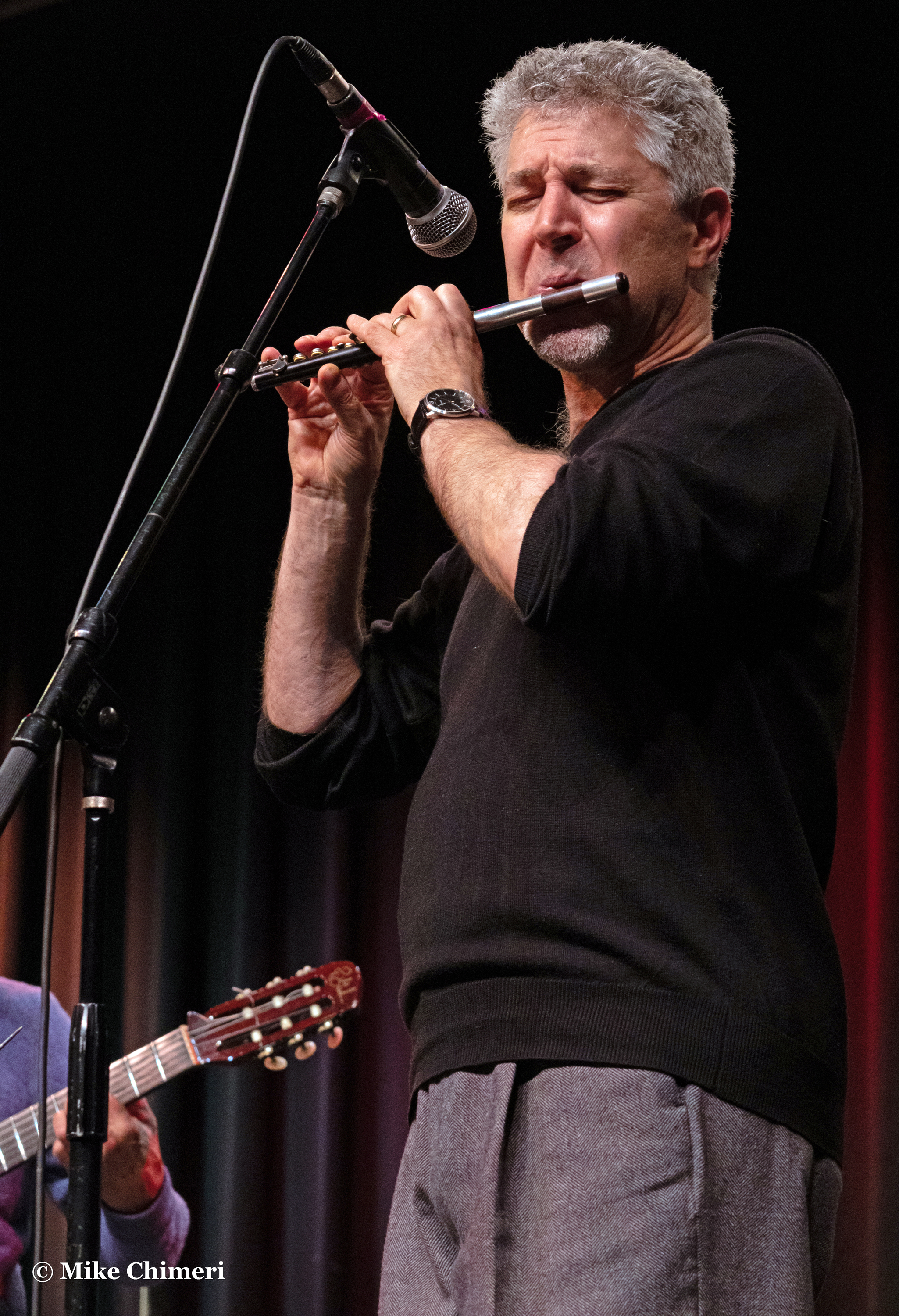
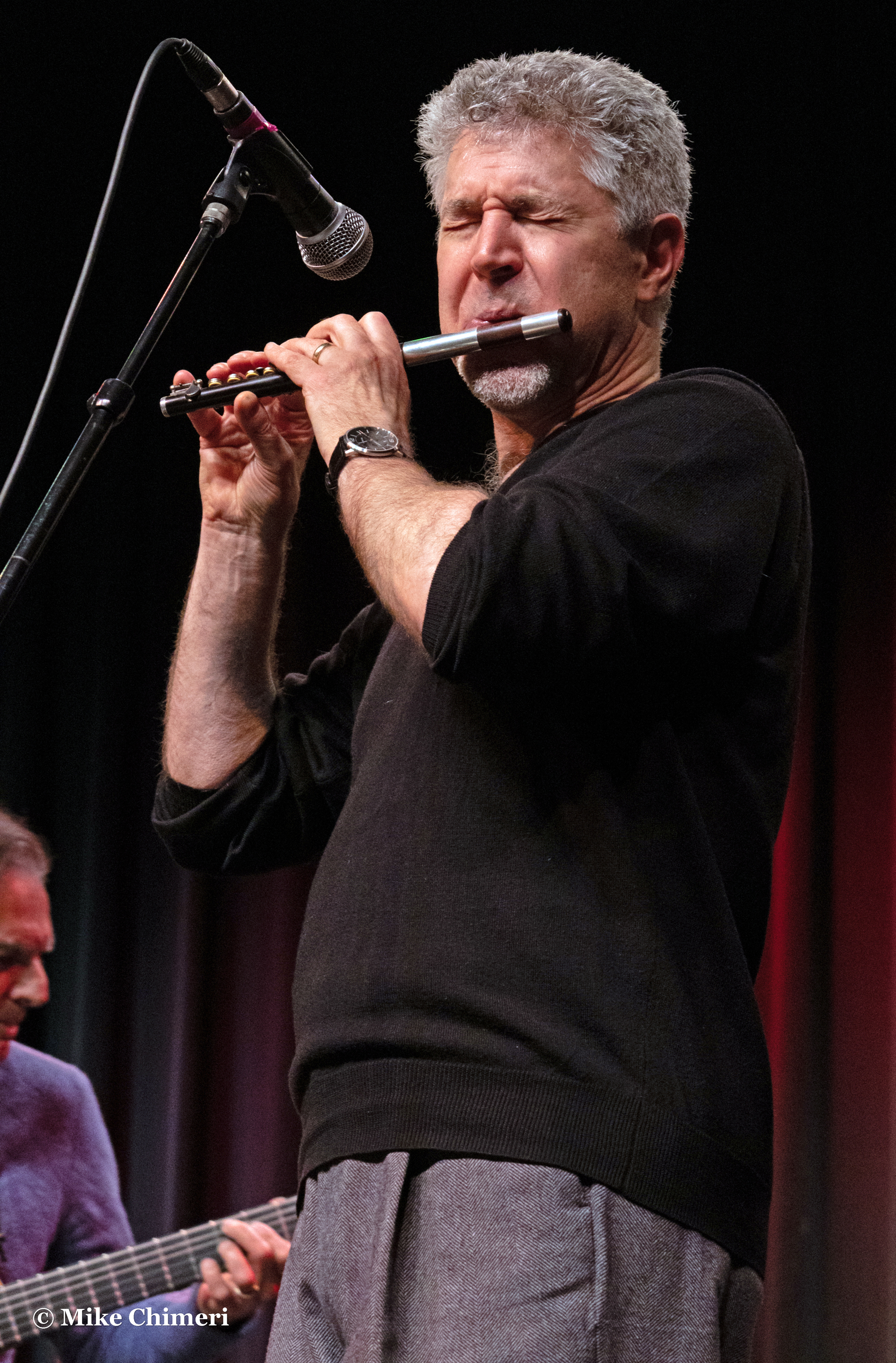
…and whistling while holding the piccolo:

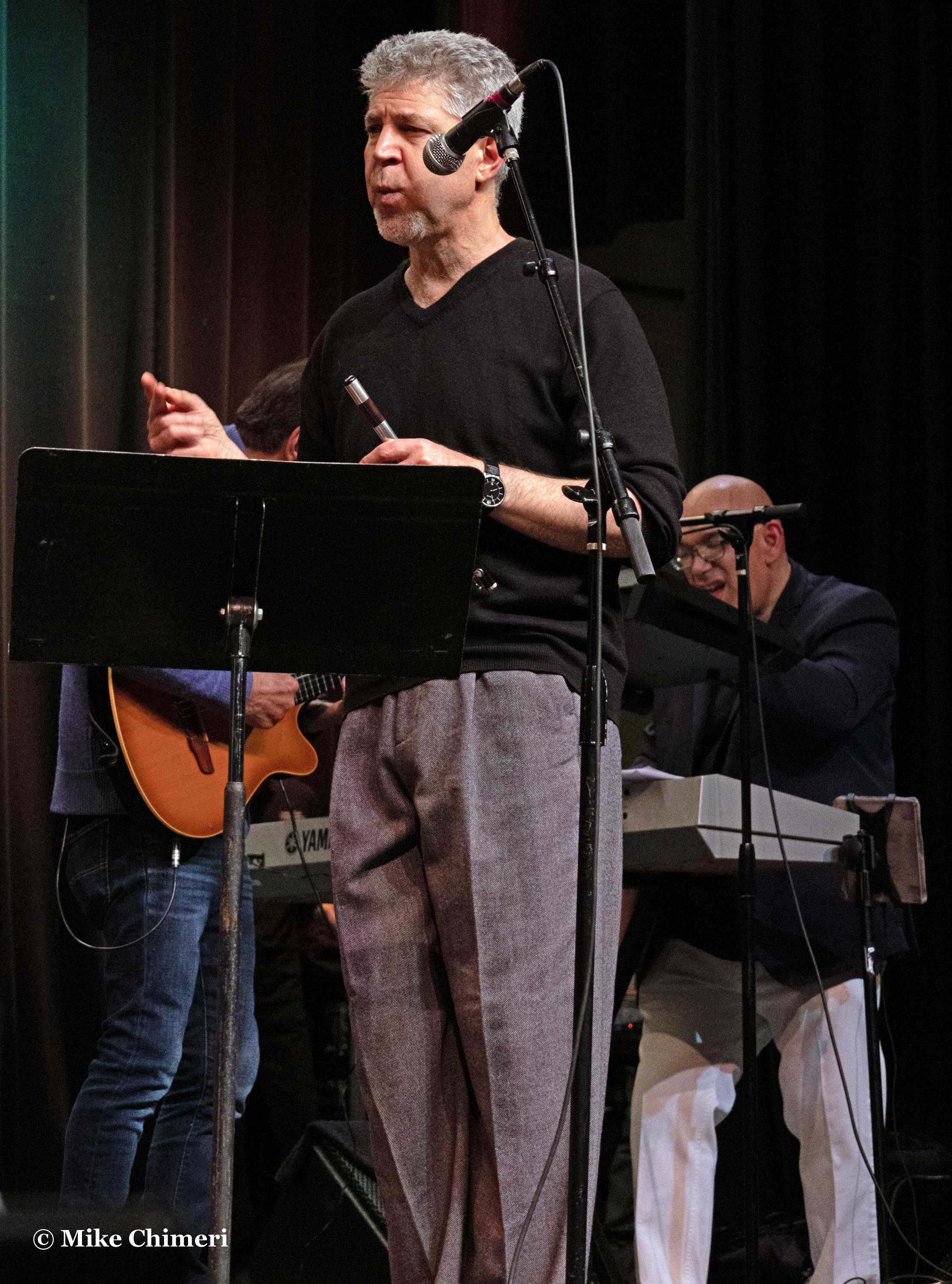

Now, the house band, beginning with percussionist Steve Scales:

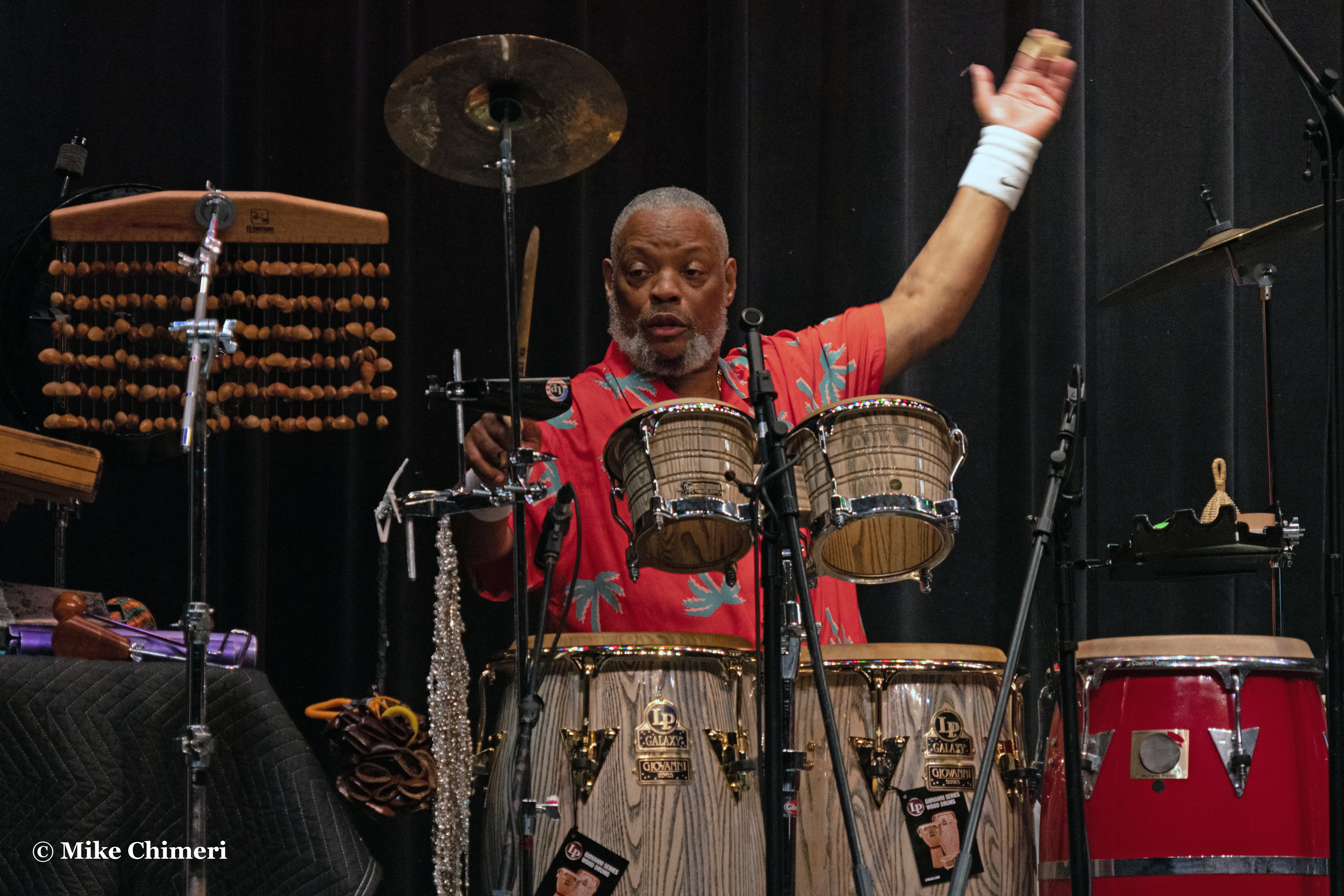
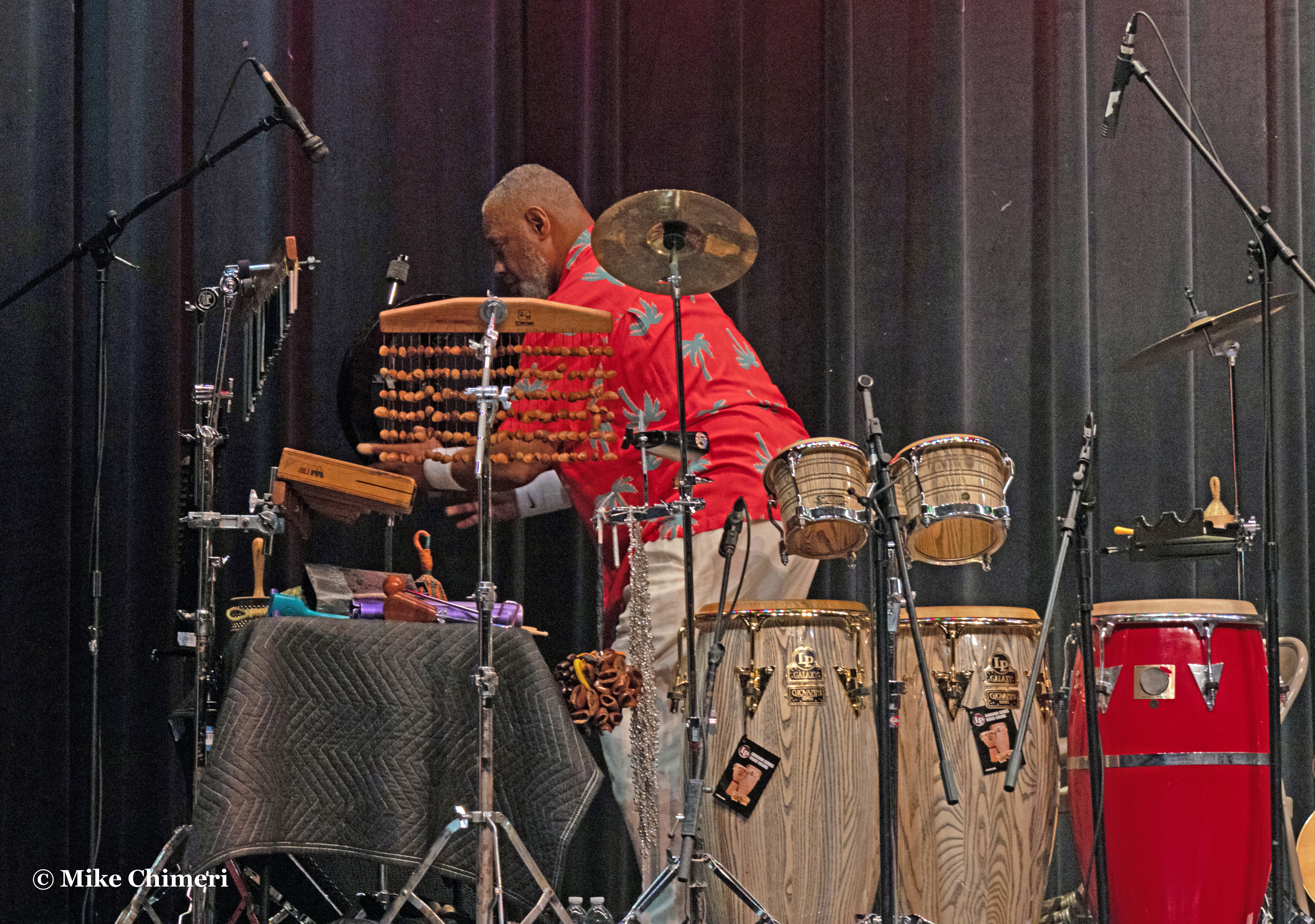

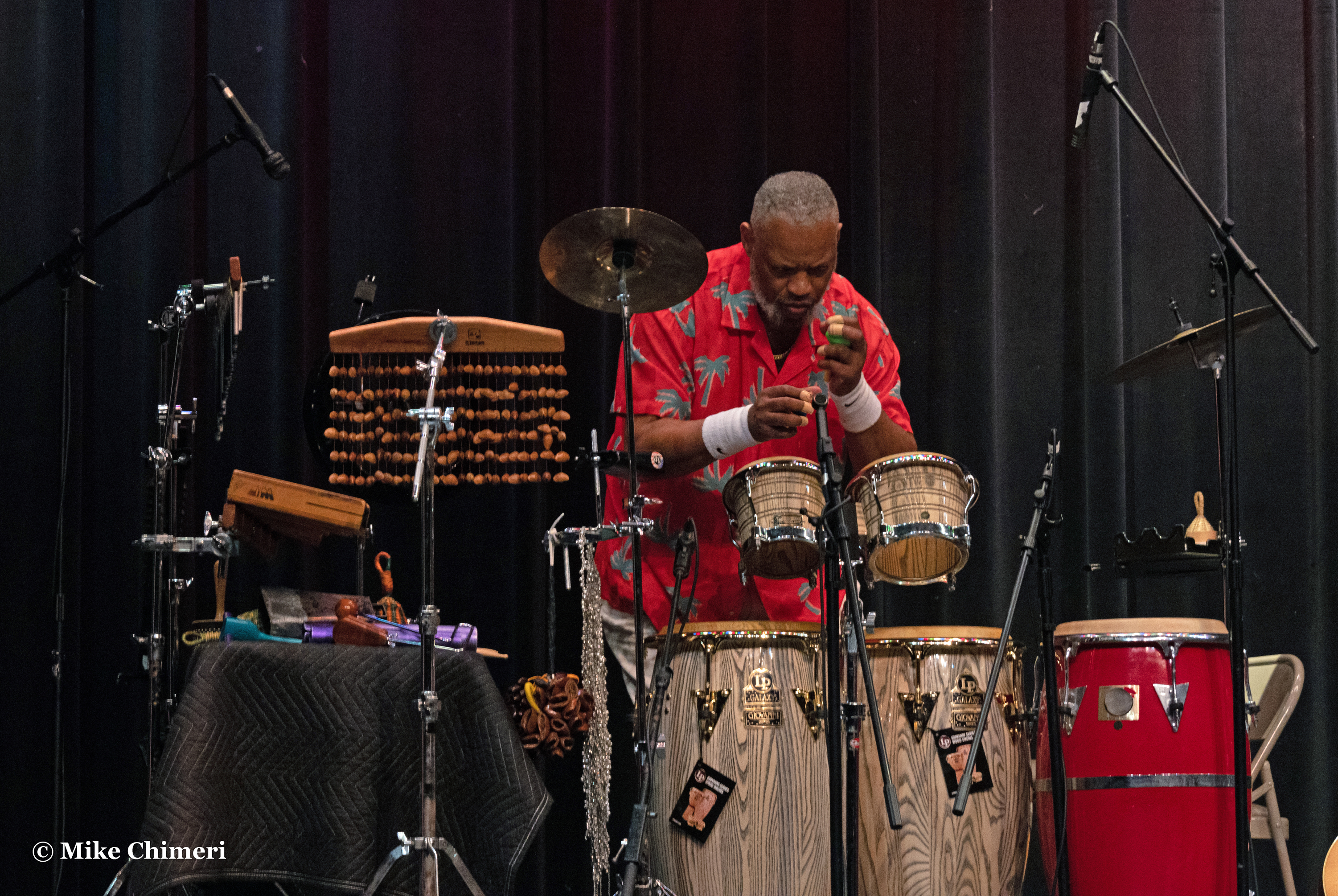

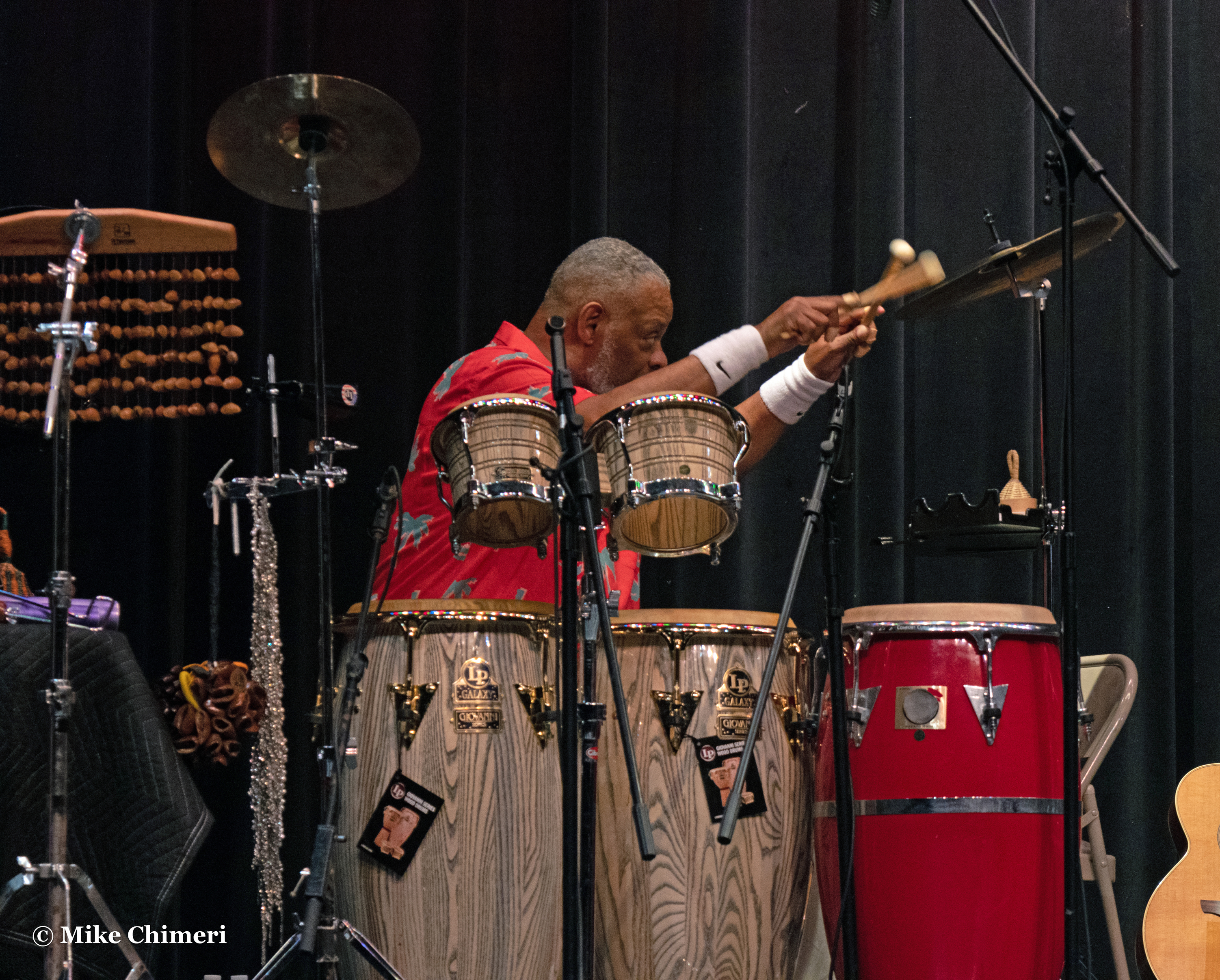

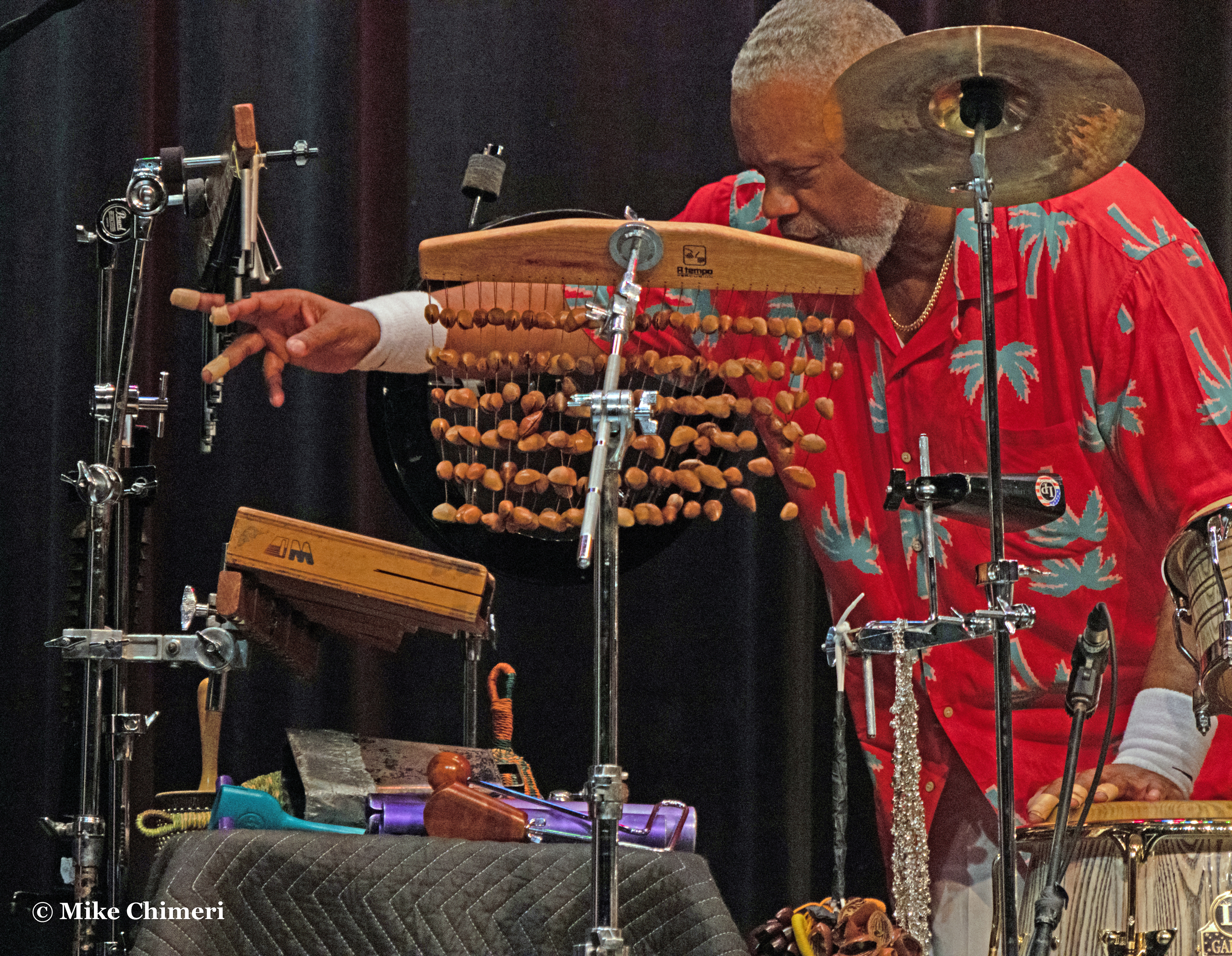
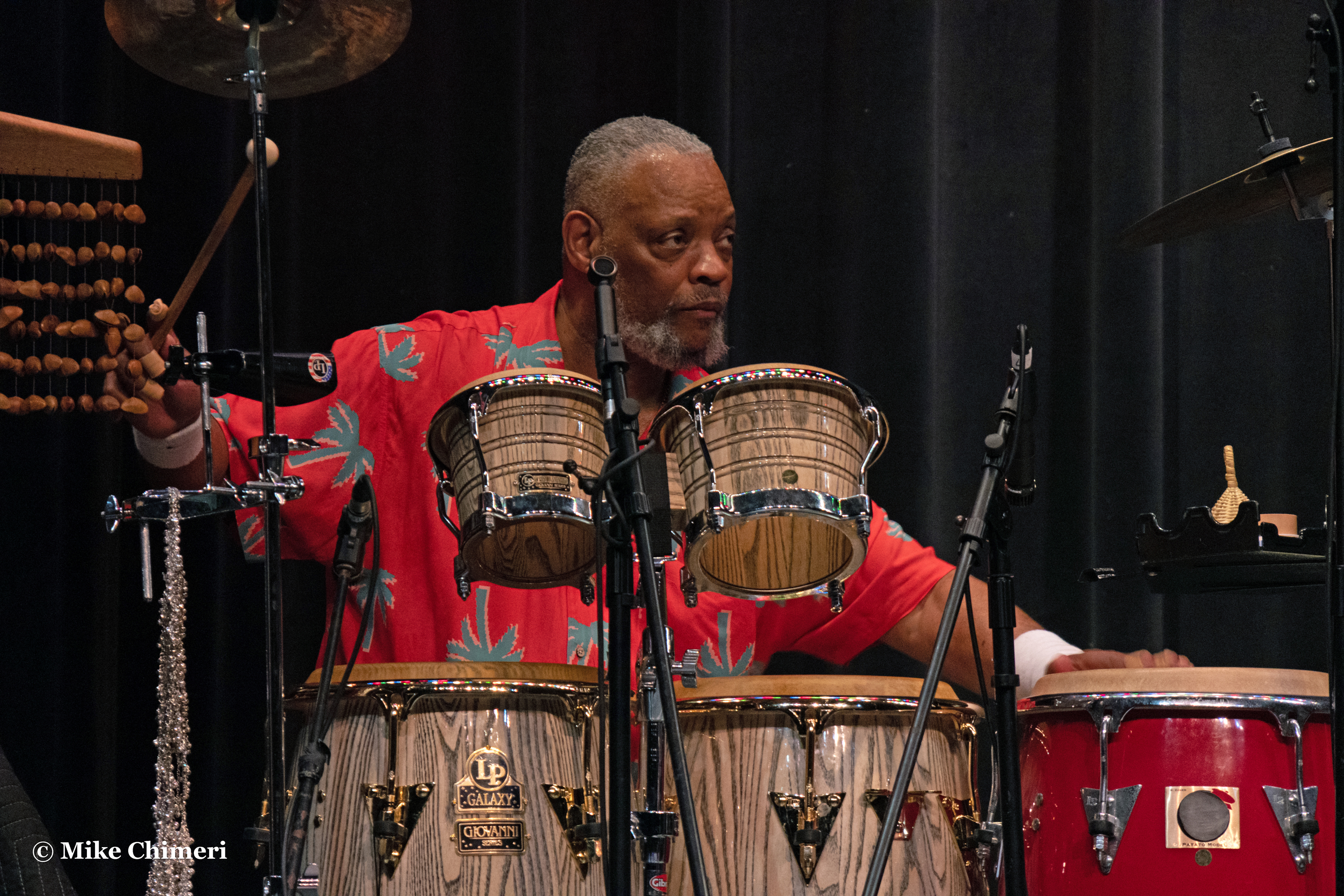
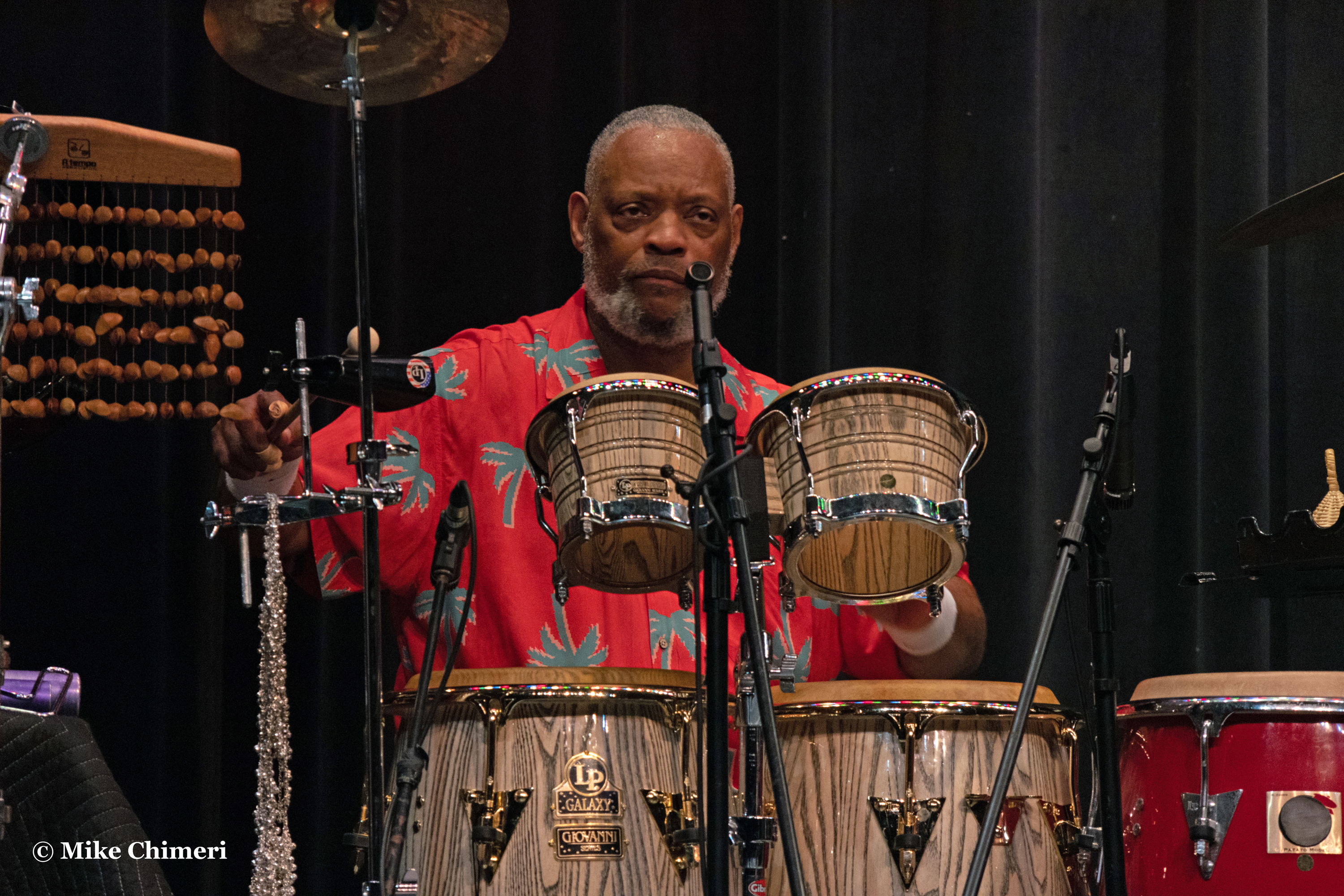
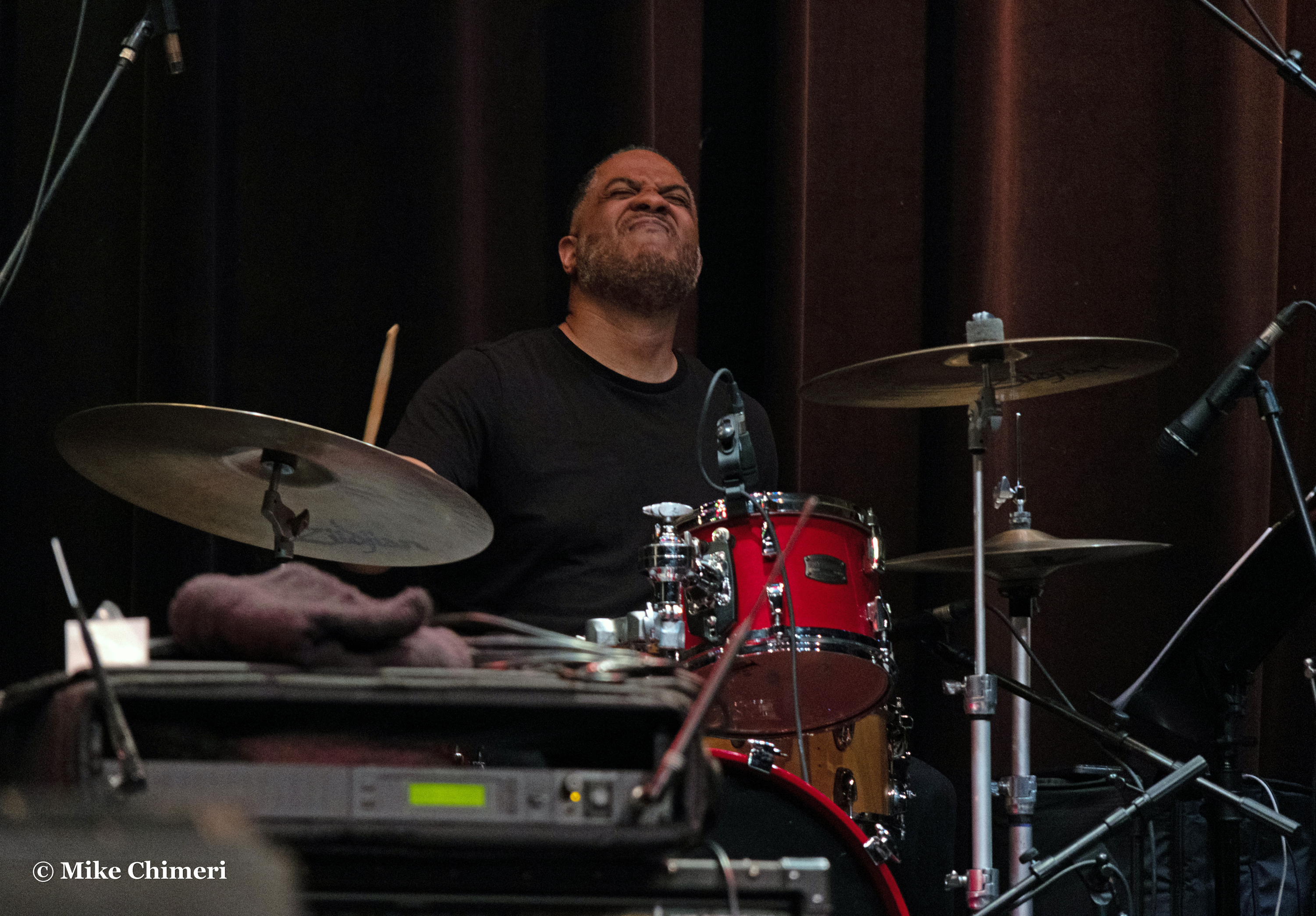
Drummer Trever Somerville:




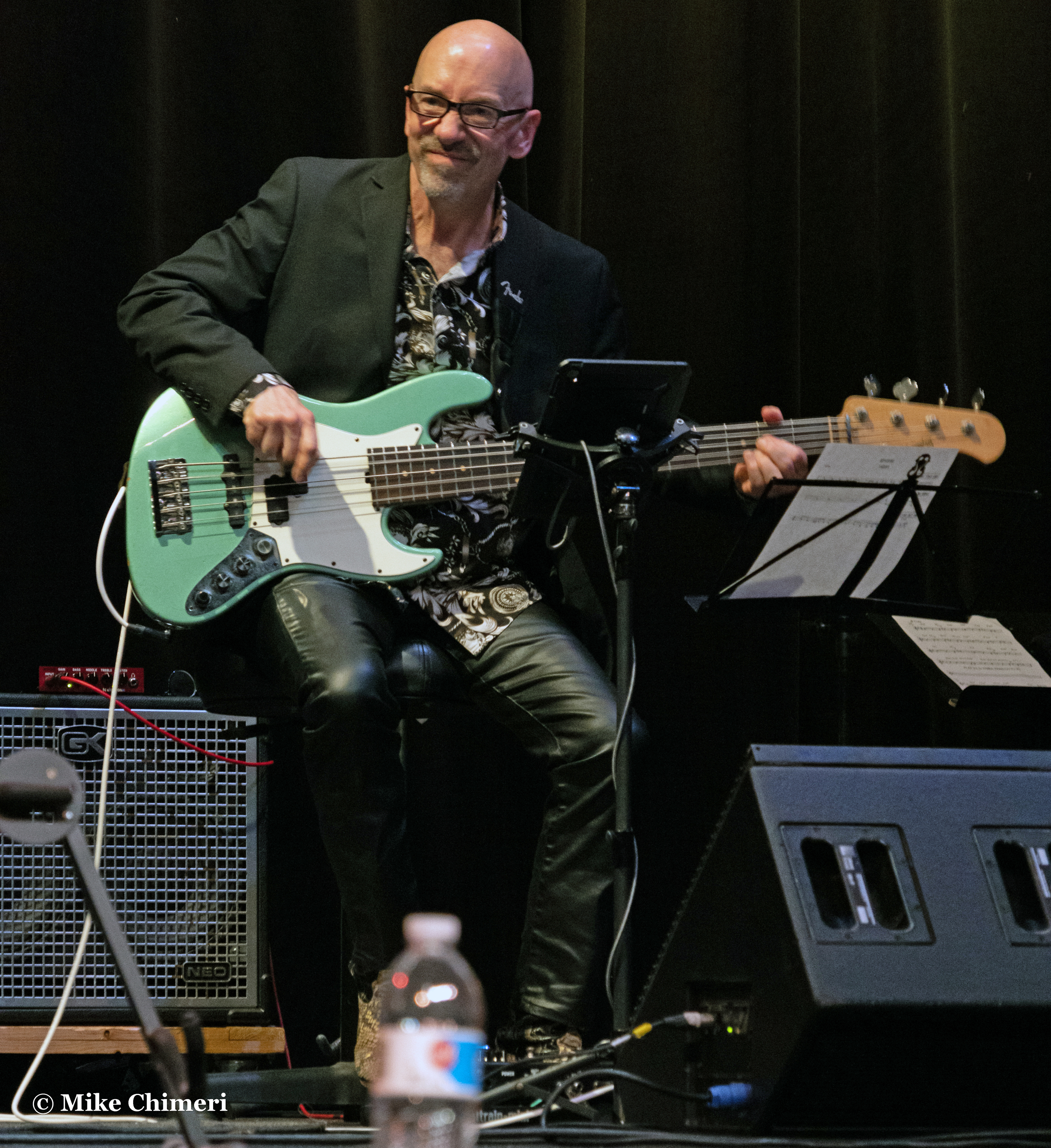
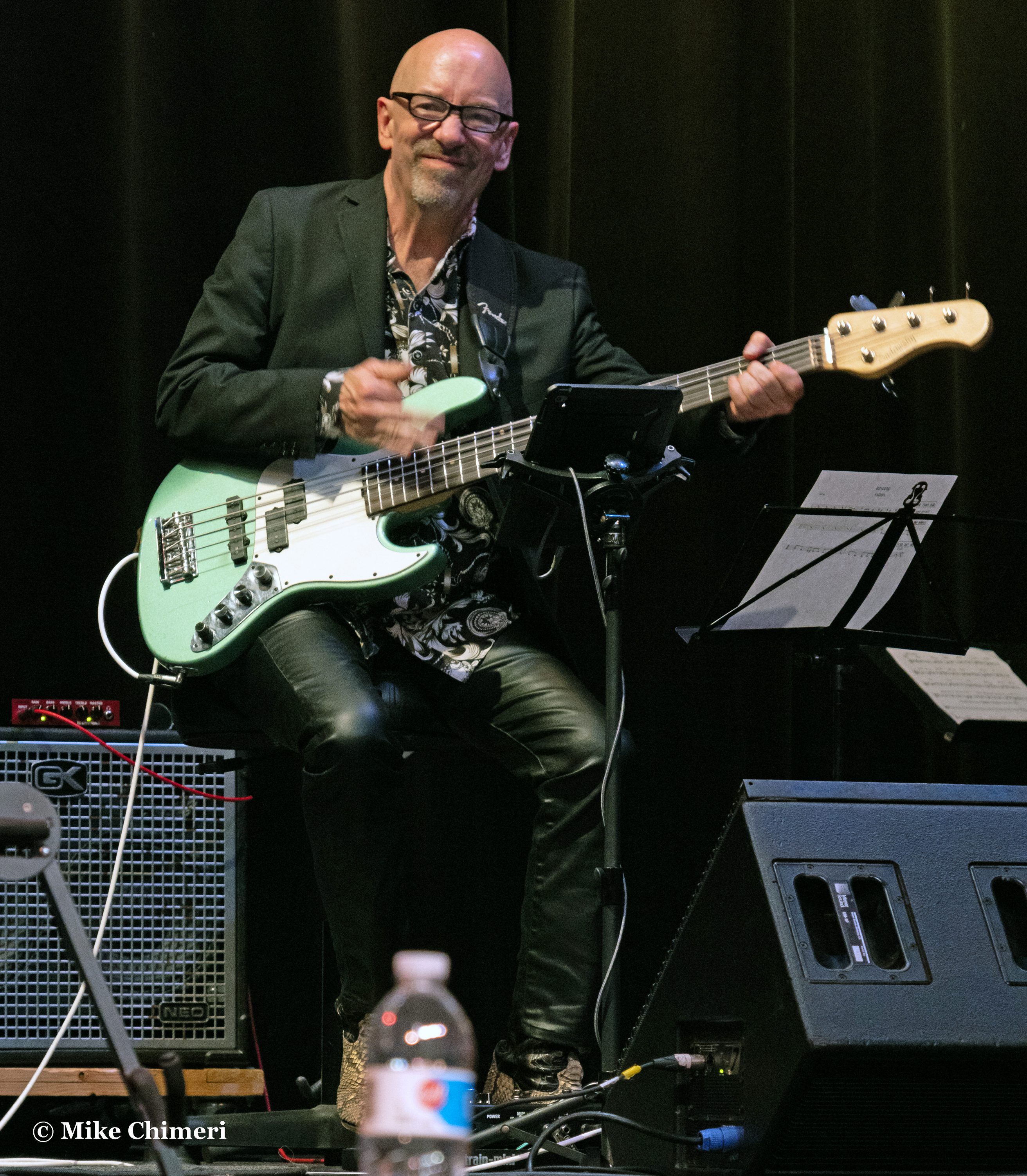
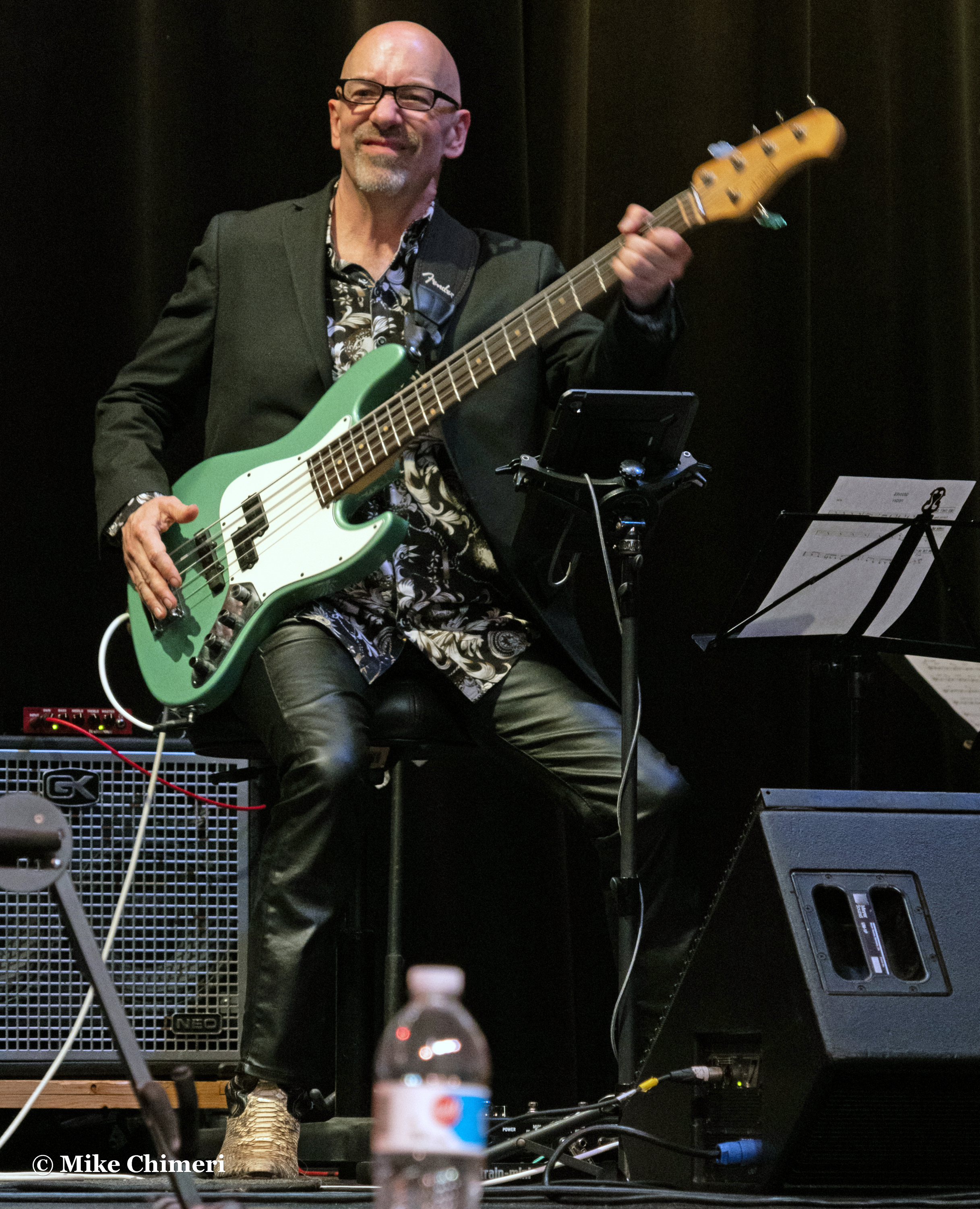
Bassist Dave Anderson:



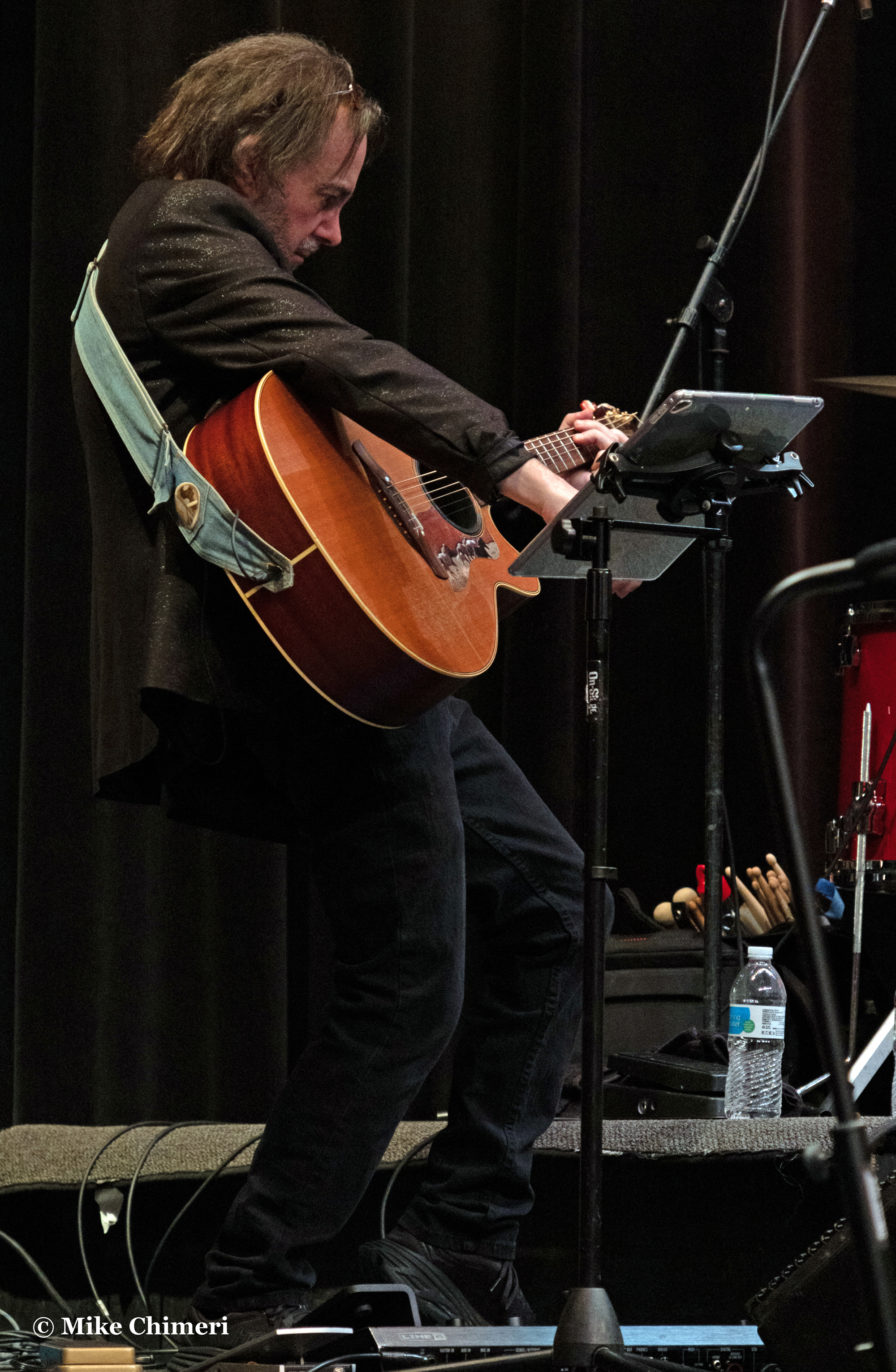
Andy Abel on acoustic guitar:


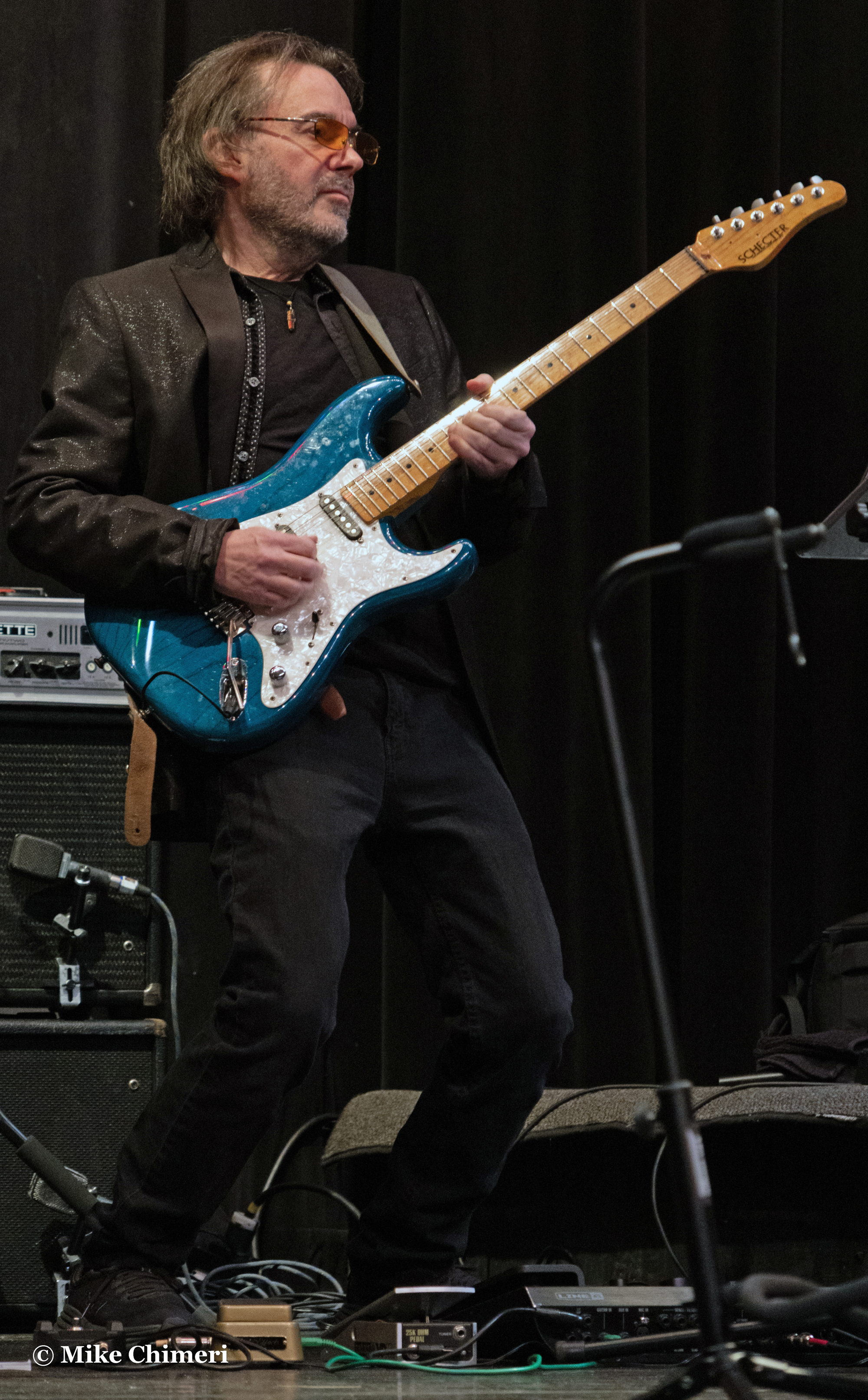
…and otherwise on electric:


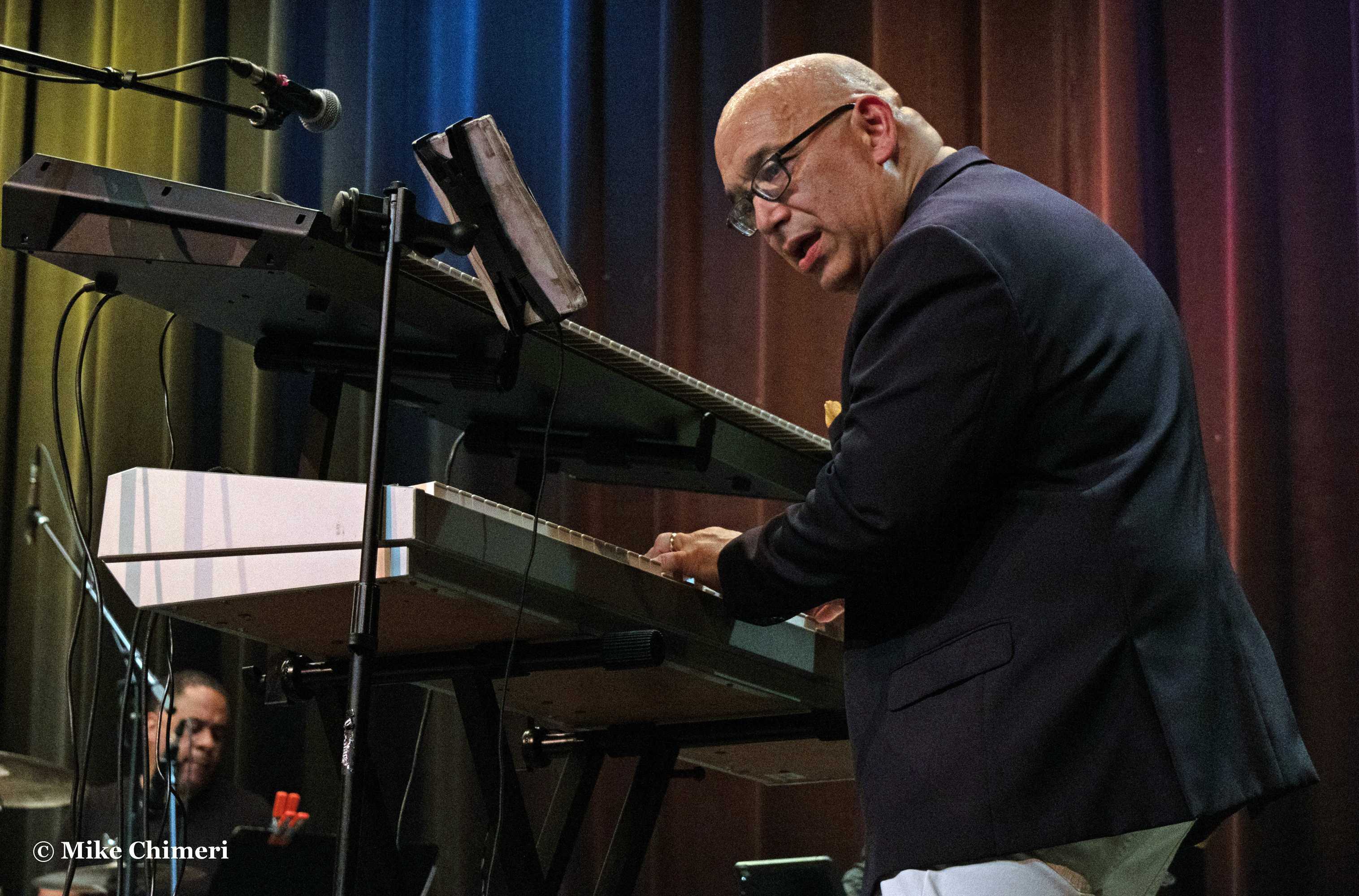
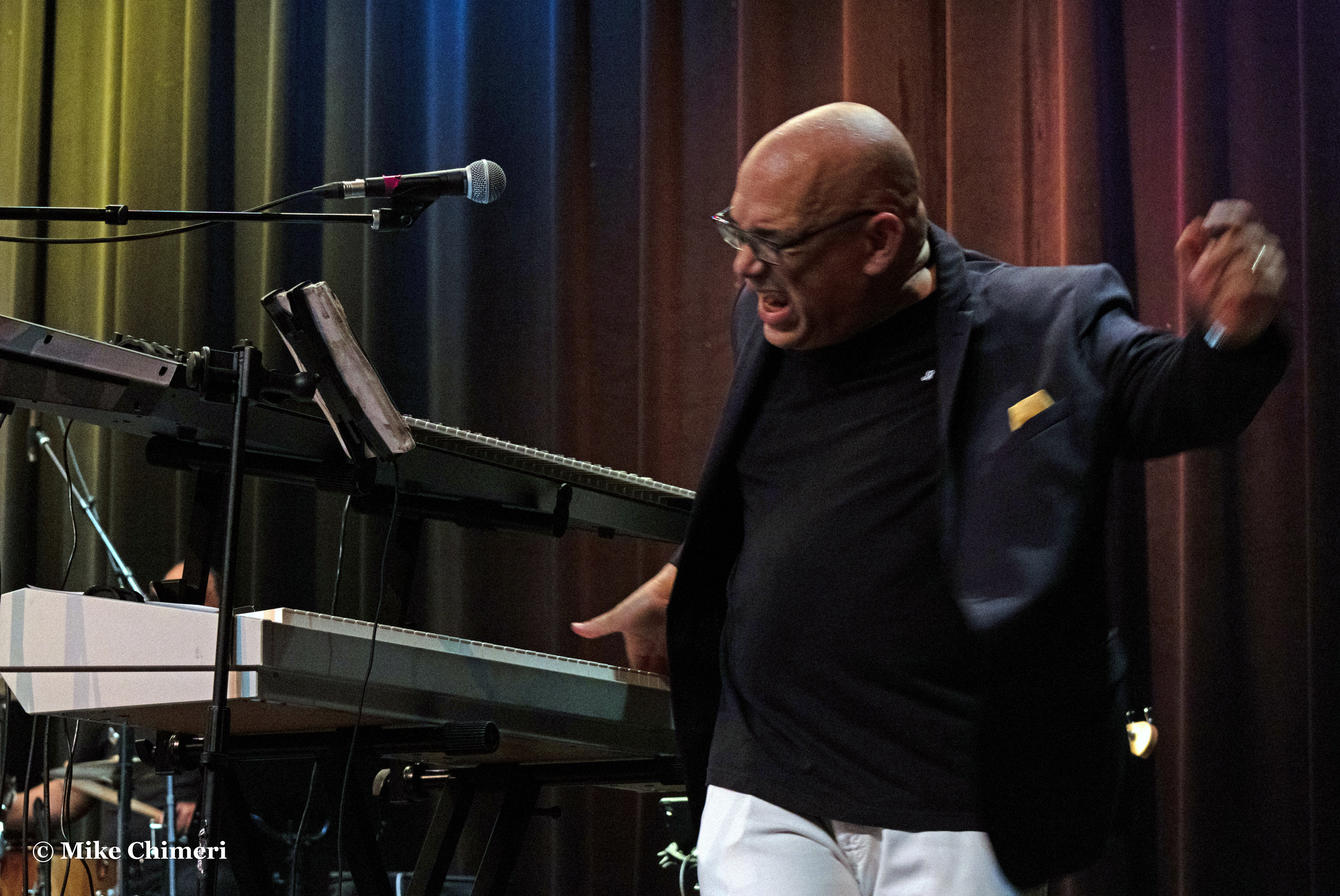
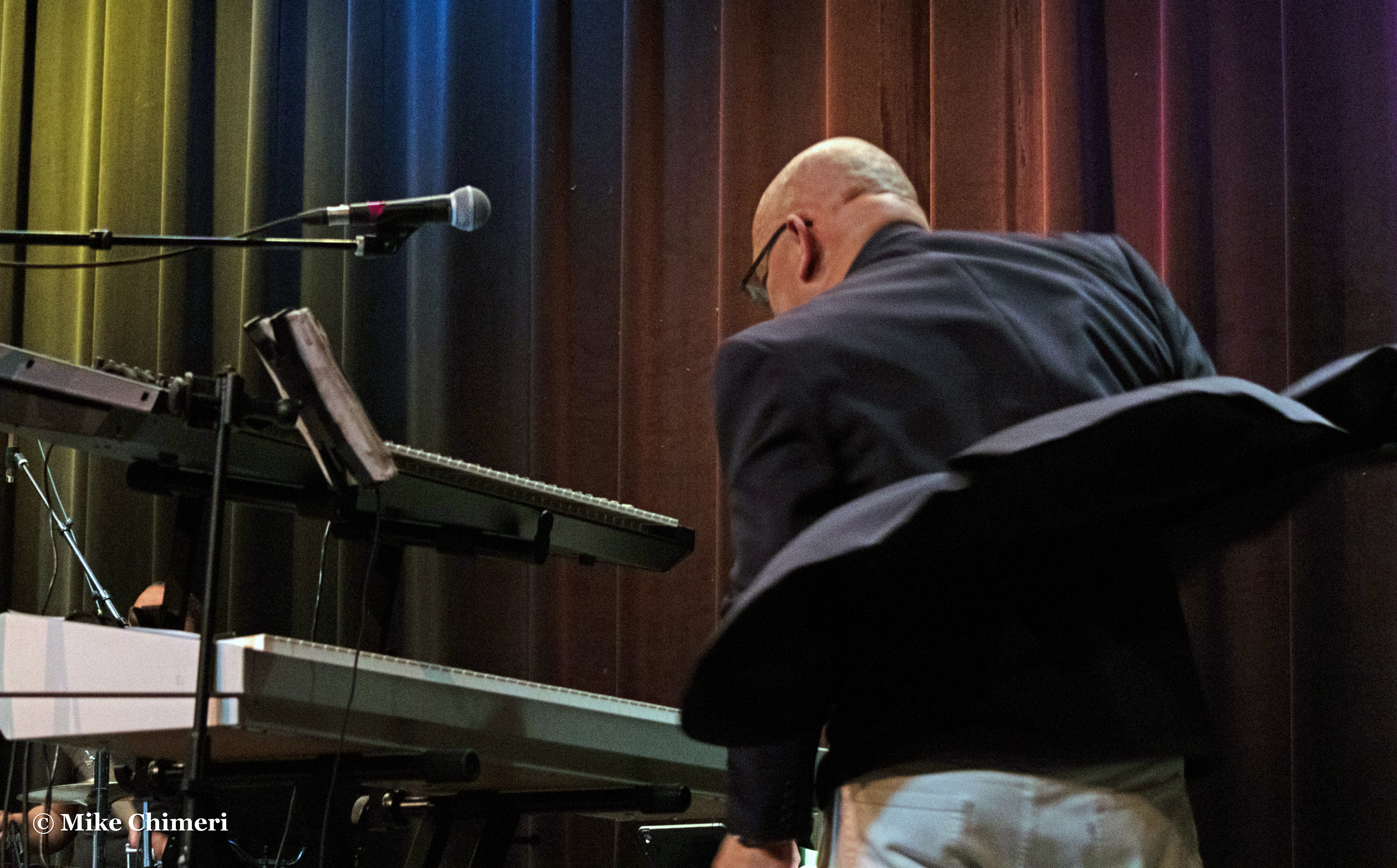
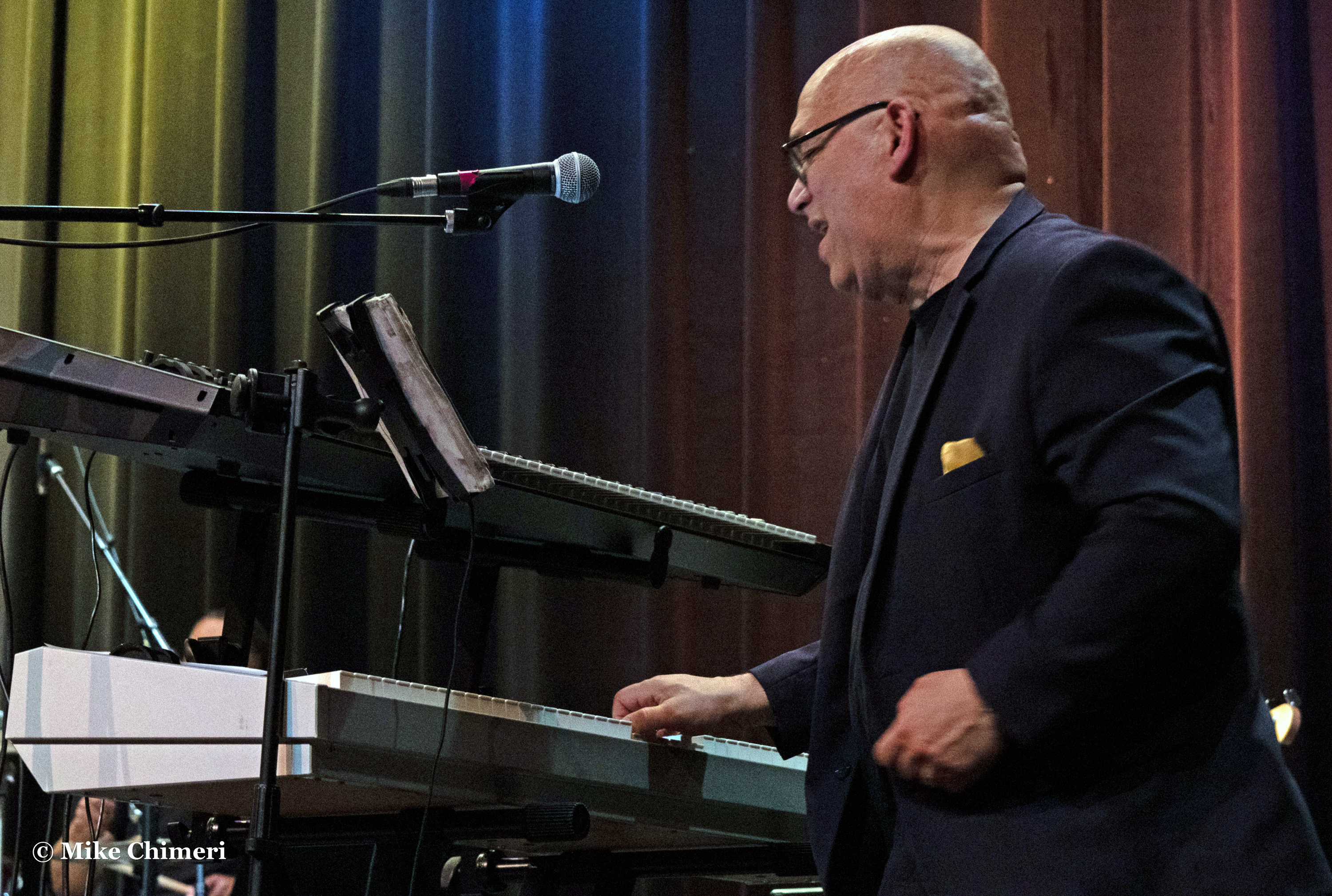
Finally, Jay Rowe on keyboards (all but the first are from his “My Cherie Amour”):

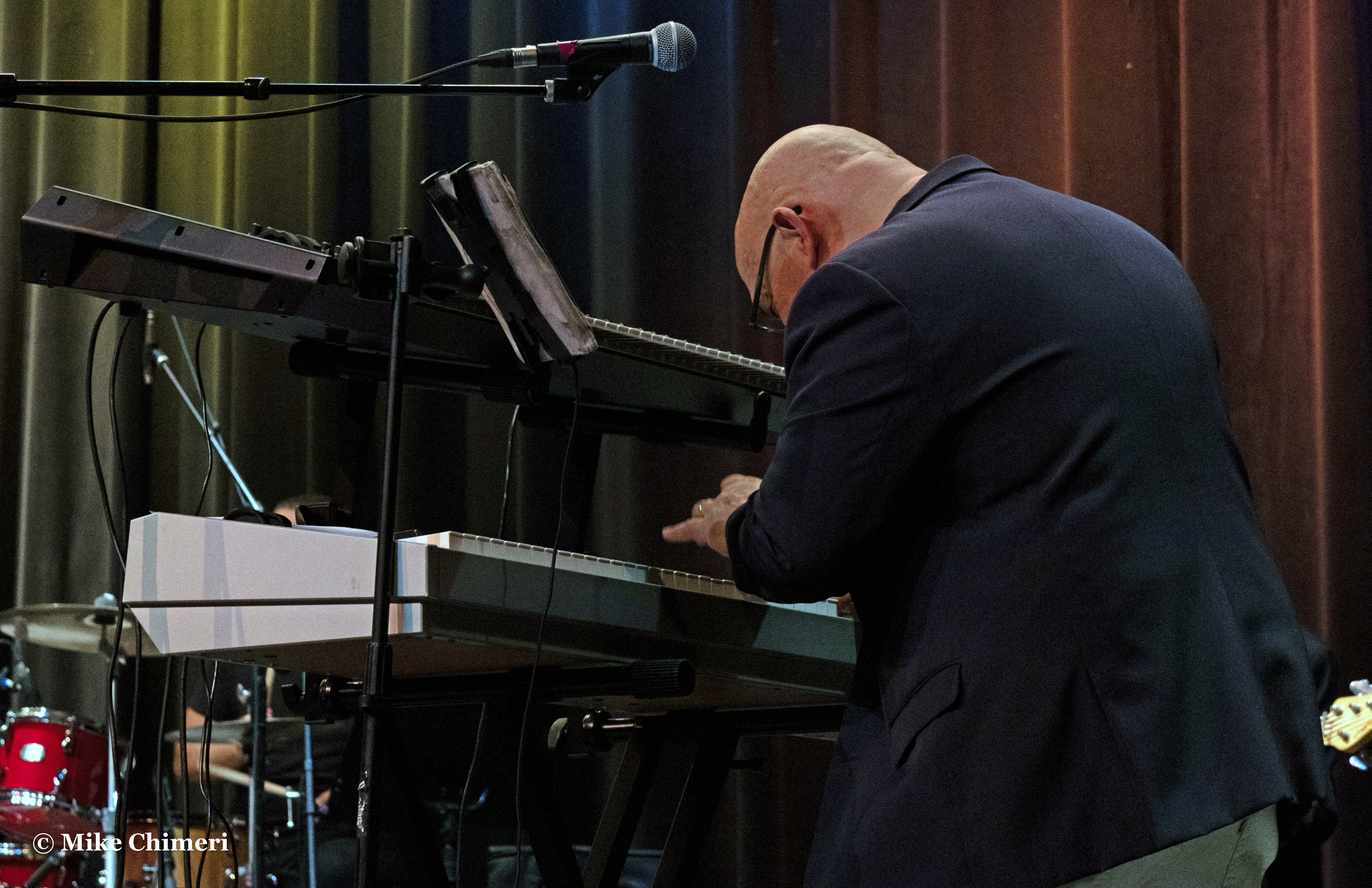


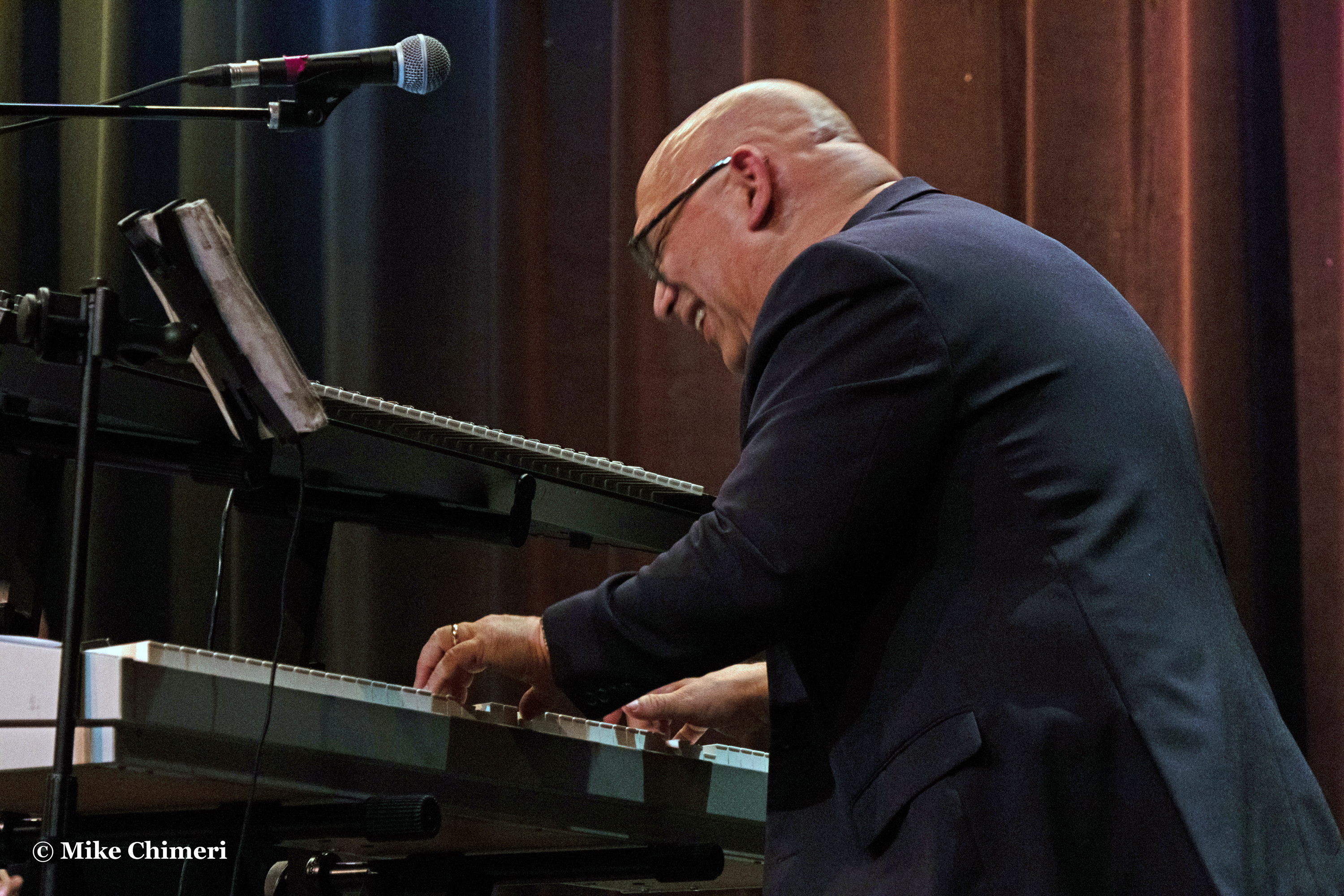
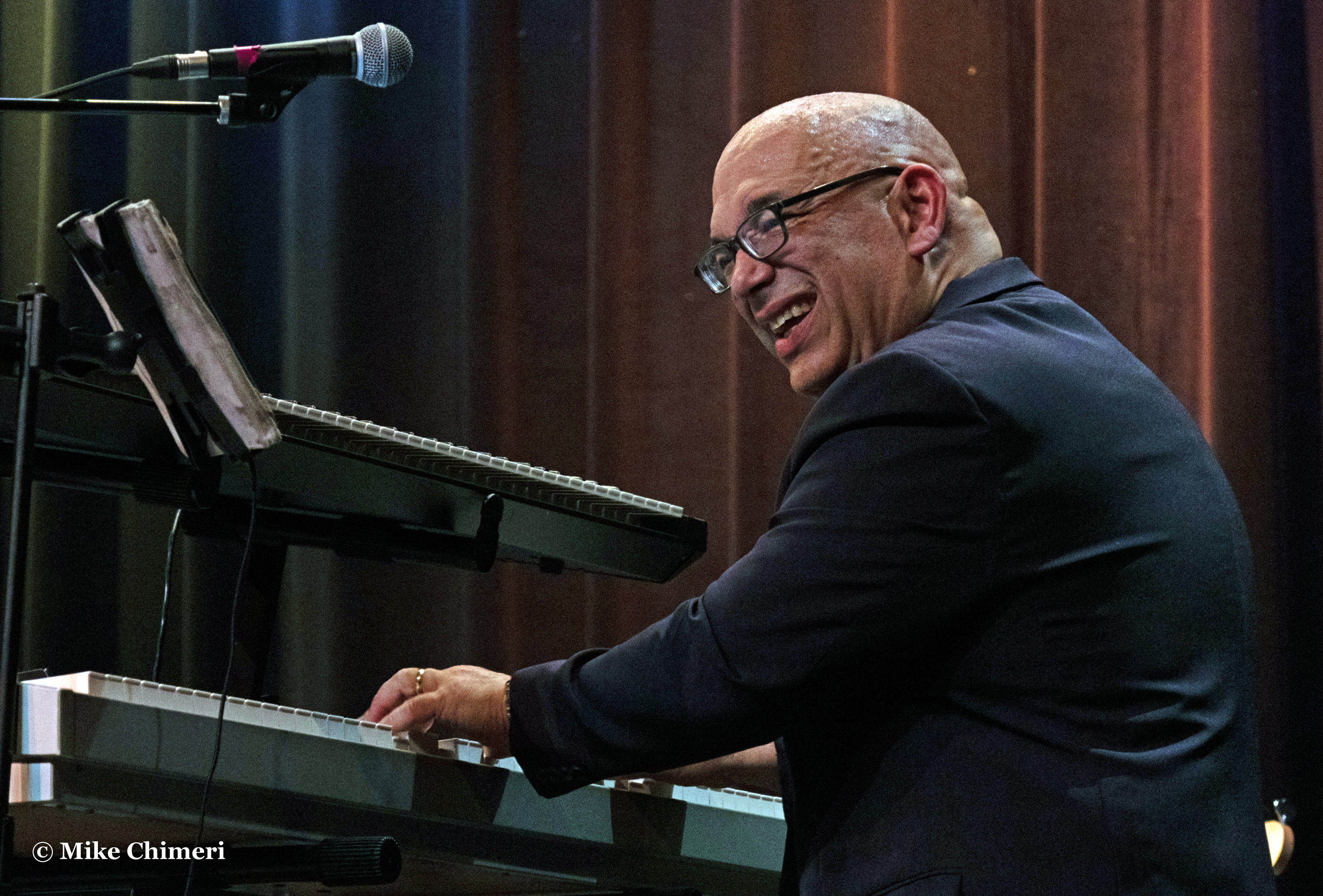


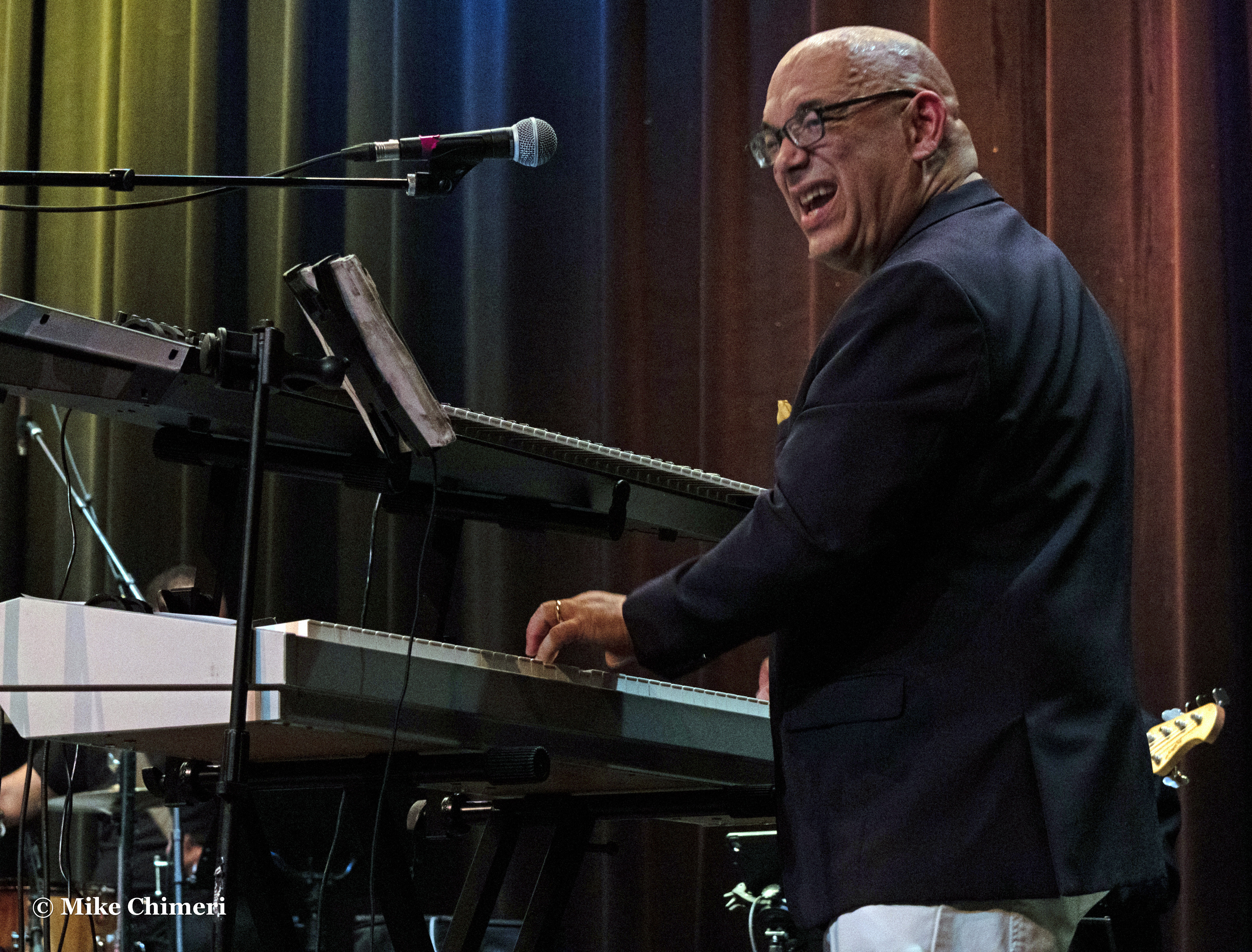
On to medium and wide shots, beginning with Chieli and Nelson:
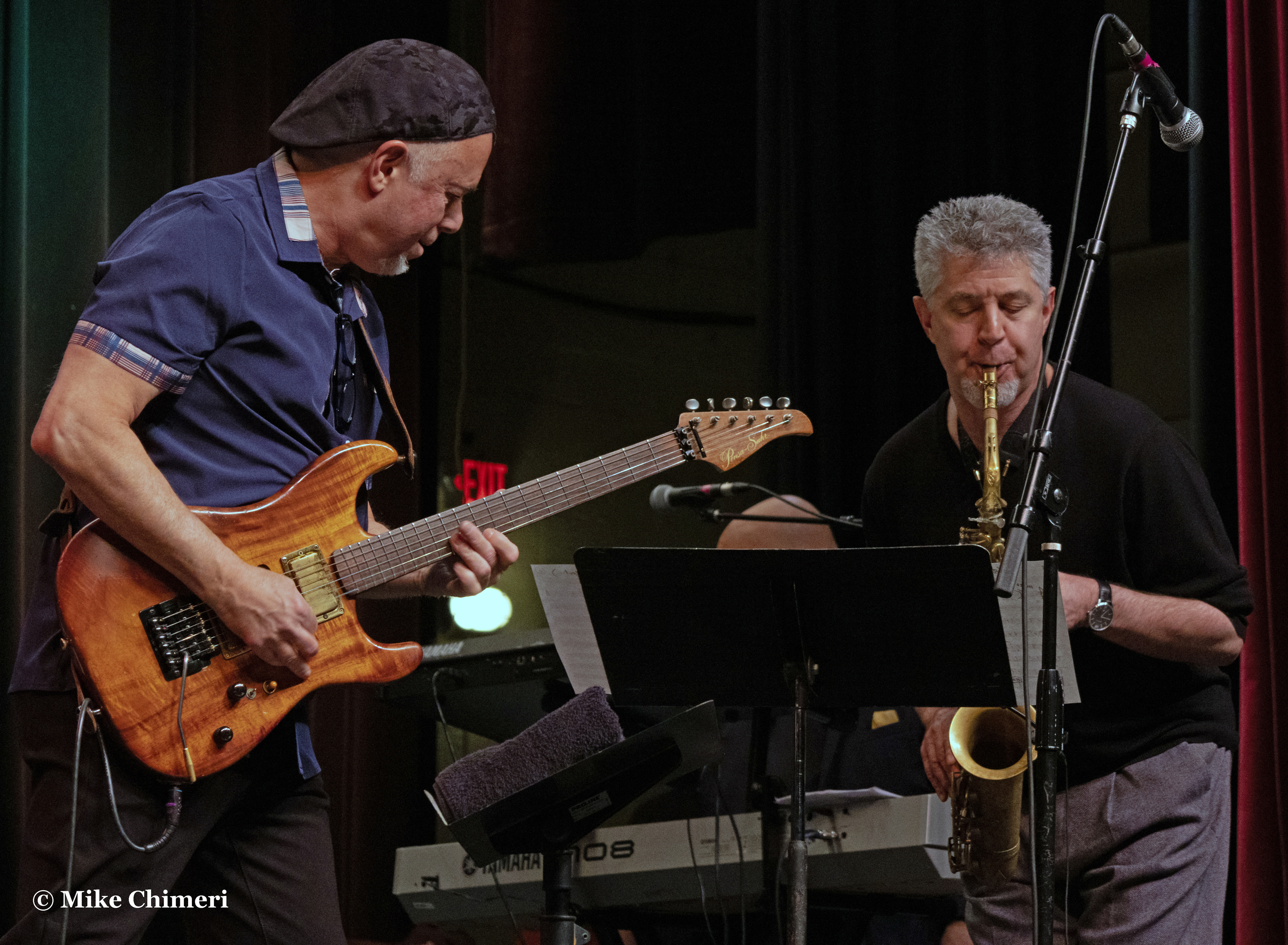
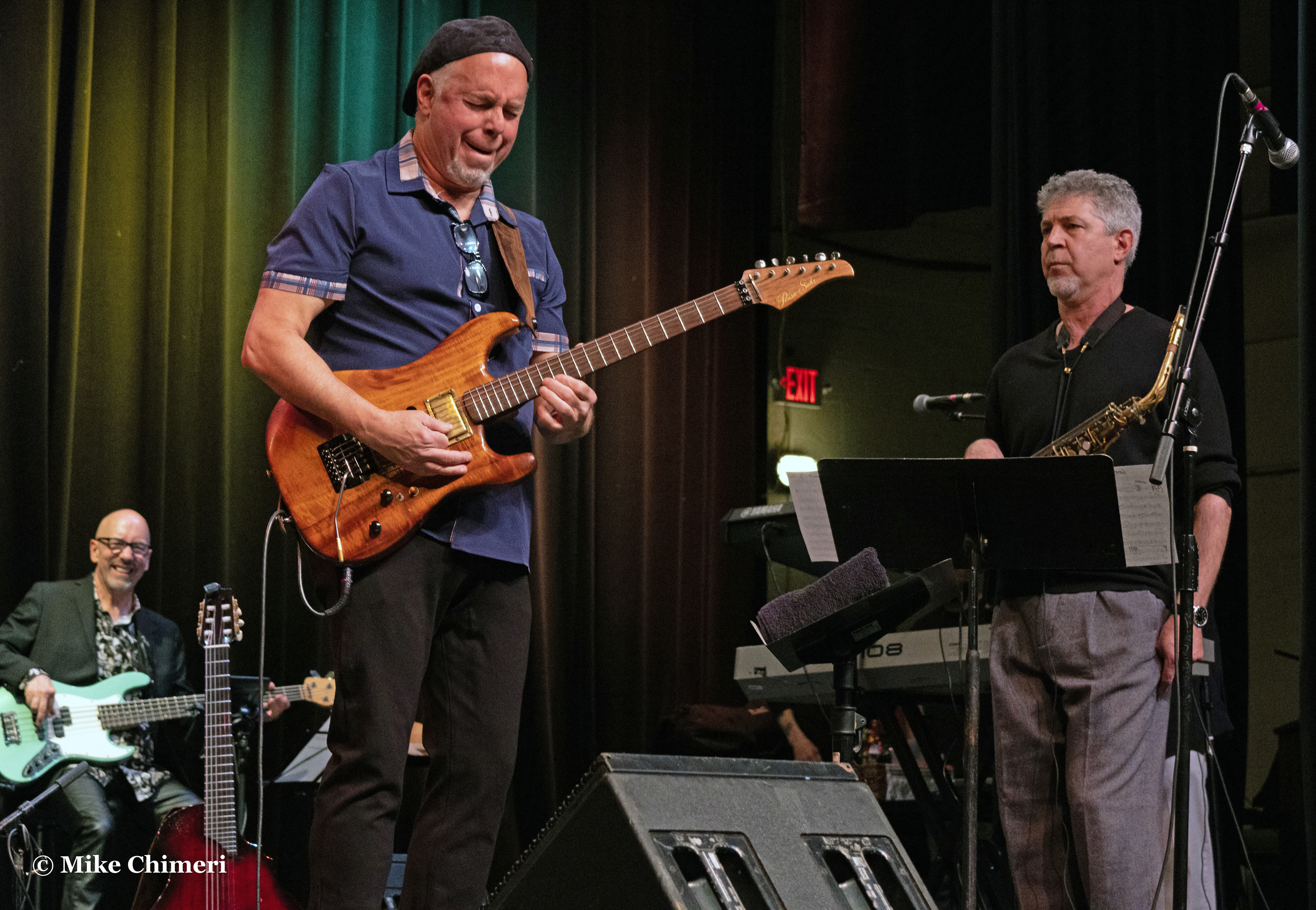
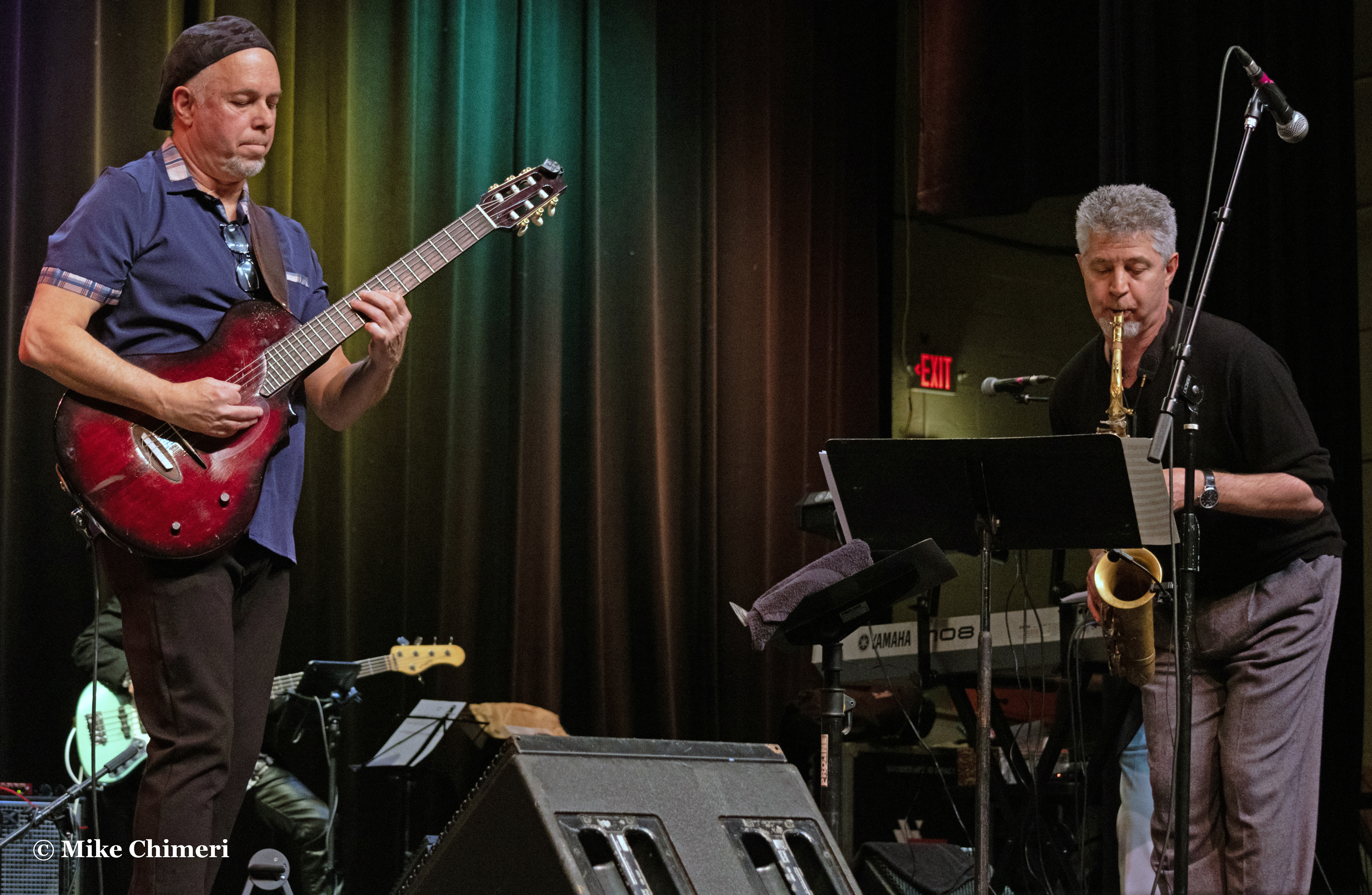
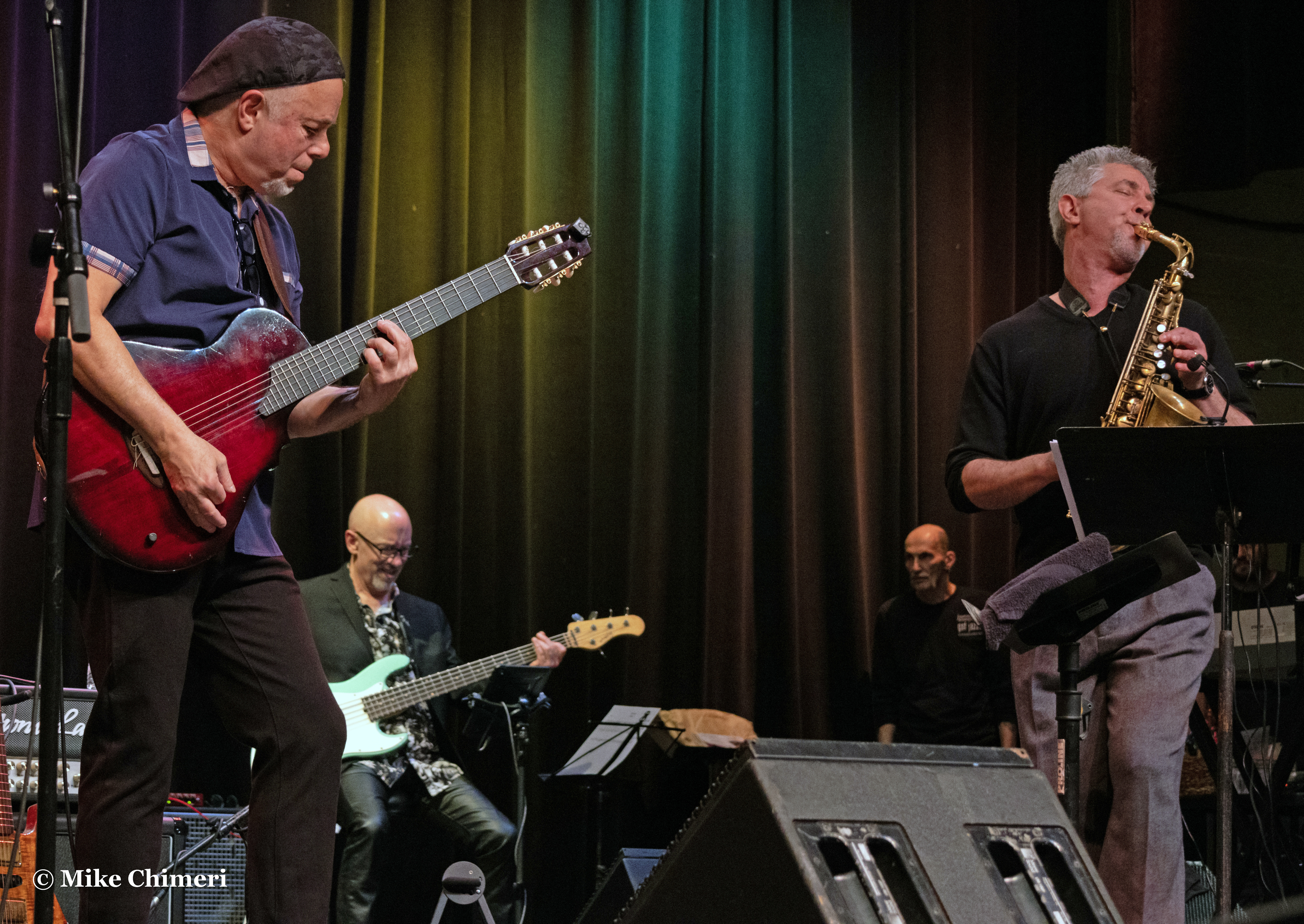

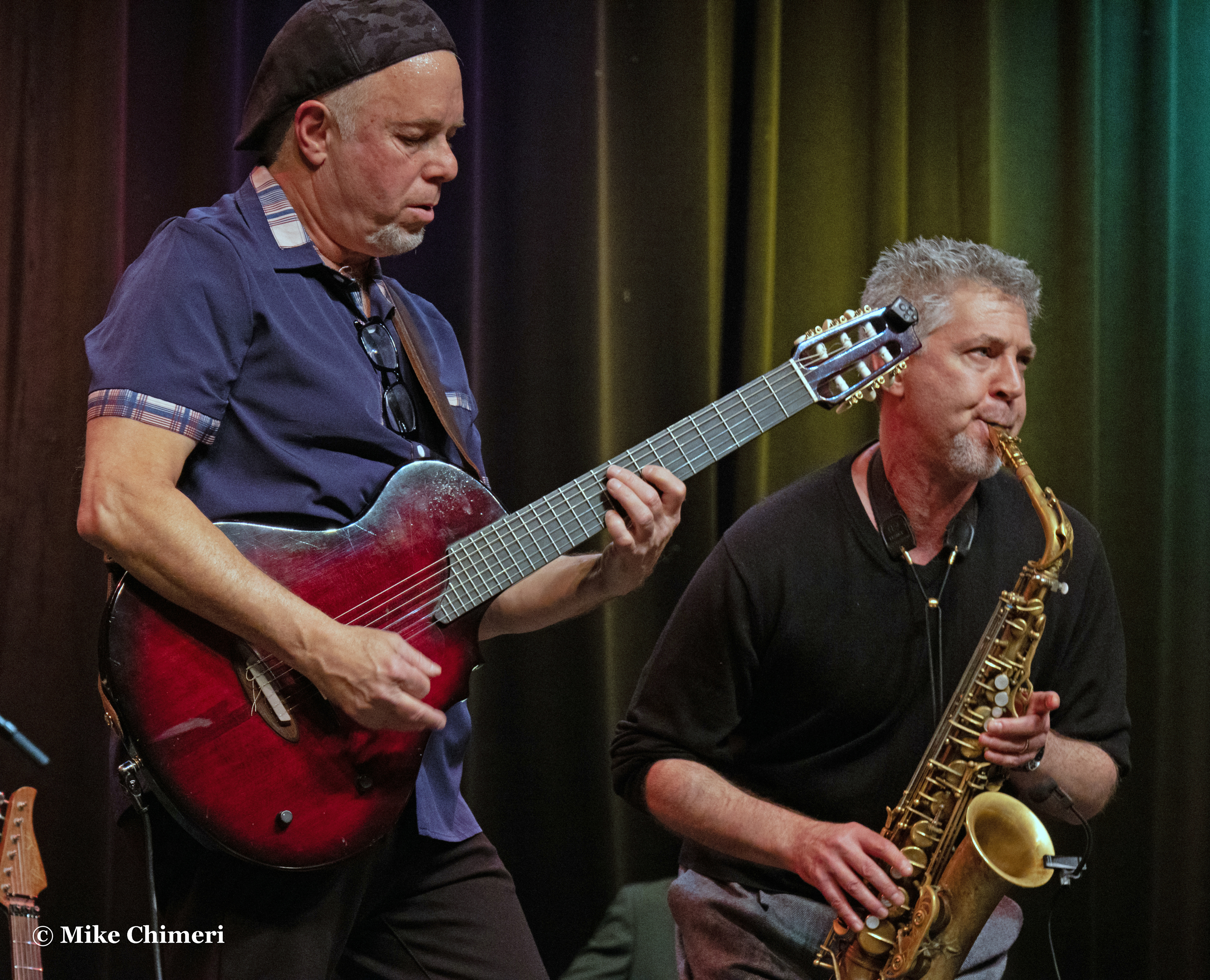
Chieli and Ken on “In Memory of Elizabeth Reed”:
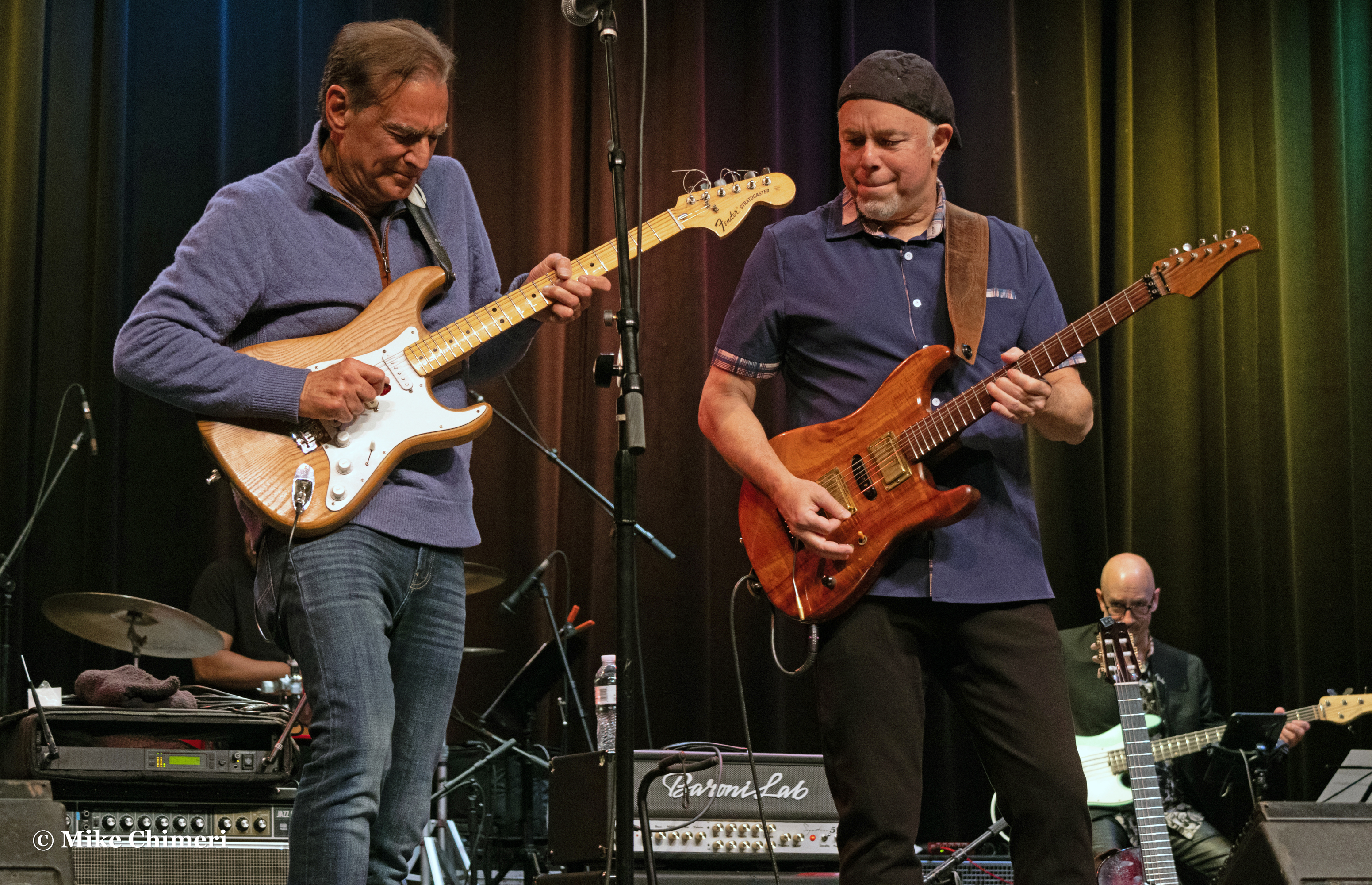


Ken and Nelson:

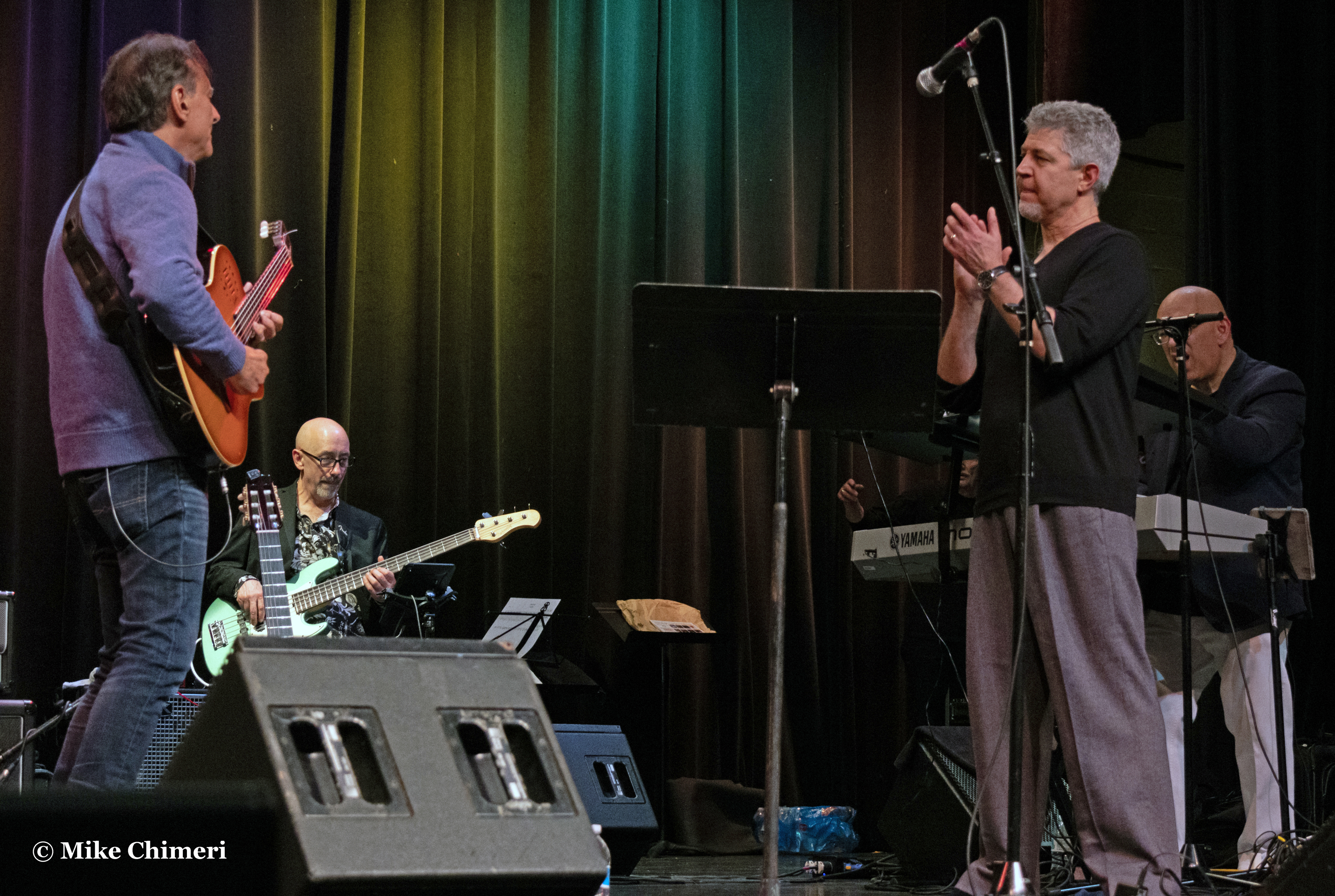


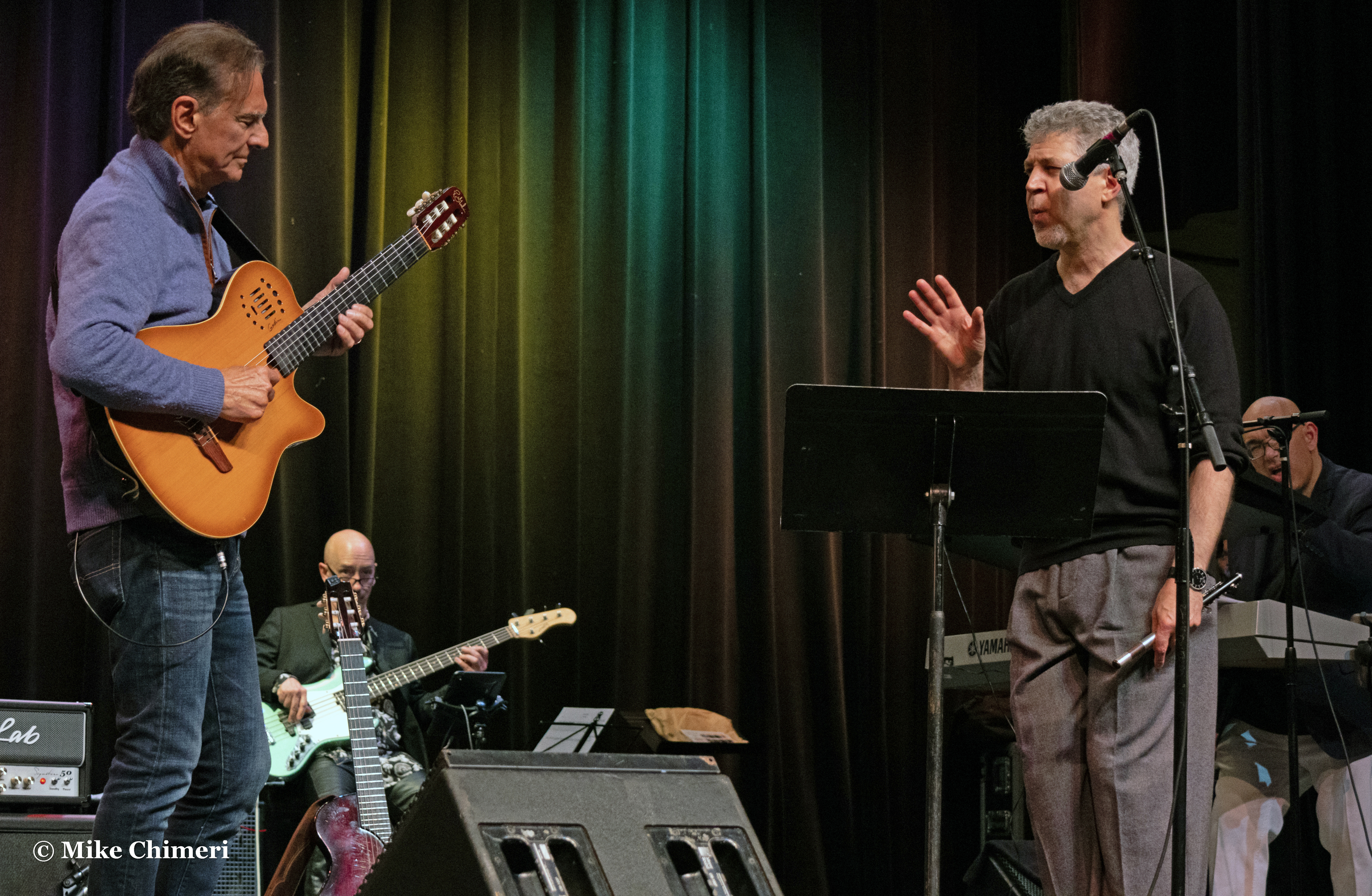

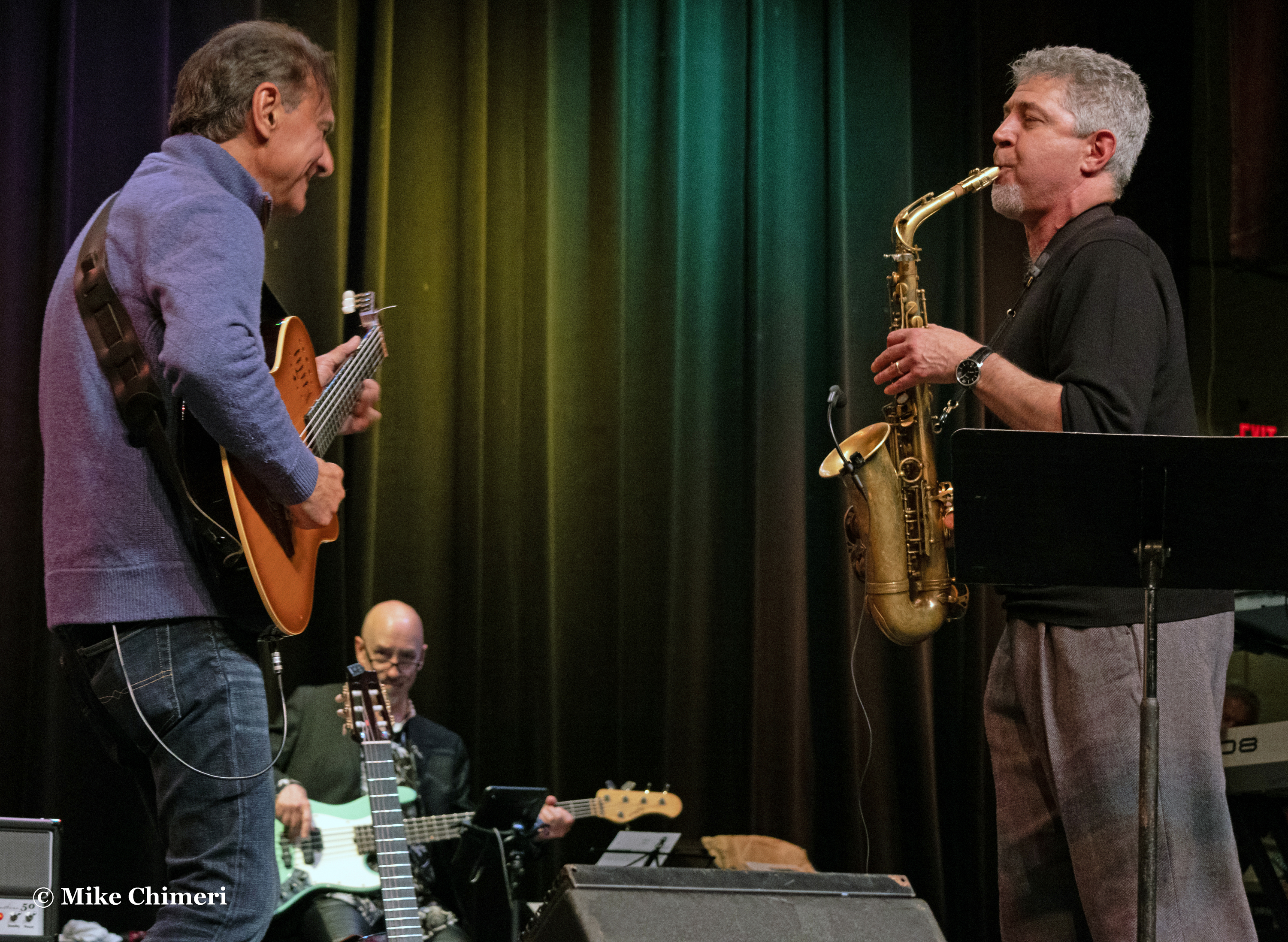
Nelson and Jay:

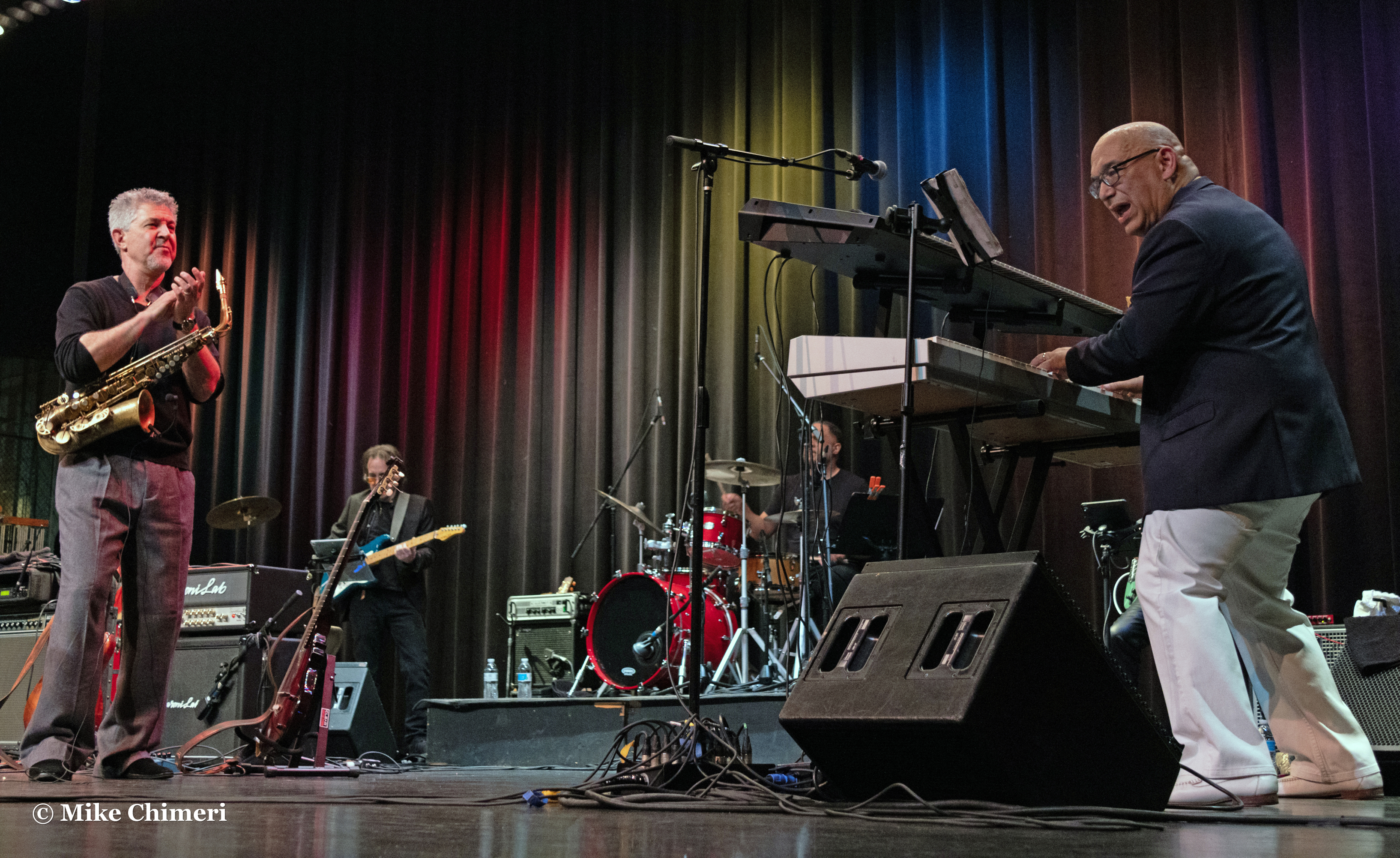
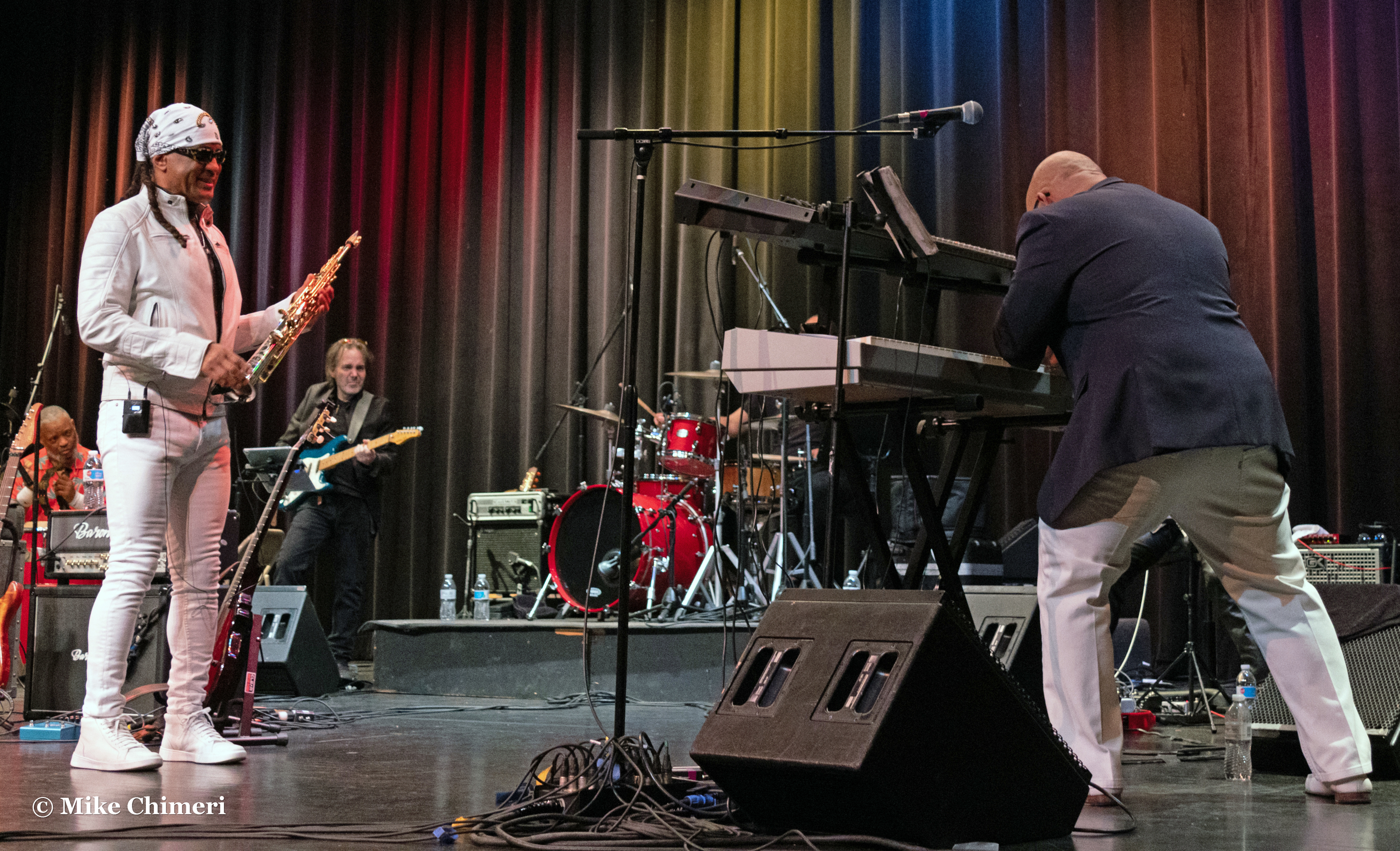
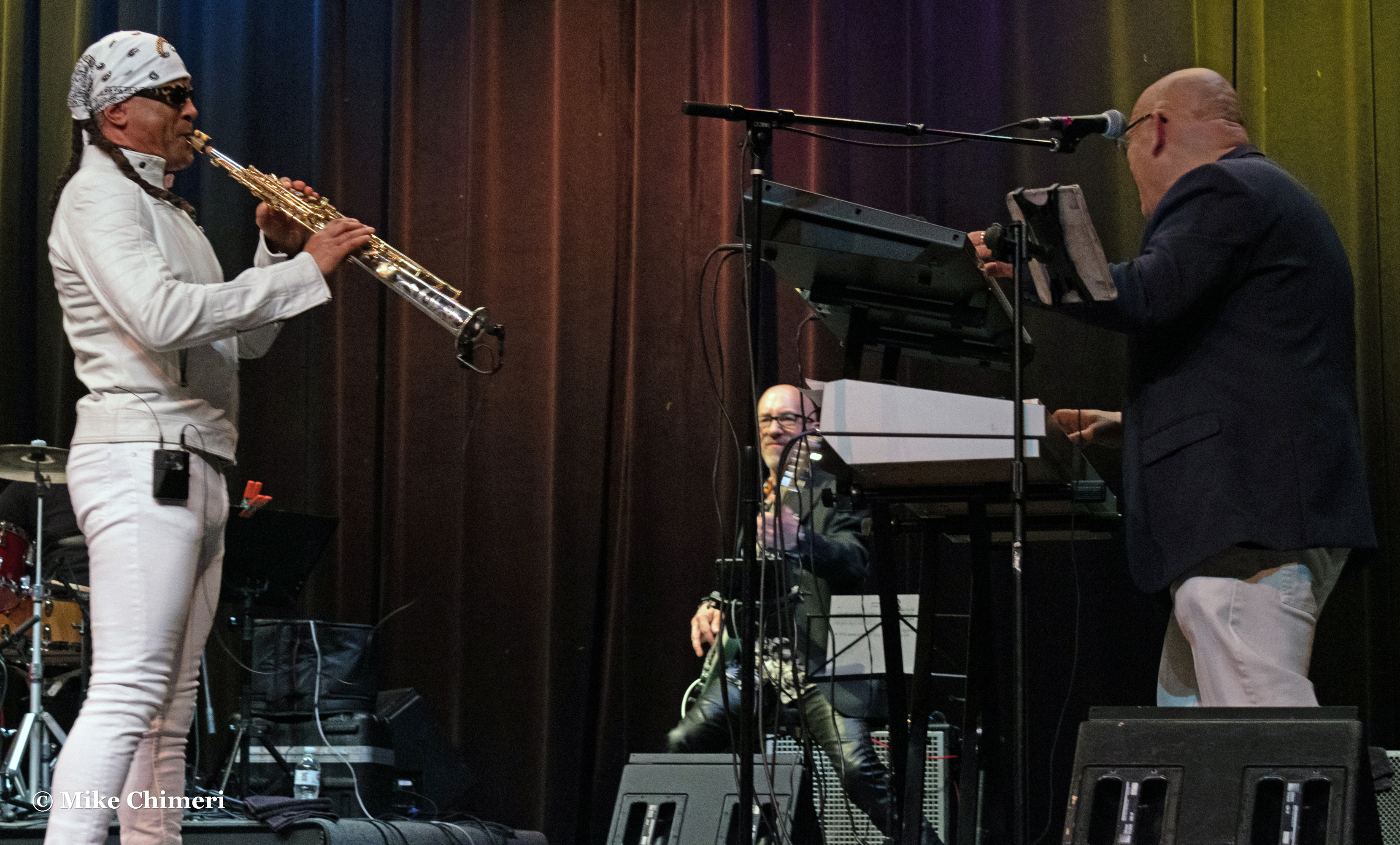
Marion and Jay:
Last in this section, Steve and Trever:

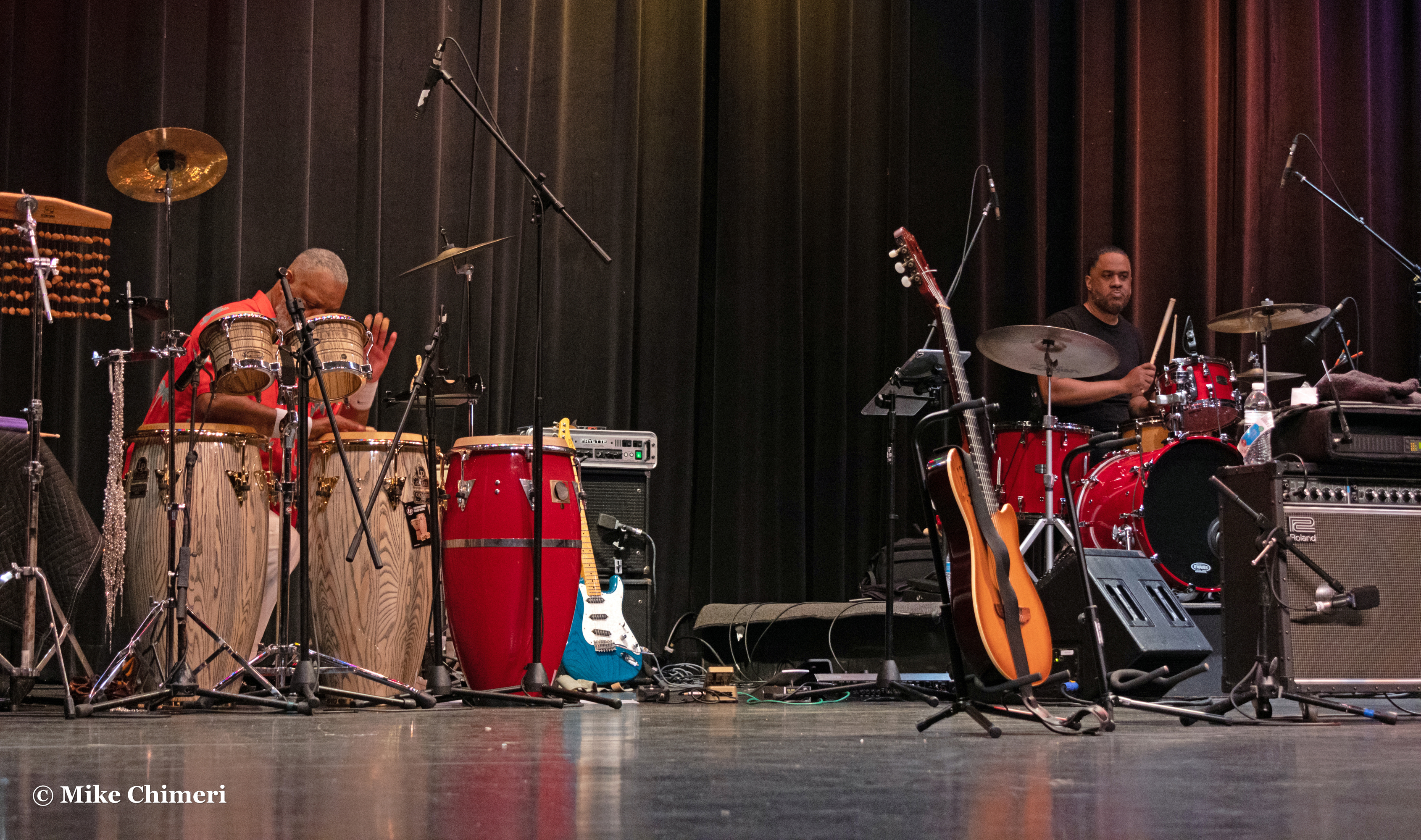
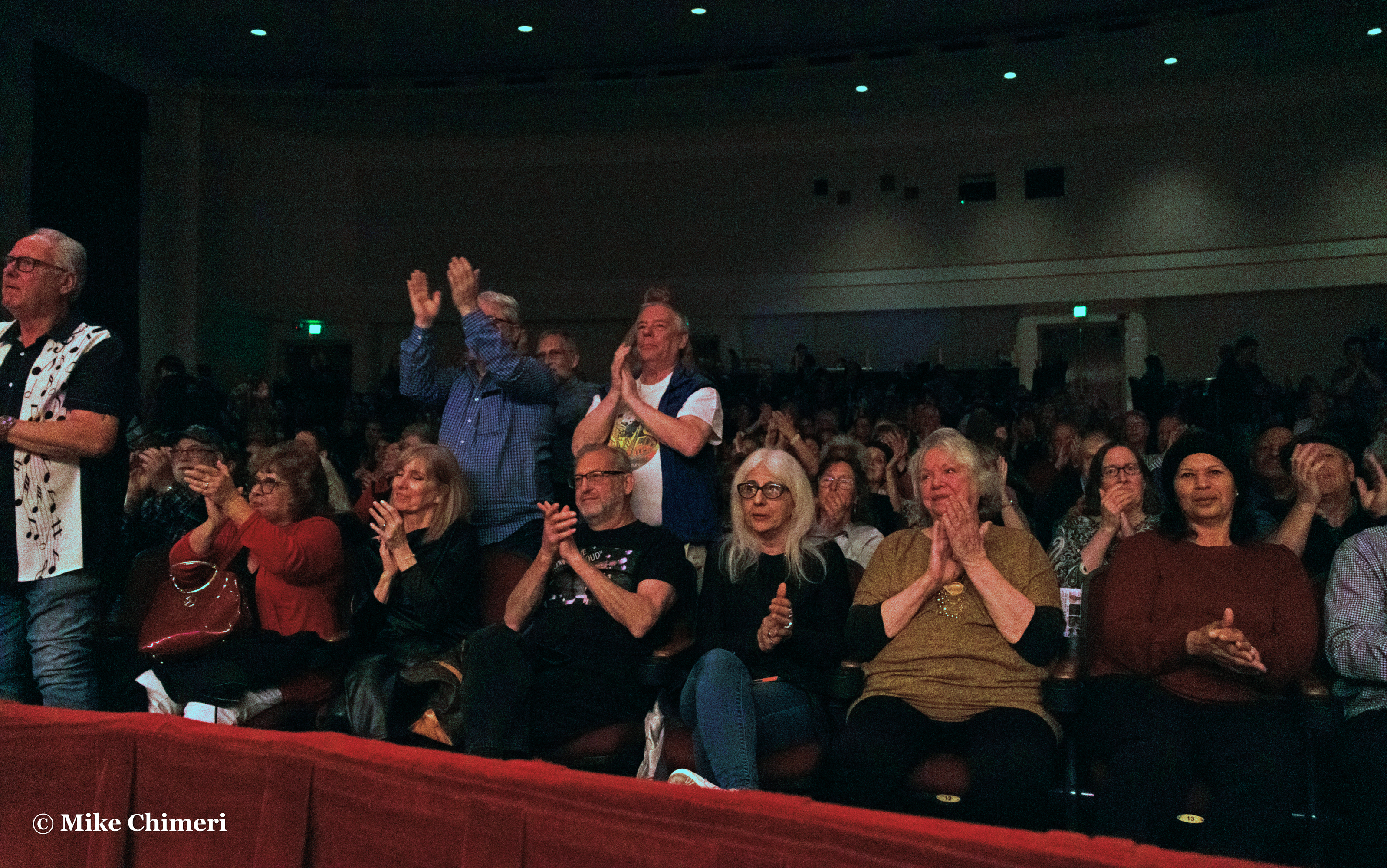
Why not give audience and photographer shots their own section?

Andrew James, Ron and Nydia Hancox 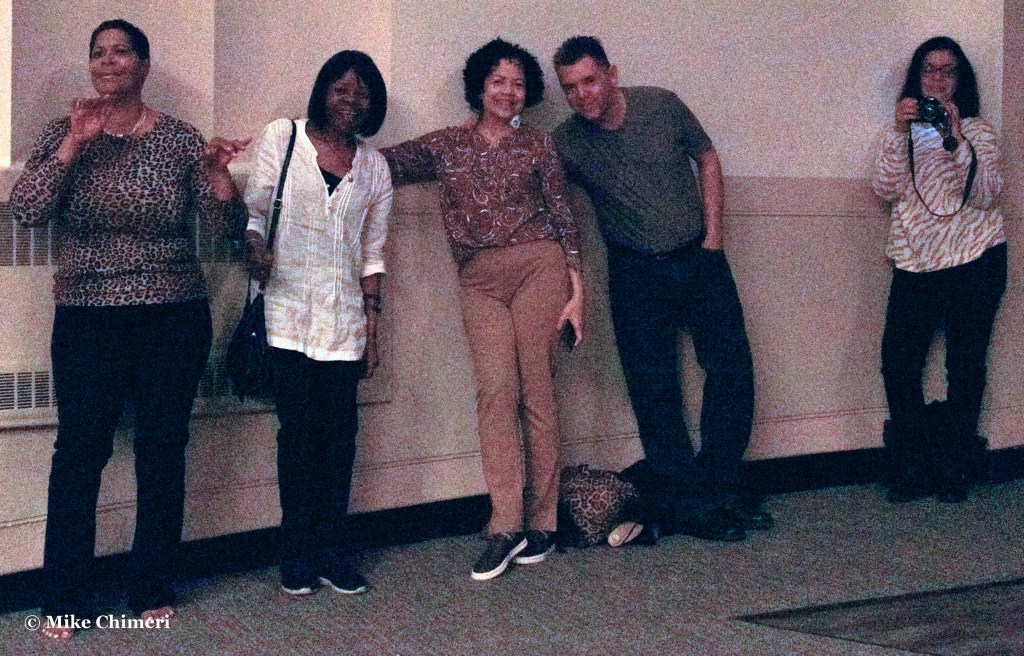
Estella Taylor-Greene, Dolly Moye, Nydia Hancox, Jay Dobbins, Norma Rohadfox 
Another photo of the fab five in my camera’s sports mode. Jay Dobbins spotted me again.
When it came time for the raffles (between “…Elizabeth Reed” and “Marcosinho”), I forgot to only check my tickets for the 50/50 portion. I was needlessly exasperated when my numbers didn’t match what Jay Rowe called.
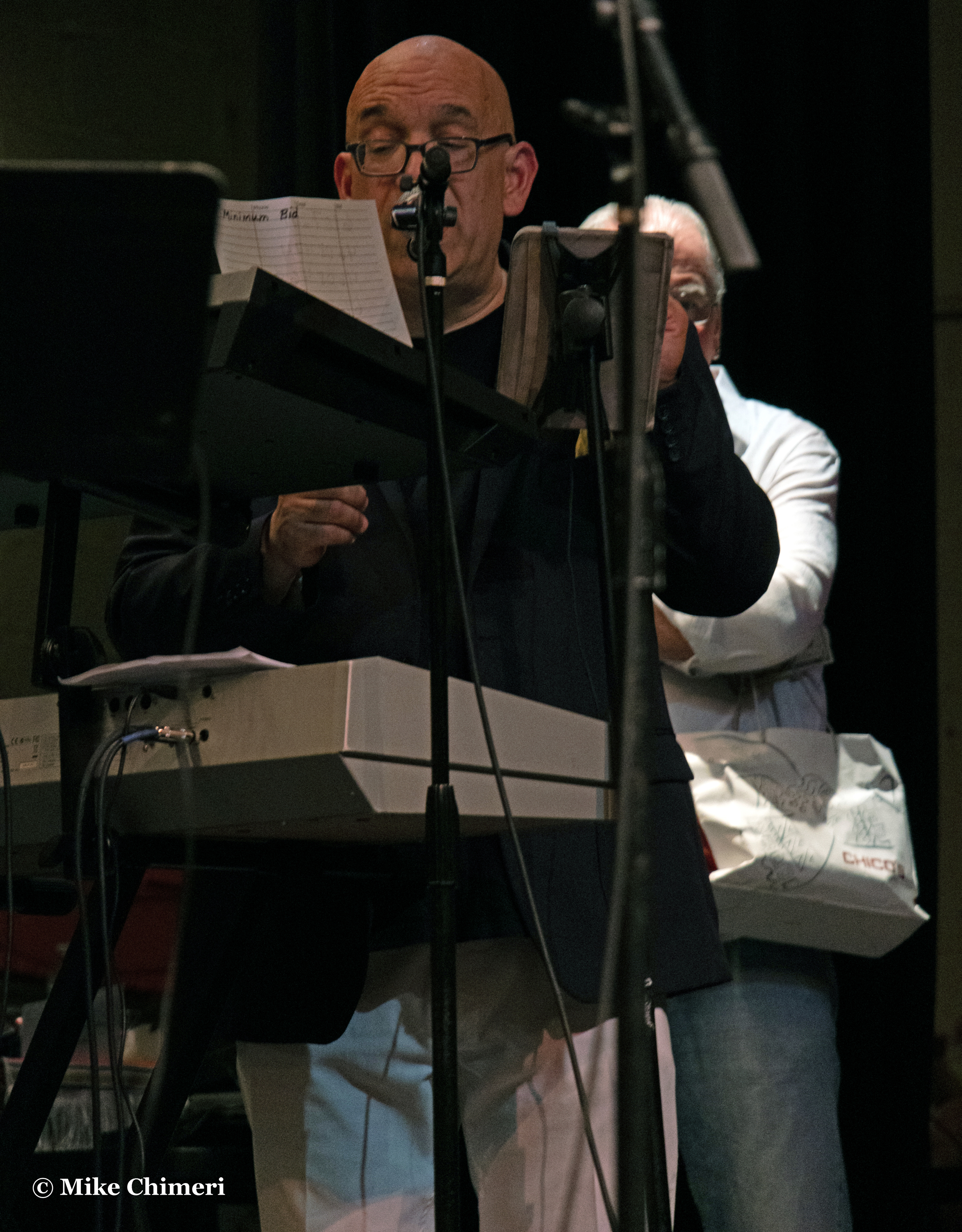
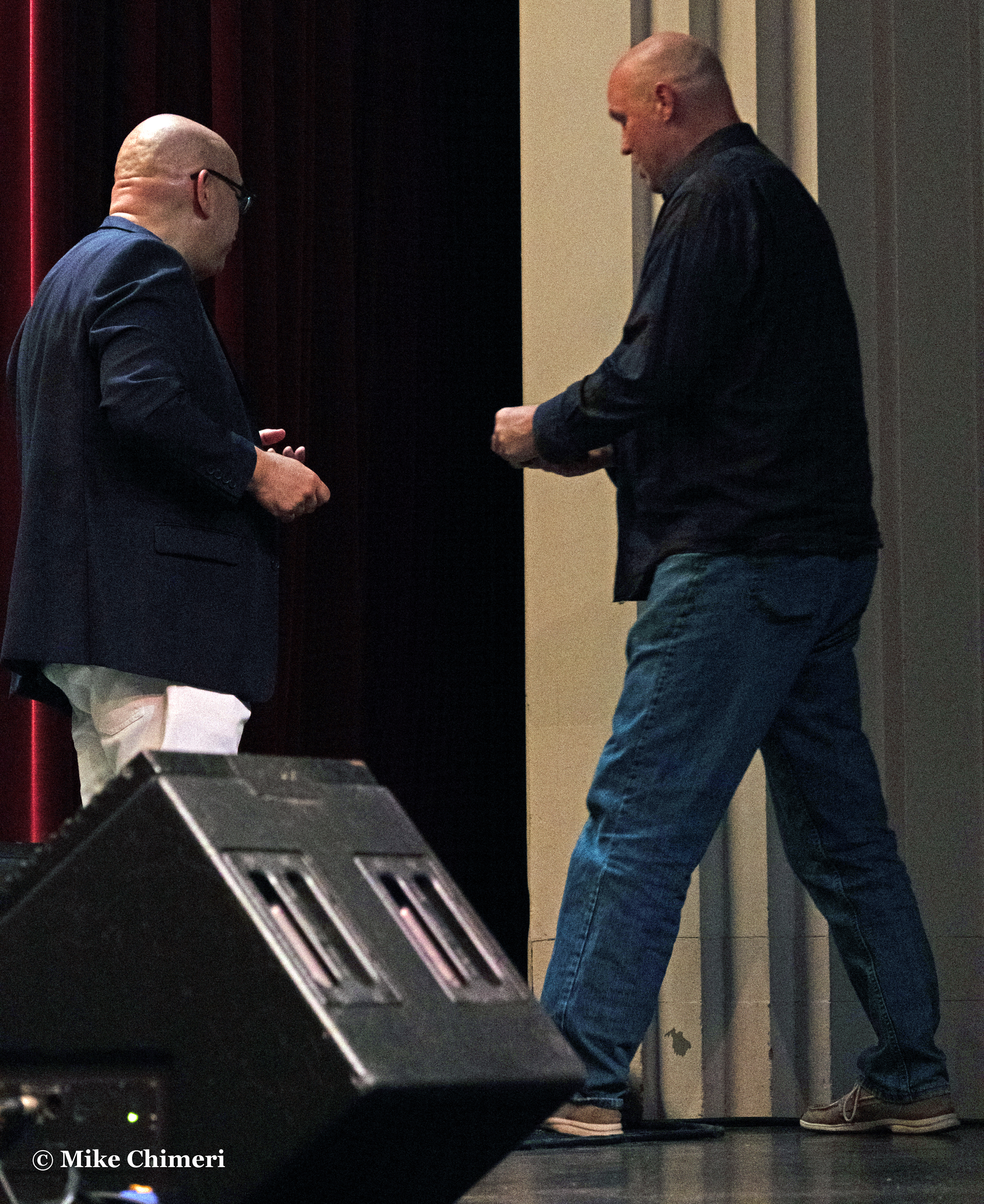
I was rightfully dismayed when I actually lost the 50/50, but at least my $10 went to a great cause. The winner was Steve, who graciously donated back $200 of his winnings.

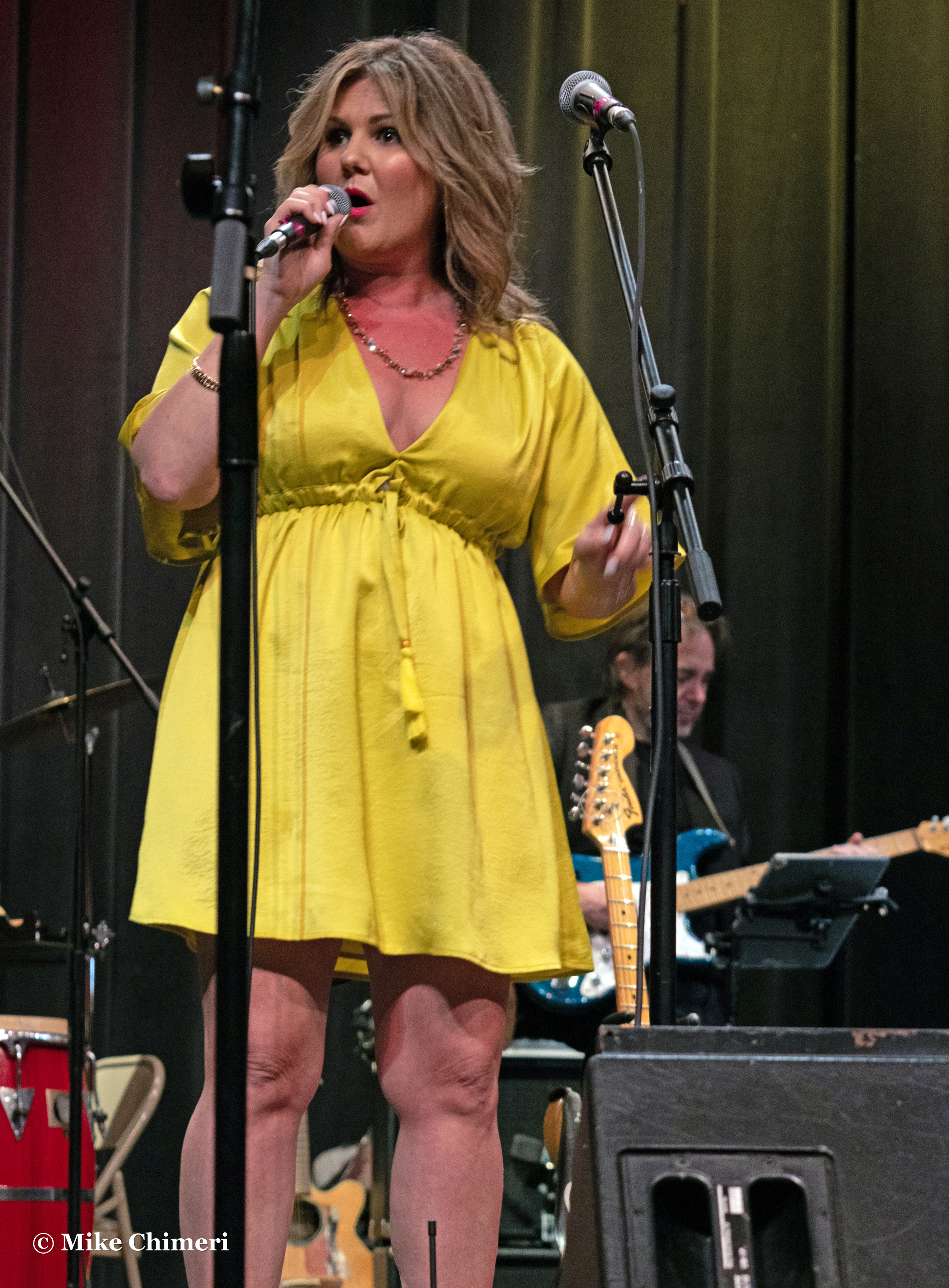
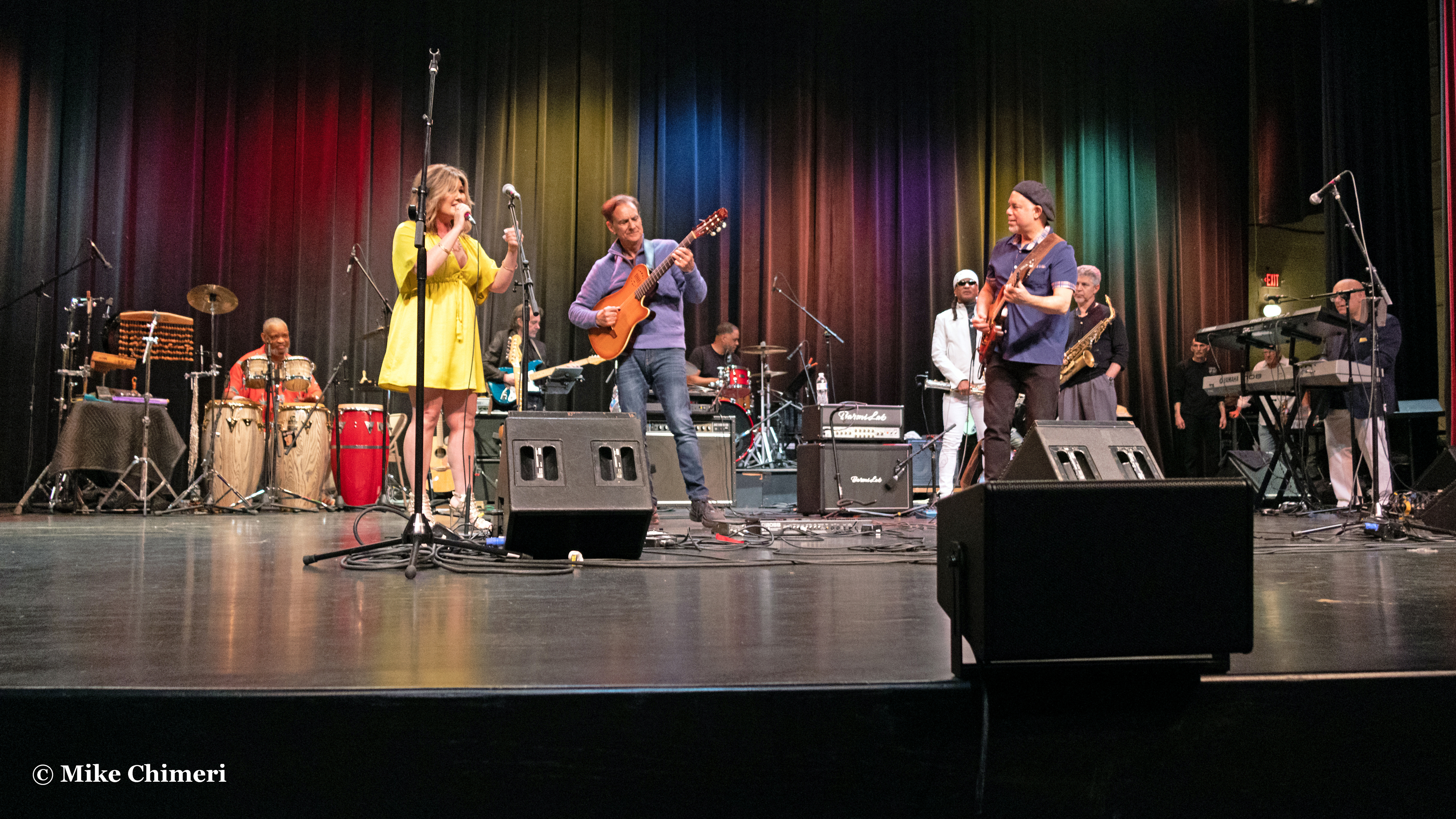
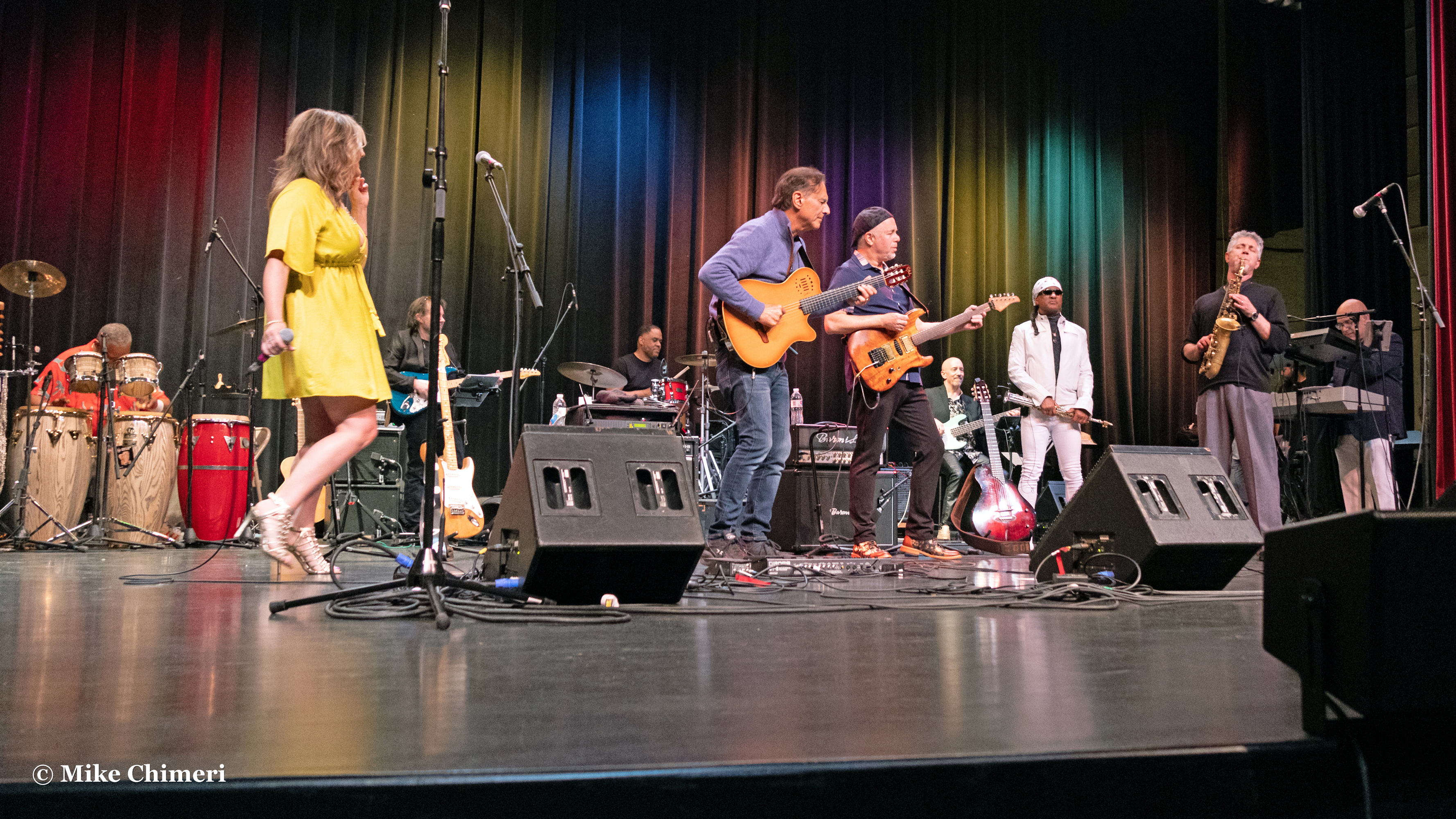
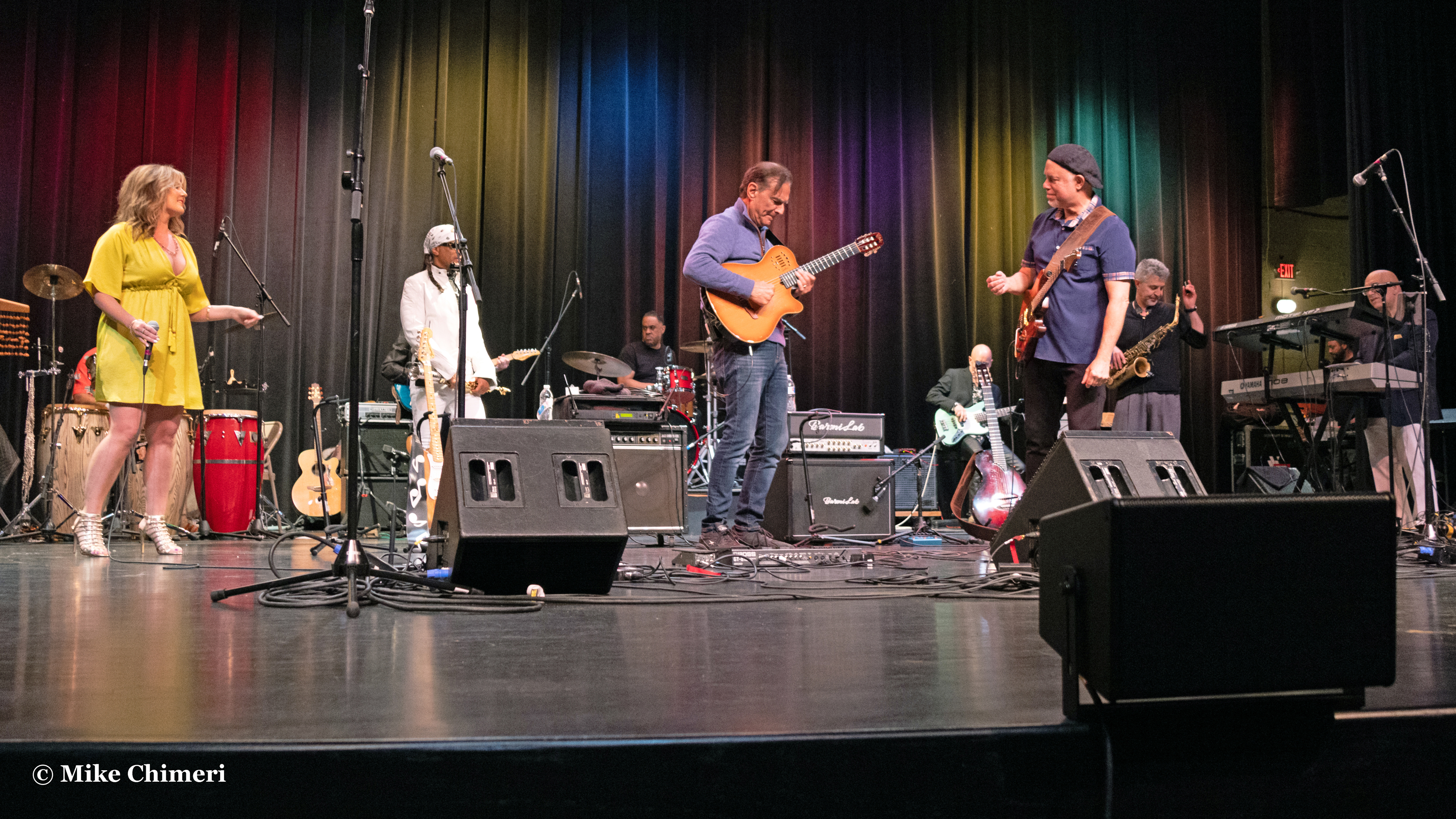
The finale, “What You Won’t Do for Love,” featured vocals by Carla Z:




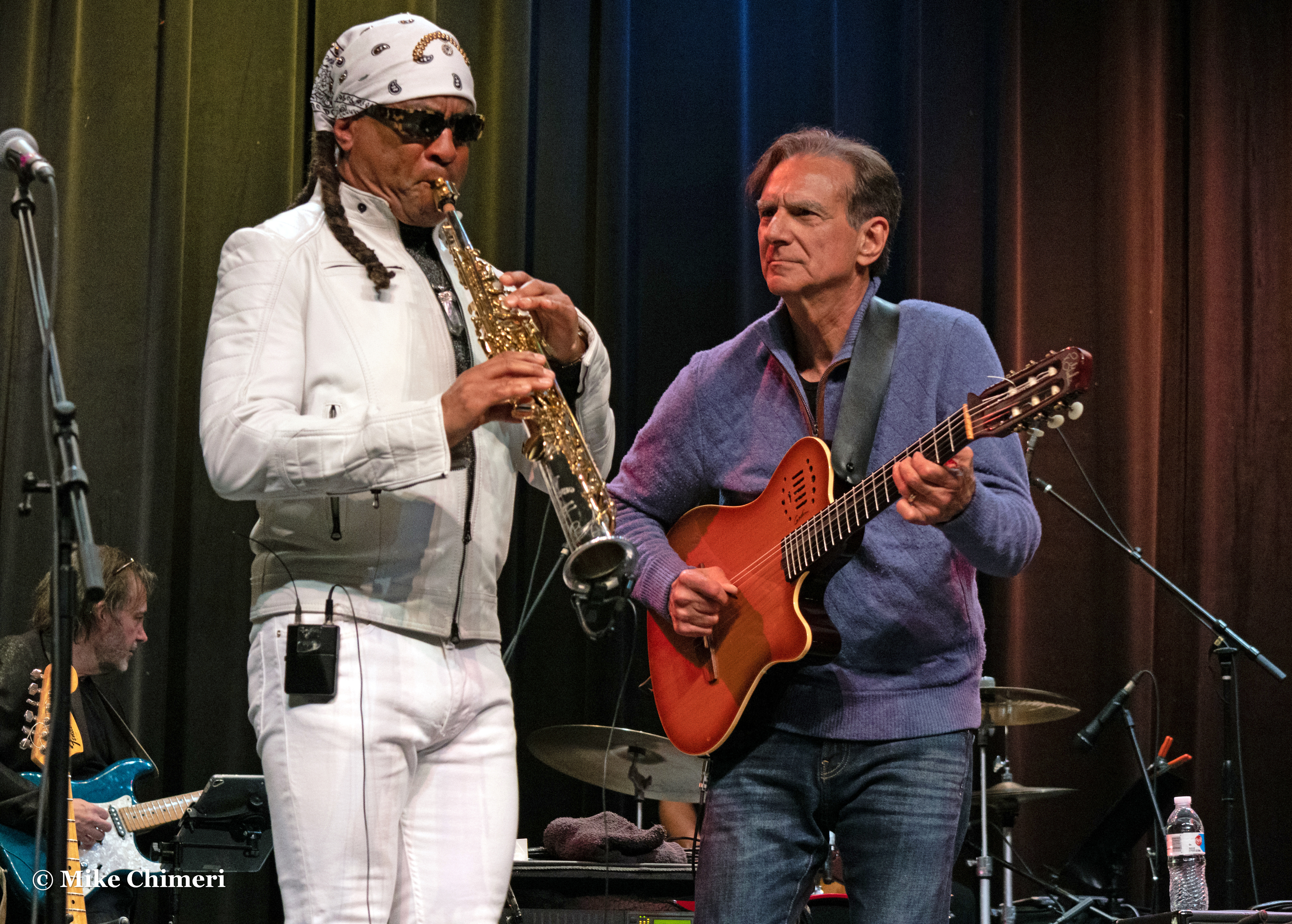



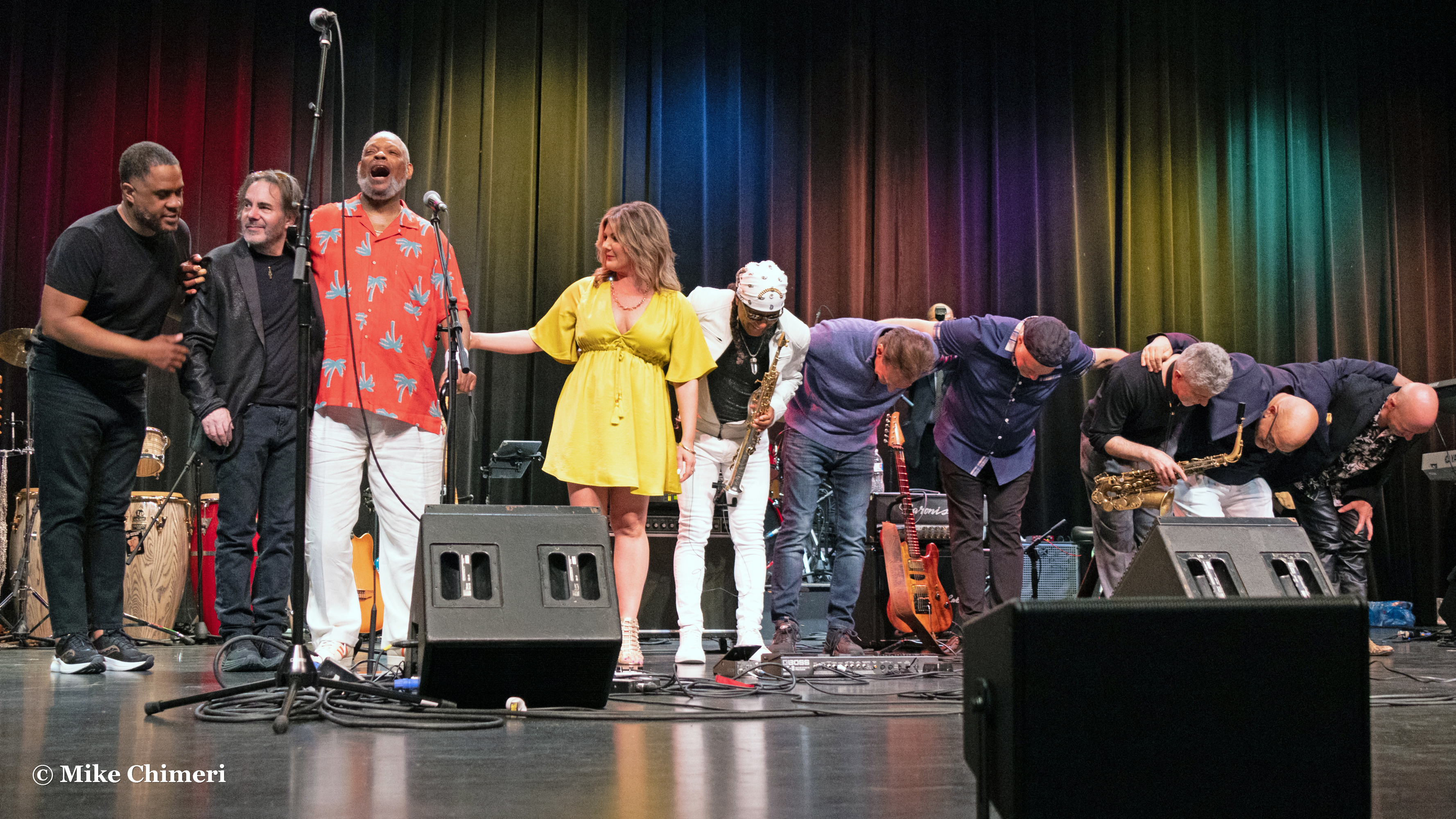
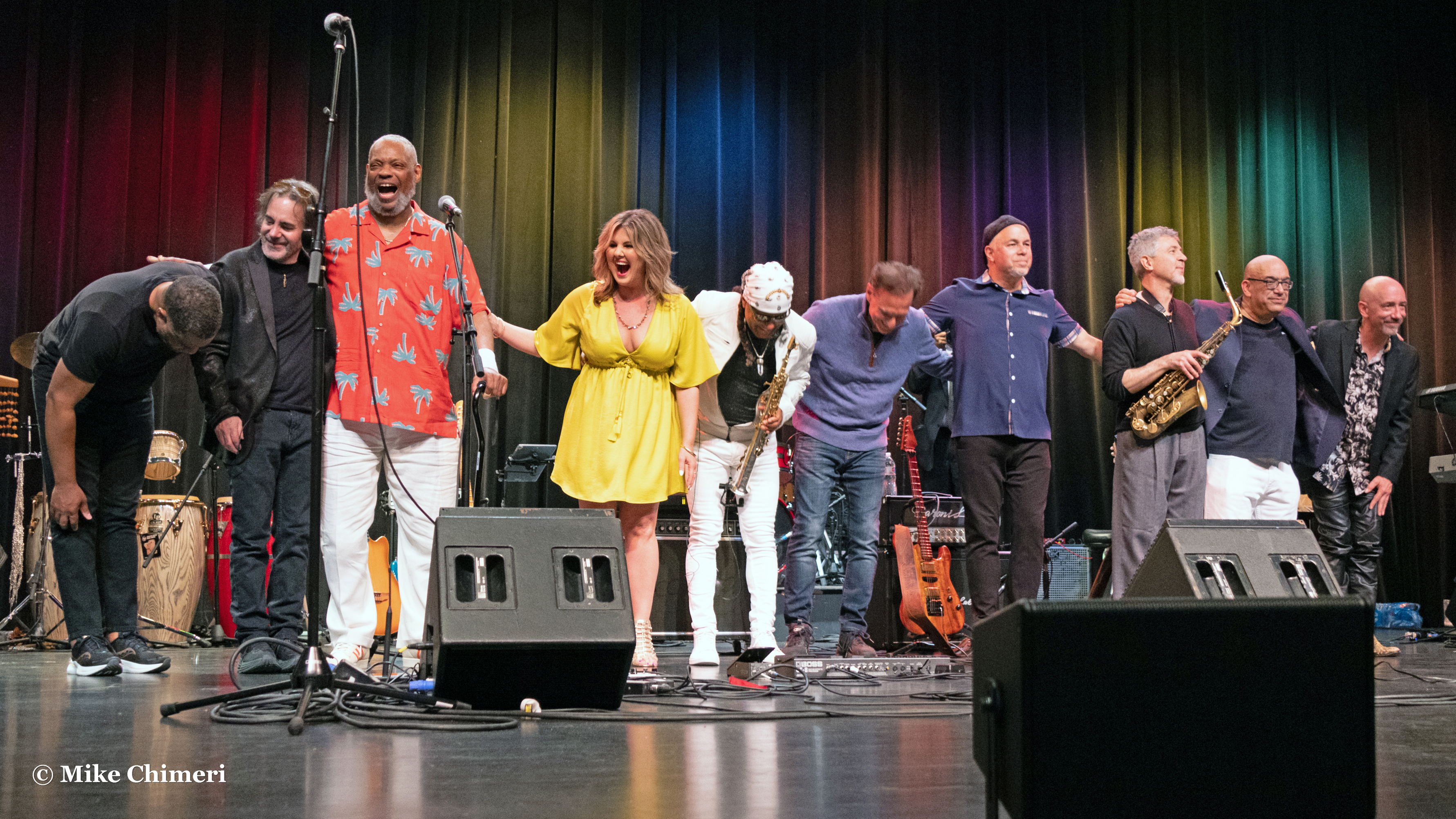


As I was packing up my camcorder – Panasonic HC-X1500 with VW-HU1 and Rode VideoMic GO II – and tripod – Magnus VT-300, Lisa Arpin approached me to say hello. We had met during Jay Rowe’s Tito Tuesdays livestreams on Facebook during the early months of COVID. Afterward, I put the speedlight on my camera – a Canon EOS R7 – for flash meet-and-greet photos. (I was close enough to the stage that the RF-S 18-150mm lens was all I needed.) Unfortunately, the flash and low ISO (100) darkened the background and washed out the foreground. So, I turned off the speedlight and had photos taken at the settings I used during the show: 1/100 second shutter speed and ISO 2500. Later in Adobe Photoshop Elements, I’d bump up the brightness and contrast. (I have regular Photoshop, but mostly use it for upscaling, PDF automation, and graphic design.)
The first photo is of Jay Dobbins and Andy Abel:
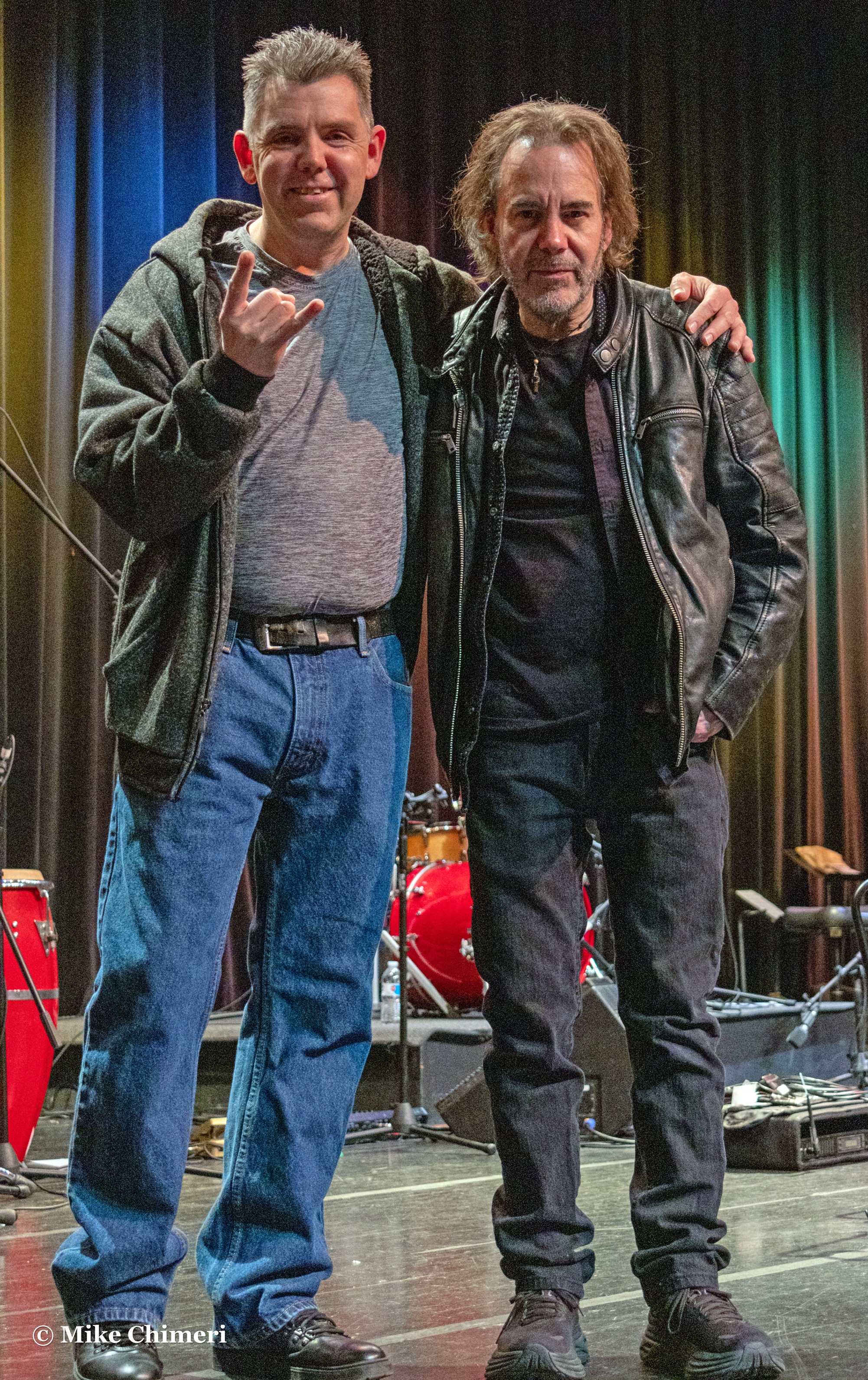
Andy and “Jay Squared” (Dobbins came up with that):

I wanted to get in one photo, which Andy’s sister Janet gladly took (the next day was her birthday):

Once more from the auditorium, me with Jay Dobbins and Steve Scales:

Out in the lobby, I missed a chance to catch up with Chieli Minucci, but was part of a conversation with Marion Meadows and Katherine Gilraine about a documentary he was working on.
It took three attempts to get a photo with Jay Rowe, his wife Deborah, and Nelson Rangell (sorry to all three of you):

The last photo of the night, taken by Kelly, was me with Kristin and Ken Navarro:

Ken acknowledged Kristin during the show before “When We Dance.” It was very nice to catch up with them. Ken spotted me in the orchestra pit while playing “Smooth Sensation,” saying hi to me during a rest. After the show, he climbed off stage to chat with me. I talked about how I’d be debuting tracks from Love is Everywhere on May 17 (last night) at the end of the second Three-of-a-Kind Showcase edition of Instrumental Invasion. Ken liked the concept.
Kelly dropped me off at Hampton Inn around midnight. I wrote the following back in my room (in the vein of what I wrote earlier in this recap):
I had a lot of apprehension and performance anxiety ahead of tonight, the first night of the 20th anniversary Smooth Jazz of Scholars. The thought of taking hundreds of photos and having to edit them all scared me. And yet, I was at the Parsons Complex in Milford and had a great time. No way will I give up what I do. It’s too much fun in the moment. That’s what should matter. I have to remind myself to be present. I can’t look ahead in fear. I have to enjoy myself and snap away. I’m beloved by all that know me, and that was true tonight.
Mike Chimeri, Facebook post, 4/29/23, 1:22 AM
Watching part of a Twitch livestream got me through the late night/early morning hours as I transferred photos and videos from their SD cards. Then, since I shoot RAW now, I imported all the photos into Adobe Lightroom, then exported them as JPGs and deleted the RAW files.
Before retiring for the night/morning, I edited the meet-and-greet photos to include in my all-is-well Facebook post. I was able to get a few hours of sleep before my body decided I’d had enough.
Instrumental Invasion, 5/17/23: More Three-of-a-Kind Showcases! May 18, 2023
Posted by Mike C. in Airchecks, Animation, Audio, City Pop, Comedy, Game Shows, Internet, Jazz, Media, Personal, Radio, TV, Video.add a comment
The May 17 Instrumental Invasion on WCWP was the sequel to February 8’s theme week, containing six more Three-of-a-Kind Showcases and more Bob Barker era Price is Right references (Fremantle’s Barker era YouTube channel). The show was recorded and mixed entirely on March 15, but I had to do pickups on the 16th.
The playlist was created on March 9 with annotations on the 11th. The talk break script was drafted up to the top of hour 2 on March 14 and completed between recording sessions on the 15th.
Let’s get the scoped aircheck out of the way before all the background info:
The line “I wouldn’t think of it” while back-selling “Unthinkable” by Casiopea referred to a scene in Futurama episode 2ACV03, “A Head in the Polls.” Here is the relevant portion from the transcript:
Morbo: Morbo demands an answer to the following question: If you saw delicious candy in the hands of a small child, would you seize and consume it?
Johnson: Unthinkable.
Jackson: I wouldn’t think of it.
Morbo: What about you, Mr. Nixon? I remind you, you are under a truth-o-scope.
[The truth-o-scope hovers over Nixon’s head and he starts to sweat.]
Nixon: Uh, well, I, uh … the question is-is vague. You don’t say what kind of candy, whether anyone is watching or, uh…
[He clears his throat.]
At any rate, I certainly wouldn’t harm the child.
[The truth-o-scope beeps.]
Maurice LaMarche as Morbo, John DiMaggio as Jack Johnson and John Jackson (same voice for each), Billy West as Richard Nixon’s Head
Aside from that, there were many Bob Barkerisms in my talk breaks, such as the way I teased the next segment, and the “Sir John, who cometh from the flock…?” shtick with announcer Johnny Olson. Examples can be found at the start of these two videos:
I channeled Johnny and Rod Roddy with the “something for every room in the house!” bit leading into the Fourplay and Ken Navarro showcases. I was going to end the show with a Marc Antoine Three-of-a-Kind Showcase, but my signed copy of Ken’s Love is Everywhere CD arrived on March 9. Thus, an opportunity arose to end on a new recording.
This time, four songs were retreads (again, listed in order of appearance):
- “Avenida del Mar” by The Rippingtons (6/2/21)
- “Can’t Tell You Why” by Brian Simpson (4/22/20)
- “So Many Ways” by Brian Simpson (8/11/21)
- “Tried and True” by Dan Siegel (12/8/21)
And The Price is Right music cues I used were (italics are not in the video title):
- Showcase Cue 2 (Cue 56)
- Showcase Cue (Play It Again Stan)
- Every Room in the House Cue
- Showcase Cue ’03 [1]
- Calliope Showcase Cue (Family Feud 1994 Vamp)
- Bopsa Moog
- Main Theme
For the first time in the show’s Wednesday night history, I went more than a week – two weeks – without a David Benoit song. That’s still only seven weeks out of 163. He will definitely be back next week.
Instrumental Invasion, 4/26/23 April 27, 2023
Posted by Mike C. in Airchecks, Animation, Anime, Audio, City Pop, Education, History, Idol, Internet, Japanese, Jazz, Language, Media, Music, Personal, Radio, Technology, Travel, TV, Video, VTuber.add a comment

The April 26 Instrumental Invasion on WCWP went on the air at the end of the station dinner for students and alumni. The dinner was held at The View Grill, located off Long Island Sound in Glen Cove. I listened to much of the first hour during a ride home from my parents. Mom took a photo of Dad’s infotainment system while tuned to 88.1 FM:

3:47 PM UPDATE: Here’s a photo I took with my camera:

I caught the rest at home.
I have a lot to say, so I’ll get the scoped aircheck out of the way here:
The show’s playlist was created on February 24, annotated on the 27th and 28th, scripted on the 28th and March 1.
For the first time since December 7, I recorded out of sequence. Segments 6, 1, and 3 were recorded on March 2, followed by segments 2, 4, and 5 on March 3. I wanted to get the last segment out of the way because of the mammoth talk break that expounded on my city pop discovery, including excerpts of “4:00 A.M.” by Taeko Onuki and of the Caitlin Myers English version. My hunch was right, but I only managed to go 69 seconds over, plus another three seconds in the first segment where I first discussed city pop vis-à-vis Casiopea. I had little trouble compensating, completely making up for the overage over the last four segments without remixing.
After recording a quick pickup for the second segment on March 4, I redid the entire last talk break on the 5th. Taeko noted in a 2017 interview that Stuff drummer Chris Parker played on Sunshower, her precursor to Mignonne. Eric Gale was in Stuff. Maybe it was him. I bought a 2008 CD reissue of Mignonne on Amazon, planning on scanning the presumably Japanese liner notes once it arrived on March 6 and translating the text in the scan. Hedging my bets, the full talk break record said the soloist was Eric. Then, I did an alternate tack-on where I said it wasn’t. I played part of the solo in each.
Served me right for not noticing Discogs’ entry for Mignonne‘s 1989 CD reissue with its English credits. Nope, not Eric. It was Tsunehide Matsuki. I canceled the Amazon CD order, cited the Discogs ’89 CD credit, tacked that onto the earlier redos, and called it a night. I did one more pickup for this redo on March 7 because I was unsure of whether or not Caitlin Myers had more city pop adaptations in the pipeline. I did a separate pickup for the first segment on the 7th, with the precise Japanese transliteration of Casiopea, and a pickup for the top of hour 2.
For posterity, here was the original last talk break with all my nervous energy:
The redo where it was Eric Gale (and the Caitlin YouTube channel plug):
The redo tack-on where it wasn’t Eric:
Read about my early city pop journey in this blog post.
I’ll still include the relevant city pop videos, starting with the original “4:00 A.M.” by Taeko Onuki (or Ohnuki):
As Lou Monte would say (in “Lazy Mary”), the “British” version by Caitlin Myers (from the U.S.):
And T2norway‘s video about Casiopea:
[Removed on 5/3]
April 15 portion joined in progress:
Caitlin’s anime dubbing background inspired me to sign up with CrunchyRoll and watch select anime series. I started with the second season of Love Live! Nijigasaki High School Idol Club, featuring Caitlin as the introverted Shioriko Mifune, who slowly comes out of her shell as the season progresses. At first, I wondered “why the hell am I watching this?,” but by the third episode, I was hooked. So, now I can add idol/virtual idol to my diverse musical interests. (What I play on Instrumental Invasion remains my primary interest.) Incidentally, the English dub does not account for songs, meaning episodic numbers and the opening and closing themes are sung by the original seiyuu (Japanese voice actors).
On March 28, YouTube recommended a Ruri Ohama video, which led to a recommendation of a compilation video by JapanesePod101.com. After watching several of those compilations, I took the plunge by subscribing to the site itself and taking various courses. JapanesePod101.com is a division of the Franklin Square-based Innovative Language Learning. I always feel a sense of pride when I come across a Long Island-based company, past or present. Concurrently, I subscribed to Mochi real Japanese (Mochi Sensei) to learn Japanese from her videos. The teaching styles differ, but that’s okay.
[Removed on 5/3]
Back to what I wrote on March 3:
Ever since I watched Cronkite Remembers on DVD in the 2000s, I’ve had the introductory narration to Walter Cronkite‘s You Are There in my head. “We Were There” by Jazz Funk Soul always jogs my memory, but I never thought to play it on Instrumental Invasion until this show. The way I did the talk-up is how I’ve said the title to myself.
“Knee Deep in Rio” by Maynard Ferguson and Big Bop Nouveau was the song I moved from last week after realizing I wrongly placed it in the 1985-97 segment.
Robben Ford‘s “Magic Sam” was originally played on October 19 before I knew of the eponymous blues musician. Back then, I assumed it was about a magician, and I said that he “disappeared” as Jay Mirabile’s liner played on the fade out.
Tomorrow, I travel to Milford, Connecticut, to attend and photograph Smooth Jazz for Scholars. Wish me luck.
6:11 PM UPDATE: [Removed on 5/3]
Instrumental Invasion, 4/12/23 April 13, 2023
Posted by Mike C. in Airchecks, Astronomy, Audio, City Pop, Computer, Internet, Jazz, Media, Music, Personal, Radio, Sci-Fi, Technology, Video, Video Games.add a comment
The April 12 Instrumental Invasion on WCWP was recorded entirely on February 22, the day after my city pop journey began.
The playlist was created February 8, except for the last segment on the 10th. Annotations started on February 14 and finished on the 15th. The talk break script was drafted on the 21st.
This is the third week in a row with two Chick Corea songs, and second where the first song was followed by an Earl Klugh song.
I expanded my Maynard Ferguson collection with three of his latest albums, debuting this week. Maynard and Will Donato covered different songs with the same title: “I’ll Be Around.” One was the Alec Wilder standard, the other by The Spinners. Of course, last week, I played two versions of the same song: “Sunrise” by Chet Atkins.
Fourplay‘s “Aniversario” was originally played on December 30, 2020, and Najee‘s “Bounce” was first heard on August 10, 2022.
I had the opposite problem of last week, ending up two minutes and 30 seconds under after five segments! Thus, I filled the void with an extra song and reworked the final talk break. That song was David Murray’s 8-Bit Keys arrangement of “The Unknown Planet” by John Keating (or Johnny Keating), as adapted by Rob Hubbard for the video game Warhawk. In my haste, I forgot I played a Cedar Walton song (“The Early Generation”) in the first segment that featured Freddie Hubbard, so I didn’t emphasize Rob’s first name. Here is the accompanying 8-Bit Keys video:
The plan worked too well and I had to give back five seconds in the fourth segment. Either way, the last segment was the longest I’ve ever produced: 20 minutes and 45 seconds, breaking the old record set on January 4.
Click here to download this week’s scoped aircheck or listen below:
Instrumental Invasion, 3/15/23 March 16, 2023
Posted by Mike C. in Airchecks, Animation, Audio, Comedy, Internet, Jazz, Media, Music, Personal, Radio, TV, Video, Weather.add a comment

The March 15 Instrumental Invasion on WCWP was recorded one hour per day on January 29 and 30, with pickups on the 30th. After hearing the filtered audio over the air on January 25, I abandoned the technique. The two locations I record at have unique audio quality, and there’s no point in trying for a uniform sound.
The playlists for this week and next were created on January 20. This week’s annotations came on the 24th and 25th, and the talk break script was drafted on the 26th and 27th.
I led the show with Quincy Jones’s “Killer Joe” arrangement to make up for my blunder on January 18. I superstitiously neglected to acknowledge Q’s 90th birthday on Tuesday; the perils of recording in advance. I did, however, acknowledge the January blunder while back-selling “Chicken Joe” by Joe McBride. The talk-up for that song referenced Chicken Boo from Animaniacs. (I had no idea season three of the Hulu reboot was to launch on February 17.) My cluck for the tease was inspired by Jay Sherman’s (Jon Lovitz) cluck in The Critic series finale.
I’d been meaning to play “Free” by Beth Michaels ever since TWC Classics posted its appearance in a [glitchy] November 27, 1994, local forecast:
During the annotation process, “Metro Blue” by Richard Elliot replaced Kenny G‘s cover of “The Way We Were.” Wikipedia’s entry for the album it appears on lacked concise credits, as did all other online resources. Forgetting I had the CD at home, I hastily searched for a replacement, settling on “Metro Blue.” The Metro Blue record label tidbit I had in mind for “Coastline” next week was moved up a week.
I took an educated guess on Herb Alpert‘s “Rotation” personnel.
The playlist included three retreads:
- “Lake Shore Drive” by Brian Simpson (April 8, 2020)
- “Space-Time” by The Jeff Lorber Fusion (August 25, 2021)
- “Nightingales & Fairy Tales” by Lisa Hilton (September 29, 2021)
Click here to download this week’s scoped aircheck or listen below:
Instrumental Invasion, 3/8/23 March 9, 2023
Posted by Mike C. in Airchecks, Animation, Audio, Comedy, Comics, Computer, History, Internet, Jazz, Media, Music, Personal, Photography, Radio, Technology, TV, VHS, Video, Video Games.add a comment
Since there’s much to discuss and many photos and videos, I’ll post the scoped aircheck up here (and below) instead of at the end:
The March 8 Instrumental Invasion on WCWP was recorded from January 14 to 16: the first hour on the 14th, the next two segments on the 15th, and the last on the 16th. Pickups were recorded that day and the next (January 17).
Due to a facility issue at the Abrams Communication Center, WCWP activity was not allowed the day this show aired. Station manager Pete Bellotti informed me the show would air at 7PM and 9PM since there couldn’t be a live edition of The Rock Show. The above scope is from the 7PM broadcast.
The playlist was created and mostly annotated on January 11. The rest of the annotations came on the 12th, followed by the talk break script draft that carried into the 13th. A timing error in the first segment meant I had to make up a 72-second surplus. I successfully made up that time without having to remix segments.
Five songs in this show have appeared in prior shows:
- “Feel Like Making Love” by Bob James (1/20/21)
- “Freda” by Nelson Rangell (9/9/20)
- “When We Dance” by Ken Navarro (4/22/20)
- “And Now This” by Paul Taylor (1/5/22)
- “Ride With Me” by JJ Sansaverino (8/24/22)
“Freda” was preceded by David Benoit‘s arrangement of “Frieda with the Naturally Curly Hair” from Here’s to You, Charlie Brown: 50 Great Years! I had yet to see the special that gave David’s CD its name, but watched a few days after completing production. Here it is:
A chance viewing of a video that showed the differences between the original and subsequent airings of A Charlie Brown Christmas got the ball rolling on Peanuts documentaries and specials. The first video YouTube recommended was the documentary A Boy Named Charlie Brown, not to be confused with the later film:
The second video chronologically was the third recommended to me: Happy Anniversary, Charlie Brown.
The second special I watched was It’s Your 20th Television Anniversary, Charlie Brown. (I originally omitted the “television” part, correcting the error in my January 17 pickup.)
The last special I watched on YouTube before working on this show was You Don’t Look 40, Charlie Brown. This special coincided with the unrelated CD Happy Anniversary, Charlie Brown! David Benoit appears in a “Linus and Lucy” music video, concluding with his anniversary wishes to Good Ol’ Charlie Brown.
After Here’s to You, I watched the CBS News special Good Grief, Charlie Brown: A Tribute to Charles Schulz, hosted by Walter Cronkite:
And just this Sunday, the following ran on CBS Sunday Morning (4/12 UPDATE: CBS removed the YouTube version, so here it is via Facebook):
Lee Cowan’s report featured Schulz’s widow Jean and Pearls Before Swine cartoonist Stephan Pastis (first name pronounced like Stephen Curry).
As my Facebook friends and Instagram followers know, I obsessively archived Brian Simpson‘s Closer Still CD for posterity since it’s rare for anyone to find the real thing. (You can’t even find it on eBay!) I won’t share my WAV and MP3 rips from the CD since you can buy and stream the tracks digitally from places like Amazon Music, Apple Music, and Spotify. I will, however, share my camera photos and flatbed scans. Photos first:


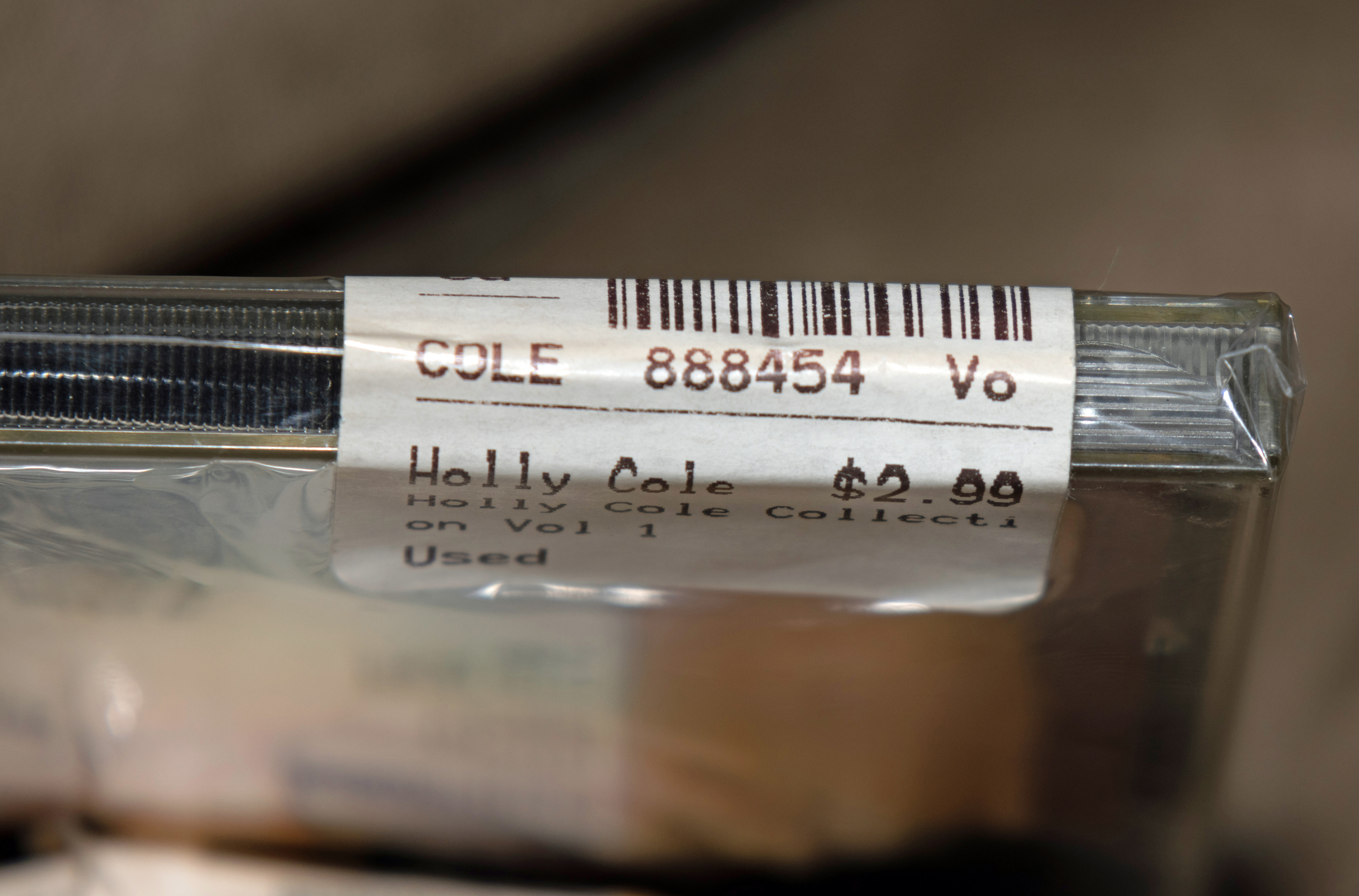


Scans:

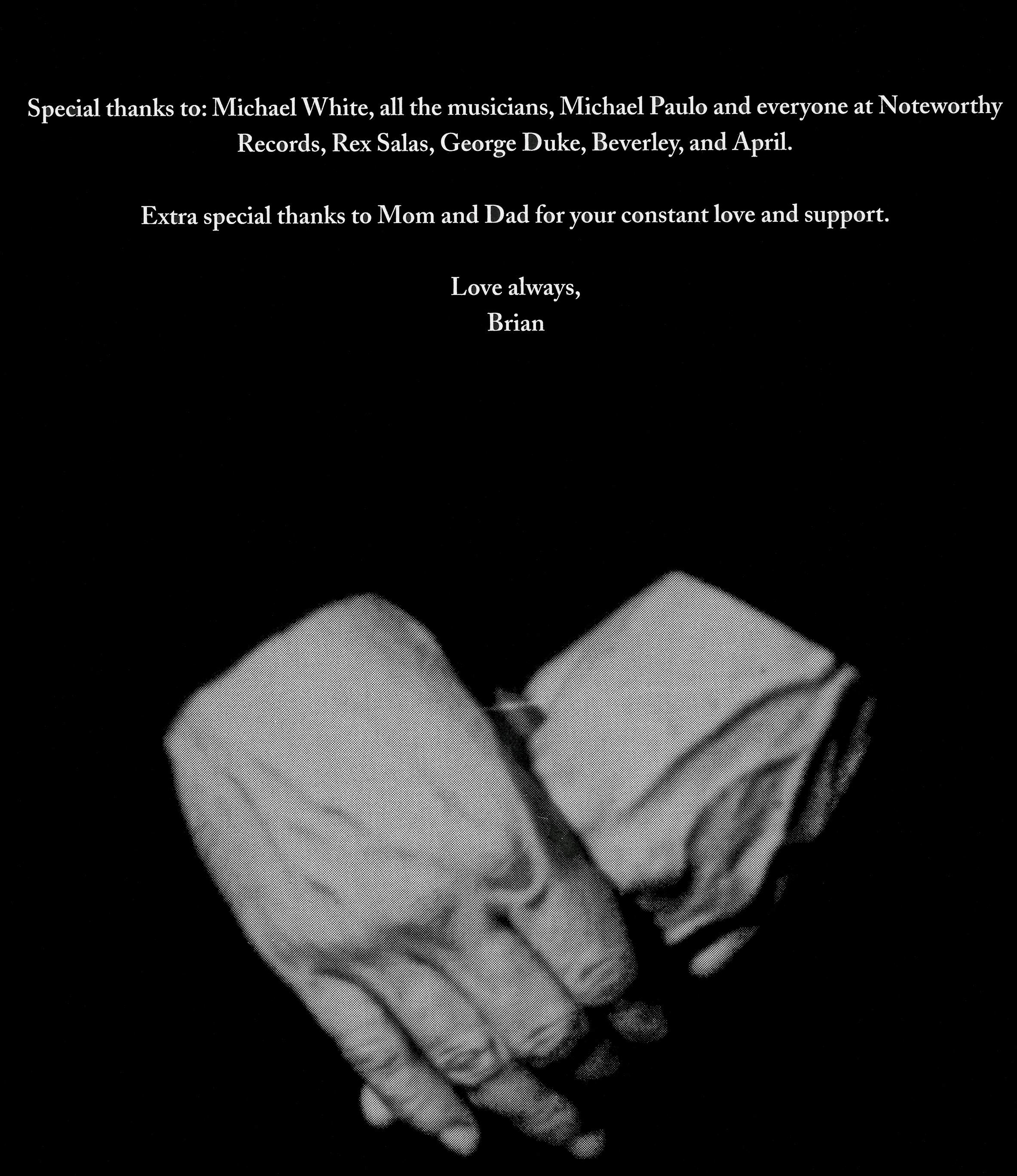
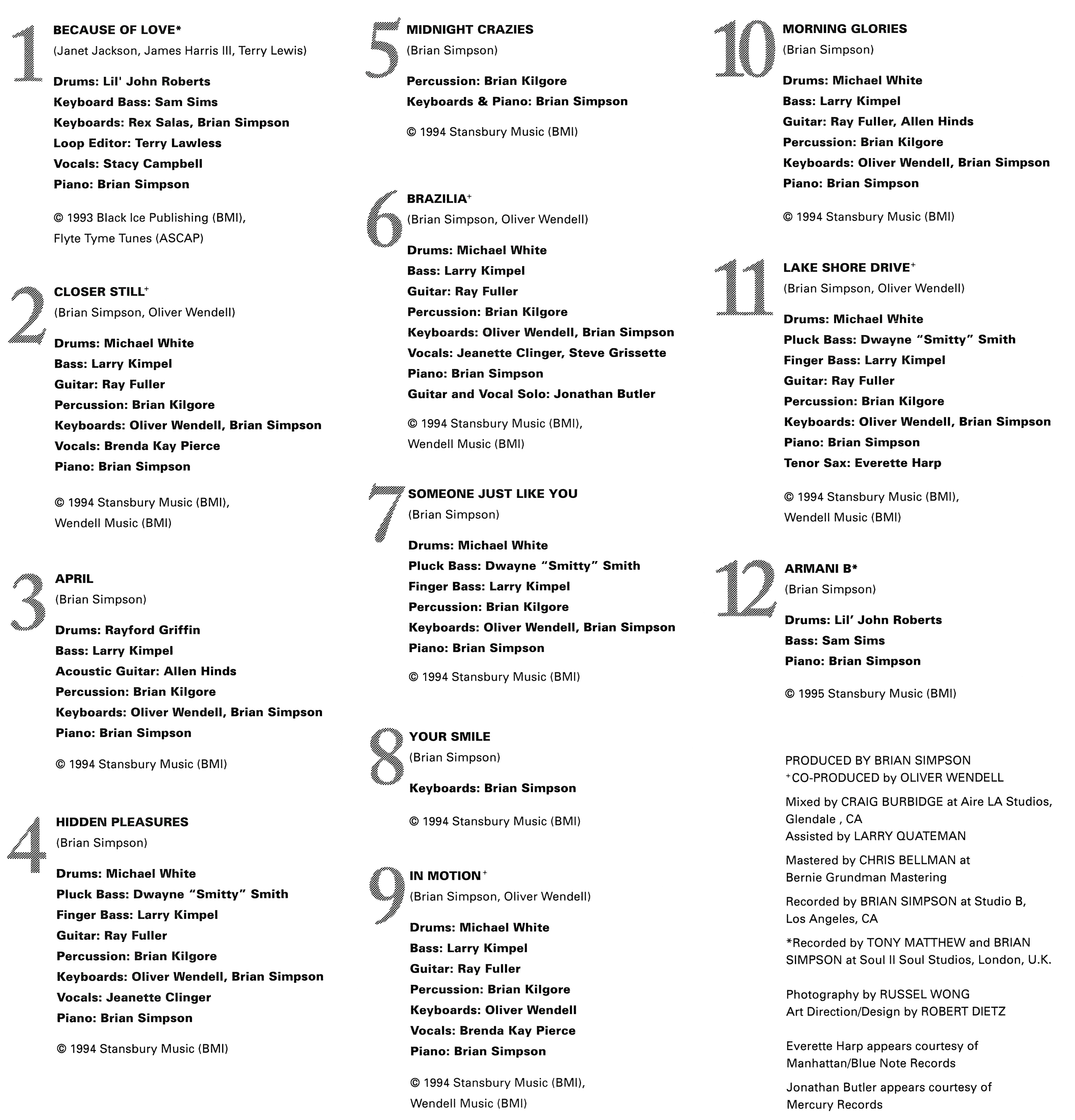

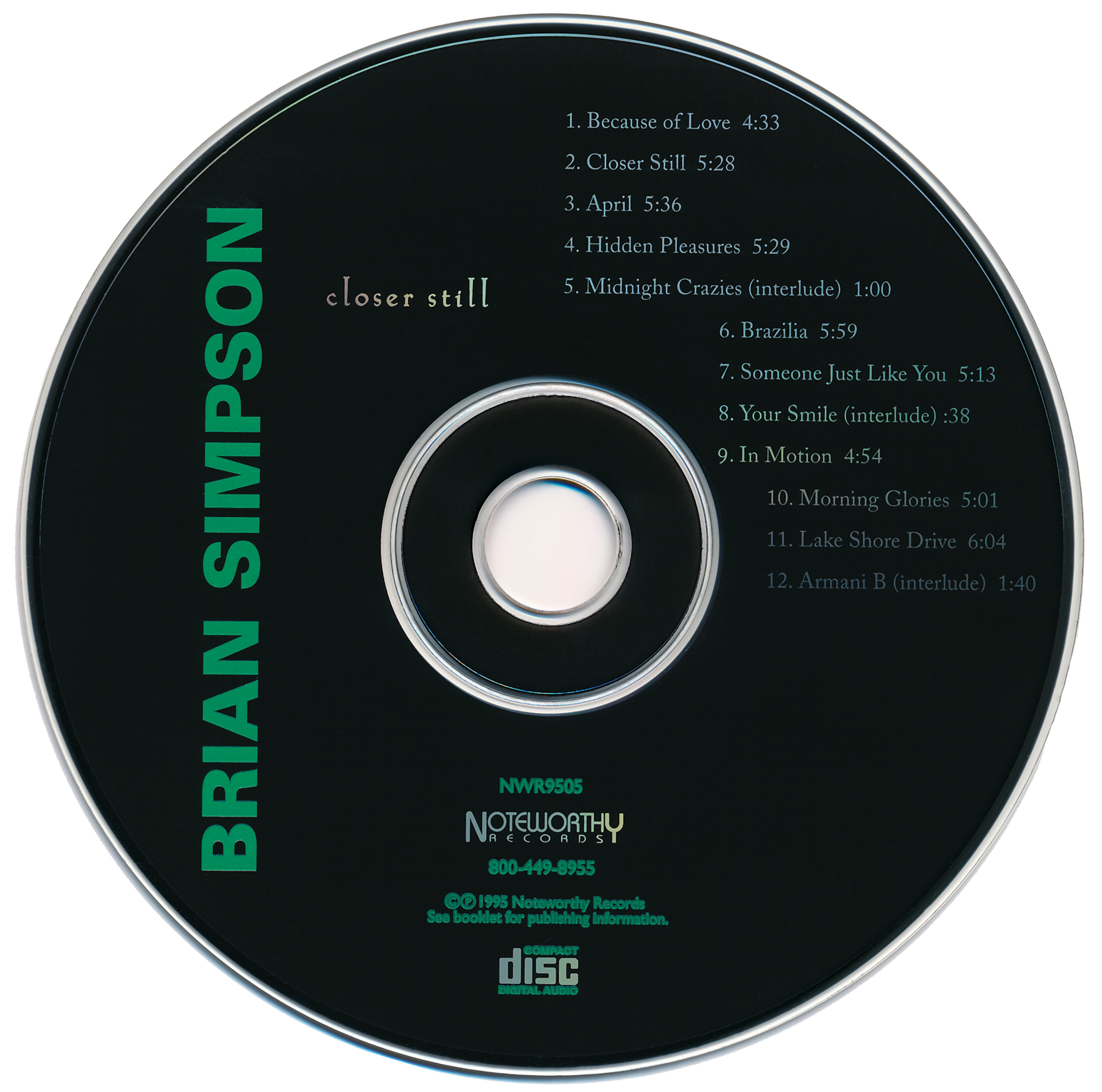

“Hidden Pleasures” (track 4) was the centerpiece of my three Brians segment (two Brians, one Bryan). The talk break that followed paid homage to two video game-centric content creators: Game Dave and Metal Jesus, with a reference to Frank Cifaldi and the Video Game History Foundation for good measure. Metal Jesus occasionally posts “hidden gems” videos, highlighting overlooked video games. Here’s a marathon of six episodes he did on Wii hidden gems:
Thank you for reading to the end of this post. I’ll return to the regular show recap format next week.
My city pop discovery (and reacquaintance with Garfield and Friends) March 5, 2023
Posted by Mike C. in Animation, City Pop, Comedy, Comics, Film, Game Shows, Health, Internet, Jazz, Media, Music, Personal, Phone, Pop, Radio, Technology, Travel, TV, Video, Video Games, Weather.2 comments

NOTE 1: This is also a Garfield and Friends story with several montages among the city pop material. Those montages led me to city pop.
NOTE 2: I consulted my computer audio recordings of the Garfield and Friends DVDs to ensure the video embed caption quotes are verbatim.
NOTE 3: I even spend a paragraph on The Weather Channel tribute site TWC Classics, a simulator that re-creates the old local forecasts, and recently departed announcer Dan Chandler who lent his narration to the sim.
Nearly 50 years ago, Japan’s economy was booming and a new leisure class developed. That leisure class begat a new Japanese pop music genre, borrowing elements of various Western music genres. They called it city pop. What began in the 1970s, peaked in popularity in the ’80s, then fell out of the Japanese mainstream.
City pop found a new Western audience in the 2010s thanks to blog posts like mine (but earlier), Japanese reissues of the genre’s albums, and YouTube uploads of the albums’ tracks. From a 2023 perspective, I give YouTube most of the credit. Today, it is the best city pop recruitment tool.
The rest of this post is about how I discovered city pop and recounts my first nine days as a fan. If you want to read more about the genre and its resurgence, I recommend Cat Zhang’s 2021 Pitchfork article and Wikipedia’s city pop entry.
On February 19, YouTube recommended a video with random clips from my favorite cartoon series, Garfield and Friends:
Jim Davis created the Garfield comic strip and CBS TV specials, but Mark Evanier (with Sharman DiVono for three seasons) spun comedy gold on CBS Saturday mornings from 1988 to 1994 (the last rerun aired in ’95). I can quote parts of episodes or even whole episodes. So, when watching the above clips, I knew what happened next.
The next Garfield and Friends clip in my recommendations came on February 20:
The evening of February 21 was my city pop entry point, but we’re not there yet. The prelude to the entry was this:
Full disclosure: I met Jim Davis at a signing in March 1995, but I was too shy and just had him sign a sketch. And I interviewed Jon Arbuckle voice actor Thom Huge (HUE-ghee) three times for The Mike Chimeri Show. (In retrospect, I would have held off on the first interview until his voice was back to normal.)
The Jon Arbuckle montage led YouTube to recommend this:
Whoa! What is that song that sounds vaguely like “Burnin’ Up the Carnival” by Joe Sample (from Voices in the Rain)? I scrolled down and saw the song was “4:00 A.M.” by Taeko Onuki (or Ohnuki). I searched Google on my iPhone and the Taeko’s Wikipedia entry (linked in the previous sentence) and found the song. That prompted the YouTube app where I heard the whole thing:
Whoa again, it appeared on an album with the last name of a few of my friends, but with an extra N. Lyrics are here.
1:30 PM UPDATE: A member of the My Life in Gaming Discord server told me the album title was part of Taeko’s fascination with French media, which I confirmed after a Google Search yielded this 2017 interview. Still, Mignonne is one letter off from my friends of Italian descent.
3:10 PM UPDATE: I just finished reading the interview linked in the prior update. It was an interesting read, but I was disappointed to learn Taeko did not like Mignonne because of what transpired during production. The resulting disenchantment, and poor sales, made her take a two-year hiatus from the music industry. Anyway, back to the good stuff.
Taeko’s Wikipedia entry led me to the one on city pop. That’s what I heard and I wanted more.
I could not stop listening to “4:00 A.M.” Ironically, it kept me up past midnight, but not as late as 4AM. I was up at 4AM on March 4 when I drafted this blog post thanks to a period of strong easterly winds that buffeted my bedroom window. The song’s refrain may sound vaguely like the later “Burnin’ Up the Carnival,” but the song otherwise had more in common with the works of Bob James and Grover Washington Jr. The line “ima o” was phrased like “that’s the time” in “Feel Like Makin’ Love” by Roberta Flack, which Bob played on and then covered. The guitar solo on the ending breakdown sounded like it came from Eric Gale‘s hands. (It was from Tsunehide Matsuki‘s hands.) I have repeatedly imagined Grover Washington himself covering “4:00 A.M.” on alto saxophone, soloing (improvising) from the last refrain, through the breakdown, all the way to the end.
I should probably acknowledge that I am on the high-functioning end of the autism spectrum, formerly known as Asperger Syndrome. That probably explains my intense focus on one thing or another, and attention to detail.
I was busy with radio show production on February 22, but “4:00 A.M.” was in the back of my mind and I was intent on extracting the audio and assigning the WAV file to a vintage Weather Channel local forecast flavor in my WeatherStar 4000 simulator. Now, I could hear all but the last 36 seconds with the current conditions and forecast, peppered with Dan Chandler’s re-created narrations. (I was in touch with Dan for a few weeks midway through my tenure at WGBB, and he even called in while I was playing a song. I didn’t put him on, but relayed what we talked about, including “reading the sports pages” as he listened to the live stream. After writing that sentence, I’m sorry to learn that he passed away on February 7 [obituary].) The simulator was already populated by music cues from The Price is Right and adjacent Goodson–Todman game shows. See the February 15 Instrumental Invasion recap for more on that obsession.
While my “4:00 A.M.” obsession continued, YouTube had more city pop recommendations, including a modern music video for Mariya Takeuchi‘s “Plastic Love“:
Oh, and another Jon Arbuckle montage:
As the “Plastic Love” video wound down, I pretended to be Dan Ingram back-selling the song, quipping that it was better than polyurethane love.
My vocal city pop discoveries halted for the next few days when I found a city pop creation befitting my love of instrumental music: jazz fusion supergroup Casiopea!
First, I found “Midnight Rendezvous“:
Then, “Eyes of the Mind” before the “the” was added:
Groups like Casiopea and T-Square (formerly The Square) have influenced generations of video game music composers.
I woke up on February 23 after a full night’s sleep and was greeted with two more Jon Arbuckle videos:
As I listened to my radio show aircheck from the night before, I began extracting audio from whatever Casiopea albums were on YouTube (mostly via their “topics” channel), provided the cover art available online was clear and at least 1500×1500 pixels. If AI upscaling in Adobe Photoshop yielded poor results, I’d buy the CD myself and scan the artwork. That’s what I did for Flowers (1996), but I bought Euphony (1988) because it wasn’t on YouTube. I will eventually buy the actual CDs, but given the inflated import prices, collection take a while. Here’s what I do have:
- Casiopea (5/25/79) (Alfa)
- Super Flight (11/25/79) (Alfa)
- Thunder Live (4/21/80) (Alfa)
- Make Up City (11/21/80) (Alfa)
- Eyes of the Mind (4/21/81) (Alfa) – featuring the aforementioned Bob James
- Cross Point (10/21/81) (Alfa)
- Mint Jams (5/21/82) (Alfa)
- 4×4 Four by Four (12/16/82) (Alfa)
- Photographs (4/23/83) (Alfa)
- Jive Jive (11/30/83) (Alfa)
- The Soundgraphy (4/25/84) (compilation album) (Alfa) – I have the title track, the lone original recording
- Down Upbeat (10/25/84) (Alfa)
- Halle (9/10/85) (Alfa)
- Casiopea Live (9/25/85) (Alfa)
- Sun Sun (9/10/86) (Alfa)
- Euphony (4/25/88) (Polydor/Aura) – the CD reissue I have includes “Halle” from Casiopea Perfect Live II (7/10/87) as a bonus track
- Full Colors (5/25/91) (Pioneer)
- Dramatic (5/21/93) (Alfa)
- Answers (5/25/94) (Alfa)
- Asian Dreamer (12/16/94) (Pony Canyon)
- Freshness (5/19/95) (Pony Canyon)
- Flowers (9/20/96) (Pony Canyon)
- Light and Shadows (9/3/97) (Pony Canyon)
- Material (5/19/99) (Pony Canyon)
- Ta•Ma•Te Box (11/20/13) (Hats Unlimited) (CD tracks only)
- A•So•Bo (4/22/15) (Hats Unlimited) (CD tracks only)
- New Topics (10/12/22) (Hats Unlimited)
I’m still working my way through the albums chronologically in my spare time. Flowers is gradually on its way from a Japan Discogs markeplace seller, so I jumped from Freshness to Light and Shadows. That’s where I am as of publication on March 5. (I got in eight hours of sleep the night before.)
The last item in this post’s Casiopea segment is T2norway‘s video profile of them, preceded by his city pop story:
The night of February 23, YouTube recommended two more Garfield and Friends videos. One was yet another montage:
And the other was a series review by Nostalgia Critic, played by Doug Walker (who was born the same day as me!):
I was let down by his critiques of certain characters and the animation style, not to mention his disdain for U.S. Acres. Nonetheless, I respect his dissent.
My city pop discoveries resumed on the night of February 25, related to “Plastic Love.” Leading off, a Super Famicom/Nintendo rendition:
That was followed by the infamous long version of the Mariya Takeuchi original (lyrics):
(As of March 13, the video was taken down. In the long version, one verse repeated and the ending chorus was extended, exemplified below.)
Since I was watching in a web browser, I saw recommendations on the right side of the tab. The one that caught me eye was an English version of “Plastic Love”:
The singer-songwriter was Caitlin Myers, also a voice actress with a focus in anime and video games. She has two YouTube channels: one in her name and one called Interlunium. I was unaware of the scope of her work as I watched this first video. (3/31 UPDATE 1: Interlunium is a virtual idol group where Caitlin portrays Junko.) (3/31 UPDATE 2: Caitlin’s version of “Plastic Love” was reworked with original instrumentation and new vocals for her 2021 compilation, City Poppin’.)
More city pop discoveries came way on February 26. Figuratively waiting at the door to this new day was “Mayonaka no Door* (Stay with Me)” by the late Miki Matsubara, recorded when she was just 19 (lyrics):
*”Door” is lyrically transliterated “doa.” The full term means “midnight’s door (literally, door of midnight).” In another ironic twist, there were nights after discovering this song when I’d be awake around midnight as the refrain bounced around in my head. Sometimes, I imagined a fast tempo, “Spain“-esque Chick Corea version with a Minimoog solo. Others, I thought of McCoy Tyner.
Sure enough, Caitlin Myers wrote an English version of this, too:
Incidentally, I added both versions of “Plastic Love” and “Mayonaka no Door (Stay with Me)” to the WS4000 simulator, again using the five-minute local forecast flavor.
Knocking on afternoon’s door was the biggest discovery yet: Caitlin covered “4:00 A.M.”!
My city pop journey had seemingly come full circle. Now, I had English versions of the first three vocal city pop songs I discovered to complement the originals.
The Garfield and Friends video journey definitely came to end on the morning of February 28 with this video showing one second of each episode from show (or rather from each cartoon in each episode):
However, there was more city pop to be had that afternoon. Other Caitlin Myers English adaptations were in my YouTube feed, and I felt I had to hear the originals before listening to hers.
“Do You Remember Love?” was adapted from its directly-translated Japanese title, “Ai Oboete Imasu ka.” Sung by Mari Iijima, it underscored the intense climax to the 1984 film, Macross: Do You Remember Love? I foolishly watched that sequence on YouTube instead of a straight recording of the song, unable to unsee or unhear any of it. (And I thought Disney villain deaths were rough.)
Lucky for you, the reader, I found a straight recording (lyrics):
And the Caitlin Myers version:
3/13/23 UPDATE: “Do You Remember Love?” was J-pop rather than city pop, illustrating how songs from the subgenre led me to ones from the main genre.
“Dance in the Memories” was next, written and performed by Meiko Nakahara (lyrics):
Caitlin’s turn:
Closing out my first week in city pop, “Telephone Number” by Junko Ohashi (lyrics):
I had to make a 3-minute, 30-second local forecast flavor to accommodate the song’s 3:58 run time (3:59 for Caitlin).
As a suburban New Yorker, I like Magical‘s cover art of Lower Manhattan featuring the original World Trade Center. I passed by One World Trade Center in 2014 while running the Tunnel to Towers 5K.
The hook – “ah-uu, 5-6-7-oh-9” – brought two things to mind:
- “Ah-uu”: “Werewolves of London” by Warren Zevon – of course, that’s “a-hoo,” not “ah-uu.”
- “5-6-7-oh-9” (56709): Foreshadowing SMS!
Musically, Caitlin did a masterful job replicating the sound of each song she adapted into English. On behalf of city pop fans everywhere, thank you, Caitlin, for your efforts.
Thank you to the many city pop artists whose works inspired by our (the West’s) music have boomeranged back to us.
And thank you, the reader, for making it to the end of this post. Wish me luck on the rest of my city pop journey. Be sure to catch Instrumental Invasion April 26 at 9PM Eastern (April 27 at 11AM in Japan) on WCWP. It’ll be the first show with music by Casiopea, and about ten minutes into the last segment, I allude to some of what I laid out in this post because I play Scott Wilkie‘s cover of “Burnin’ Up the Carnival.” (5/2 UPDATE: Here is that show’s recap, along with my journey since writing this post.)
I’ll leave you with Caitlin Myers’ Japanese versions (lyrics by Datenkou) of “Never Gonna Give You Up“…
…and “September“:
Instrumental Invasion, 3/1/23 March 2, 2023
Posted by Mike C. in Airchecks, Audio, Internet, Jazz, Media, Music, Personal, Radio, Video.add a comment

The March 1 Instrumental Invasion on WCWP was recorded and mixed entirely on January 9.
The playlist was created on January 3, with annotations starting on the 3rd and not resuming until the 7th. The talk break script was drafted on the 8th.
This was the second week in a row with songs from David Benoit‘s Waiting for Spring album and Trilogy 2 by the Chick Corea Trio. “All Blues” was the third of three songs over ten minutes long. The other two were “L-Dopa” by Maynard Ferguson and “Orchestrion” by Pat Metheny, the only song of hour 2’s first segment.
Here is the link to the Orchestrion backstory, along with a walkthrough video:
This was the final week before a segment format expansion, laid out below:
- 1984 and earlier is unchanged
- 1985-95 becomes 1985-97
- 1996-2006 becomes 1998-2009
- 2007-16 becomes 2010-20
- 2017 to present becomes 2021 to present
Minimal background information in my talk breaks led to an excessive surplus of time. Padding segments with extra liners only wasn’t enough. So, I partially redid hour 2 talk breaks at a slower pace, except for two that were redone entirely.
As noted on the air, “The Lift” by Marion Meadows was originally played on April 8, 2020. I played the 1978 version of the Jeff Lorber Fusion’s “The Samba” on February 23, 2022.
Click here to download this week’s scoped aircheck or listen below:
Instrumental Invasion, 2/22/23 February 23, 2023
Posted by Mike C. in Airchecks, Audio, Christmas, Comedy, Internet, Jazz, Media, Music, Personal, Pop, Radio, Rap, Video.add a comment

The February 22 Instrumental Invasion on WCWP was recorded the first show recorded in 2023: four segments on January 3 and two on the 4th, along with pickups. I applied a 10-band equalizer effect to my hour 1 talk breaks in an attempt to match the audio quality when recording at my secondary location. It isn’t the first time I’ve done this, but is the first on such a large scale; not just for pickups.
The playlist was created on December 28, 2022, with annotations on the last three days of the year, and the talk break script drafted on New Year’s Eve and Day.
It’s become a habit to program three-song sets in most segments, so I stopped acknowledging the feat in talk breaks.
After two theme weeks, this week had an unofficial theme with eight cover songs.
The Chick Corea Trio’s Trilogy duology were two Christmas presents from my sister Lauren. Playing their cover of “Pastime Paradise” by Stevie Wonder (from Trilogy 2) allowed me to reference “Gangsta’s Paradise” by Coolio and “Weird Al” Yankovic‘s parody, “Amish Paradise.” And since I also played “Who Should I Pay,” Jay Rowe‘s homage to “Blurred Lines,” I got to reference “Word Crimes.” (Read my Mandatory Fun synopsis here.) (7/19 UPDATE: I spoke to Jay on the phone today and he said it was actually percussionist Steve Scales who exclaimed, “yeah, put that in your bank!”)
The show led off with the adjective-less “Paradise” by Grover Washington, Jr., exactly 365 days after I last played a cut from Paradise the album. It’s also been 51 weeks since playing something from The Test of Time by Ken Navarro, and exactly eight months have passed between songs from Chuck Loeb‘s Between 2 Worlds.
To change things up, I had an extra 2007-16 segment after going to the 1985-95 and 1996-2006 wells in previous weeks.
Click here to download this week’s scoped aircheck or listen below:
As a bonus, here are the music videos for “Amish Paradise”…:
…and “Word Crimes”:
Plus, Al’s breakdown for GQ of his most iconic tracks:
Plus plus, the “pivot!” scene on Friends (from “The One with the Cop“), since I referenced it after Randal Clark‘s “Pivot“:
Instrumental Invasion, 1/18/23 January 19, 2023
Posted by Mike C. in Airchecks, Audio, Biking, Film, Food, History, Internet, Jazz, Media, Music, Personal, Radio, Sports, TV, Video.add a comment

The January 18 Instrumental Invasion on WCWP was recorded from December 1 to 3, 2022: the first segment on the 1st, the next three on the 2nd, and last two on the 3rd along with remixing and pickups.
The playlist was created on November 27 with annotations on 29th and 30th. The talk break script was drafted November 30 and December 1.
This week, the extra 2017-present segment was swapped for an extra 1985-95 segment. The last four segments only had two talk breaks each. The first two of hour 2 were made up of three songs in a row (a triple shot).
“Off the Top” by Kim Scott was originally played last April 6.
Since I brought it up after playing Wes Montgomery’s cover of “Windy,” I would have liked to attend the Dancing with the Stars Live tour stop at the Tilles Center last Tuesday, but the show was sold out when I looked for tickets and they were only available marked up through resellers on Ticketmaster. Oh, well. By the way, my “everyone knows it’s Instrumental Invasion” line going into “Windy” referenced a lyric in the song.
I included “Automat” by Yellowjackets after having seen a documentary on the titular fast food restaurants popularized by Horn & Hardart.
Here is a composite of CBS Sports’ coverage of the 1988 Tour de France, complete with John Tesh‘s music:
Click here to download this week’s scoped aircheck or listen below:
1:50 PM UPDATE: This is another of those shows where I don’t notice mistakes or oversights until after the show airs. Bob Mintzer played tenor and soprano sax on “Automat.” The phrase trumpeter Igmar Thomas borrowed on “Blues Vagabond” by Lisa Hilton was from “Killer Joe,” which Quincy Jones covered on Walking in Space. The song was originally written and performed by Benny Golson for The Jazztet‘s Meet the Jazztet record. “Chicken Joe” was by pianist Joe McBride.
I also missed a community calendar spot I recorded on Monday that ran during the last break:
4:05 PM UPDATE: Oh, and this is the PAMS jingle I referenced going into “Wherever You Go” by Brian Simpson:
 MikeChimeri.com
